
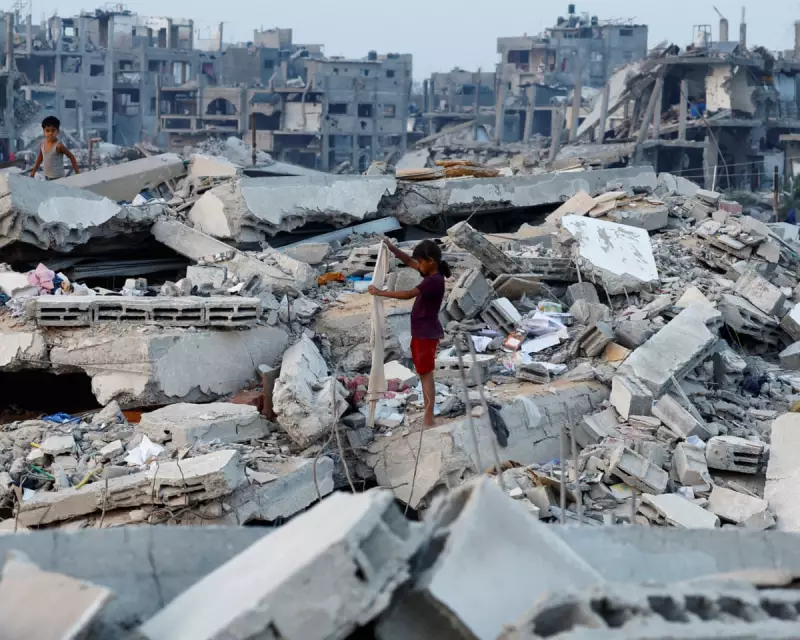
Nearly a month after the ceasefire brought temporary relief to Gaza, the situation remains dire with thousands of bodies still trapped beneath mountains of rubble and essential aid being systematically obstructed.
The Scale of Destruction
The scale of devastation in Gaza is almost unimaginable. Thousands of Palestinian bodies are believed to remain buried under the ruins - debris so extensive that experts estimate it would require a fleet of more than one hundred lorries working continuously for seven years to clear.
Palestinian children are being born literally amid the rubble, with mothers lacking both homes and functioning hospitals. The education system stands on the brink of complete collapse after two years of conflict, with more than 90% of school and university buildings destroyed.
Ceasefire Reality Check
While the ceasefire announcement brought profound relief, it has been shadowed by deep trepidation about what comes next. The agreement was reached by deferring all difficult questions, leaving Gaza in a dangerous limbo.
Since the ceasefire took effect, more than 200 Palestinians, including children, have reportedly died in strikes that Israel claims are responses to Hamas attacks. Aid, while flowing again, remains wholly inadequate to meet the overwhelming need.
Non-governmental organisations are warning that Israel's new registration system is actively obstructing aid delivery. Meanwhile, Israeli demolitions continue in the half of Gaza that its forces still control.
International Response and Future Prospects
Mediators are currently discussing a potential deal that would give Hamas fighters safe passage out of Israeli-held Rafah if they surrender their arms. However, as Qatari diplomat Majed al-Ansari warned, the deeper risk is that Gaza slides toward a state of "no war, no peace" where deaths continue and reconstruction cannot occur.
The United States is pushing for a UN Security Council resolution mandating an international stabilisation force, but this requires agreement on multiple contentious issues including the force's mandate, composition, and relationship with Palestinian civil police.
While Donald Trump wants to preserve "his" ceasefire and expand the Abraham accords, Saudi Crown Prince Mohammed bin Salman's upcoming rare visit to the US suggests that normalising relations between Israel and more Arab states remains unlikely without better deals for Palestinians.
The ceasefire reflected growing international outrage at what many describe as a genocidal war, with governments being dragged along behind public opinion. However, Gaza has already slipped back down the international agenda, with Germany quickly suggesting it would lift restrictions on arms exports to Israel.
With Israel still resisting international journalists' access to Gaza, maintaining public attention becomes crucial to ensure that further steps don't utterly betray Palestinians. As the editorial emphasises, Palestinians need not only immediate food aid but a viable future - something that can only be achieved through sustained international pressure for justice and lasting peace.




