FBI Election Facility Raid in Georgia Draws Scrutiny Amid Voter Suppression Concerns
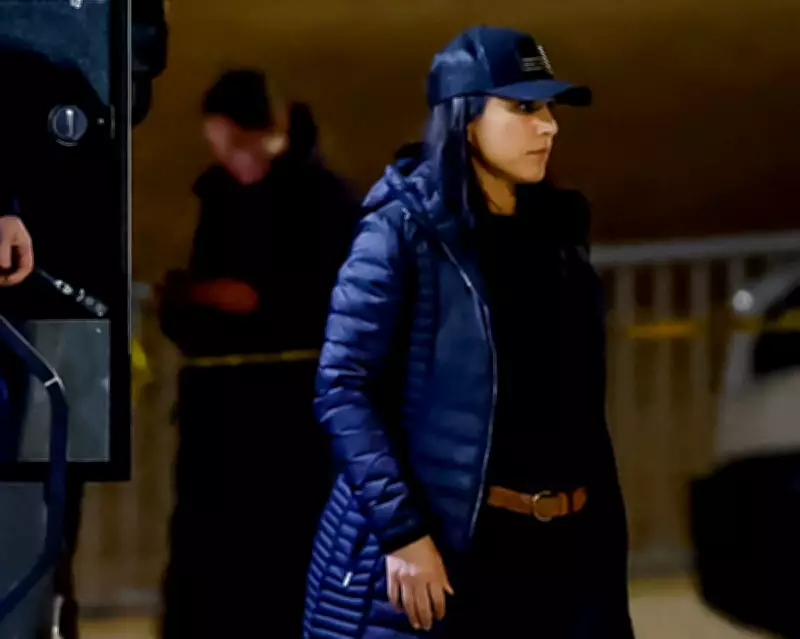
The Federal Bureau of Investigation executed a court-ordered search warrant at the Fulton County Department of Registration and Elections Hub and Operation Center in Georgia on 28 January 2026, an operation that has raised significant questions about election oversight and potential voter suppression tactics. The presence of Director of National Intelligence Tulsi Gabbard at the scene, reportedly at the request of former President Donald Trump, transformed what might have been viewed as routine administrative oversight into a politically charged spectacle.
Questionable Justifications and Historical Parallels
Federal agents removed ballots and election records from a majority-Black jurisdiction that played a crucial role in delivering Georgia for the Democratic candidate in the 2020 presidential election. This action occurred despite multiple previous audits finding the county's election processes clean and transparent. The raid echoes troubling historical precedents from the Jim Crow era, when ostensibly legal mechanisms such as poll taxes, literacy tests, and arbitrary voter roll purges were used to suppress Black political participation.
The timing and nature of the operation suggest objectives extending beyond routine law enforcement. With no substantial evidence of fraud presented to justify the intrusion, critics argue the true purpose appears to be political messaging rather than investigative necessity. The event represents what many observers describe as part of a broader pattern of using federal authority to question election outcomes that produce politically unfavourable results.

Broader Political Context and Legislative Developments
Days following the Fulton County operation, former President Trump publicly called for Republicans to "nationalize" elections in multiple states, reviving long-debunked claims about undocumented immigrants influencing electoral outcomes. This rhetoric coincides with legislative efforts to advance restrictive voting measures, including the proposed Make Elections Great Again Act, which would tighten proof-of-citizenship requirements, restrict mail voting, and undermine third-party registration drives.
Republican leadership has largely responded with careful hedging or silence regarding these developments, with few exceptions like Nebraska Congressman Don Bacon, who maintains consistent opposition to federalizing election administration. The lack of robust pushback from party leaders has effectively granted permission for continued escalation of election-related interventions.
Systematic Patterns of Political Erasure
The Fulton County incident fits within a broader pattern of actions that critics describe as systematic political erasure. This includes immigration enforcement operations targeting specific communities, efforts to remove Black history from public education curricula, and attempts to revoke protected status for immigrant groups. A recent court ruling temporarily halted one such effort against Haitian immigrants, with Judge Ana C Reyes noting the administration's actions were "substantially likely" motivated by racial hostility.
These interconnected actions create what voting rights advocates describe as a comprehensive strategy combining voter suppression (limiting access), voter depression (discouraging participation), and dehumanization (justifying exclusion). Together, these tactics do more than simply influence electoral outcomes—they fundamentally undermine democratic participation and representation.
Implications for American Democracy
The machinery historically used to suppress Black and immigrant political power at local levels appears to be undergoing recalibration for potential national application. When leaders and institutions work to erase certain communities from the American narrative—whether through legal mechanisms, historical revisionism, or administrative actions—they teach those communities that their place in the nation's past, present, and future is conditional rather than guaranteed.

As civil rights advocate Marian Wright Edelman famously observed, "You can't be what you can't see." The events in Fulton County serve as a stark reminder that visibility in law, history, and politics remains inseparable from power and belonging in American society. The attempt to strip people of their democratic voice represents an attempt at their political disappearance, with consequences that extend far beyond any single election cycle.
The Fulton County raid stands as both warning and precedent—a demonstration of how election integrity claims can be weaponized, how historical patterns of suppression can be modernized, and how democratic safeguards can be gradually eroded through a combination of administrative actions, legislative proposals, and political rhetoric. The immediate stakes involve specific communities and elections, but the broader implications concern the very foundations of representative democracy in America.