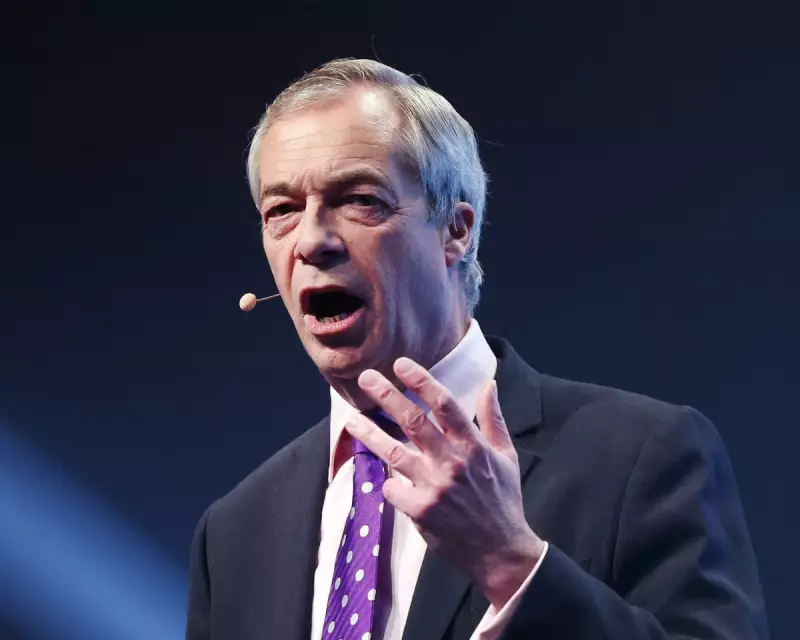
The political landscape at Davos witnessed a striking intervention from Reform UK leader Nigel Farage, who presented a controversial vision for global security during a World Economic Forum panel discussion in the Swiss resort.
Geopolitical Vision for a Changing Arctic
Speaking at the WEF's "America House" on Wednesday, Farage articulated his belief that the world would become "a better, more secure place" if the United States were to assume control of Greenland. This statement came despite his longstanding advocacy for national sovereignty and opposition to globalist structures that characterise much of the Davos agenda.
Strategic Justification Amid Arctic Changes
Farage elaborated on his position by highlighting several critical factors influencing his perspective. "I have no doubt that the world would be safer if a strong America was in Greenland," he declared, citing "the geopolitics of the High North, because of the retreating ice caps and because of the continued expansionism of Russian icebreakers, of Chinese investment."

This geopolitical assessment arrives at a moment when Arctic accessibility is increasing due to climate change, creating new strategic considerations for northern hemisphere powers.
Sovereignty Principles and Practical Politics
Interestingly, Farage's comments followed former US President Donald Trump's apparent rejection of forcibly acquiring Greenland, though Trump had previously expressed interest in what he called a "big, beautiful piece of ice." Farage sought to reconcile his strategic alignment with Trump's position while maintaining his philosophical commitment to national sovereignty.
"If you believe in the nation state and not globalist structures, you believe in sovereignty," Farage explained during the panel discussion. "And if you believe in sovereignty, you believe in the principle of national self-determination."
The Greenlanders' Perspective
The Reform leader acknowledged the importance of local consent in any territorial changes, stating: "You must respect the rights and views of the Greenlanders, because that is what national self-determination is, and that's a key part." This qualification represents an attempt to balance strategic ambitions with democratic principles.
Davos Critic Turned Participant
Farage's presence at Davos represents something of a paradox, given his history of criticising the forum. In previous statements, he has described Davos as a place where decisions "bow down to the European Union," characterising attendees as "people deciding our futures in Swiss ski resorts."
During his panel appearance, Farage insisted his fundamental stance remained unchanged. "For those of us at Davos that are fighting the globalists, belief in national self-determination is at the root of what people like me, albeit the minority here, believe in," he asserted. "So I think that's really, really important."
UK Political Context and Reform's Prospects
When questioned about Reform UK's rising popularity in British polling, Farage offered a bleak assessment of the nation's current trajectory. He pointed to what he described as Britain's "very serious decline, economic decline, social decline, even moral decline, in many ways, in knowing the difference between right and wrong."
According to Farage, this perceived decline has created a political vacuum that Reform UK aims to fill. "People are desperate for something different," he claimed, suggesting that traditional parties no longer represent many voters' concerns.
Farage further lamented what he sees as an exodus of talent from Britain, noting that "young entrepreneurs, our highest taxpayers, many of our best businesses" were deserting the country. Despite acknowledging the challenges ahead, he expressed confidence in Reform's electoral prospects: "There's a long way to go ... I think we've got every chance of winning the next election. I really do."
The Davos appearance thus served as both a platform for Farage's geopolitical vision and an opportunity to articulate Reform UK's domestic political message on an international stage, blending concerns about global security with critiques of Britain's current direction.