Ex-Putin Interpreter's Key Role in Hungary Election Monitoring Sparks Alarm
Hungarian human rights organizations have expressed serious concerns regarding the appointment of Vladimir Putin's former interpreter to a pivotal position within an international election monitoring mission. This development comes amid growing fears of potential Russian interference ahead of Hungary's crucial parliamentary vote next month, which could end nationalist leader Viktor Orbán's 16-year grip on power.
Background of the Controversial Appointment
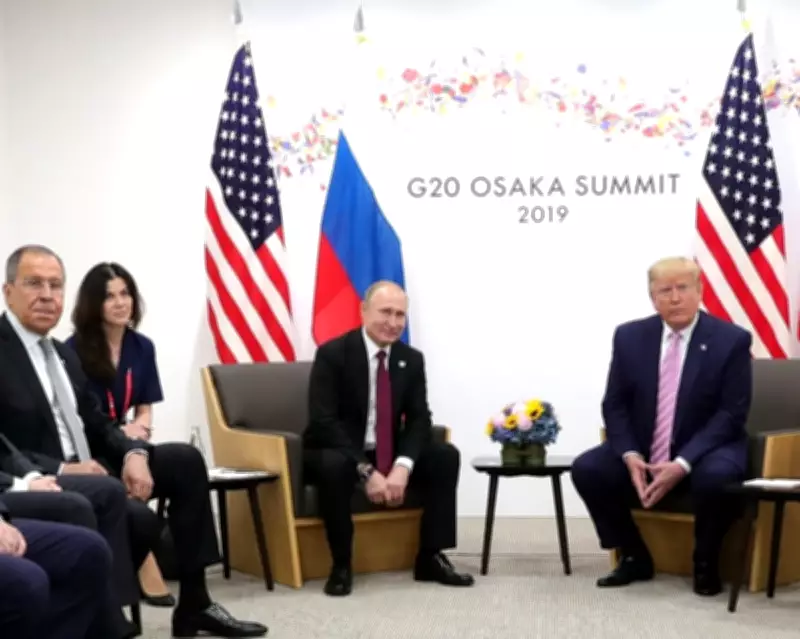
Daria Boyarskaya, who served for many years with Russia's foreign ministry and interpreted in numerous high-level meetings including those between Putin and Donald Trump, now holds a senior advisory role at the parliamentary assembly of the Organization for Security and Co-operation in Europe (OSCE-PA). Operating from the body's Vienna headquarters, Boyarskaya is actively involved in coordinating the OSCE's mission to monitor Hungary's upcoming parliamentary election.
Viktor Orbán stands as the European Union's most pro-Russian leader, having consistently criticized Ukraine and its president Volodymyr Zelenskyy while blocking EU loans to Ukraine. These positions have become central pillars of his current election campaign. Numerous allegations have surfaced suggesting Russia has been deploying various assets to enhance Orbán's electoral prospects.
Civil Society Concerns and Security Implications
Over his lengthy tenure, Orbán has frequently targeted civil society groups and independent media outlets, recently referring to them as "bugs" requiring eradication. Given this intimidating climate and Orbán's close relations with Moscow, many activists worry about sharing sensitive information with a figure possessing clear Kremlin connections.
Boyarskaya has invited representatives of civil society organizations to a closed-door meeting next week in Budapest to discuss concerns about Hungary's political landscape. The delegation will be led by British Labour MP Rupa Huq and Armenian MP Sargis Khandanyan, aiming to prepare for a larger monitoring mission comprising OSCE member nation parliamentarians who will travel to Hungary around election time.
Márta Pardavi, co-chair of the Hungarian Helsinki Committee, emphasized in a letter to OSCE officials that such meetings typically involve exchanging highly sensitive information regarding political pressure, electoral manipulation risks, and threats against human rights defenders and journalists. Pardavi argued that "even the perception that confidential exchanges could be accessed by malign external actors" would prevent rights activists from speaking freely, requesting Boyarskaya's immediate removal from all election observation tasks.
OSCE Defense and Security Context
In a strongly worded response, Italian OSCE-PA Secretary General Roberto Montella defended Boyarskaya, claiming Pardavi's letter had a "slandering nature" and stating he personally selected Boyarskaya for the Hungary mission. Montella asserted she enjoyed his "full trust and confidence," noting an external auditor in 2023 found allegations against her unfounded.
Boyarskaya has worked intermittently with OSCE for over a decade, joining full-time in 2021. While no evidence exists linking her to Russian intelligence or information sharing with the Russian government, security experts note international bodies like OSCE-PA represent prime targets for Russian intelligence penetration due to their international nature, access to sensitive information, and European centrality.
Andrei Soldatov, an authority on Russian intelligence networks, explained that as Putin's interpreter, Boyarskaya would have required highest-level security clearance, typically involving understanding security service requirements. Fiona Hill, former Trump national security adviser on Russia, recalled Boyarskaya being swapped in at the last minute during a 2019 Osaka meeting, suggesting Putin intended to distract Trump with an attractive female translator, though she acknowledged Boyarskaya's translation excellence.
Ongoing Scrutiny and International Reactions
In late 2022, Poland declared Boyarskaya persona non grata ahead of an OSCE-PA meeting, citing potential threats to state security. Travel records from leaked Russian databases indicate she has continued visiting Russia regularly since the full-scale invasion of Ukraine in 2022.
Boyarskaya maintains she abides by OSCE rules prohibiting staff from accepting instructions from national authorities. Unlike many OSCE employees seconded by governments, she is directly hired by the organization. OSCE-PA spokesperson Nat Parry confirmed the Russian government does not and has never paid Boyarskaya's salary.
The controversy highlights broader concerns about election integrity and foreign influence in Hungary's pivotal vote, with international observers closely monitoring how the OSCE handles these significant allegations against a key mission coordinator with substantial Kremlin connections.