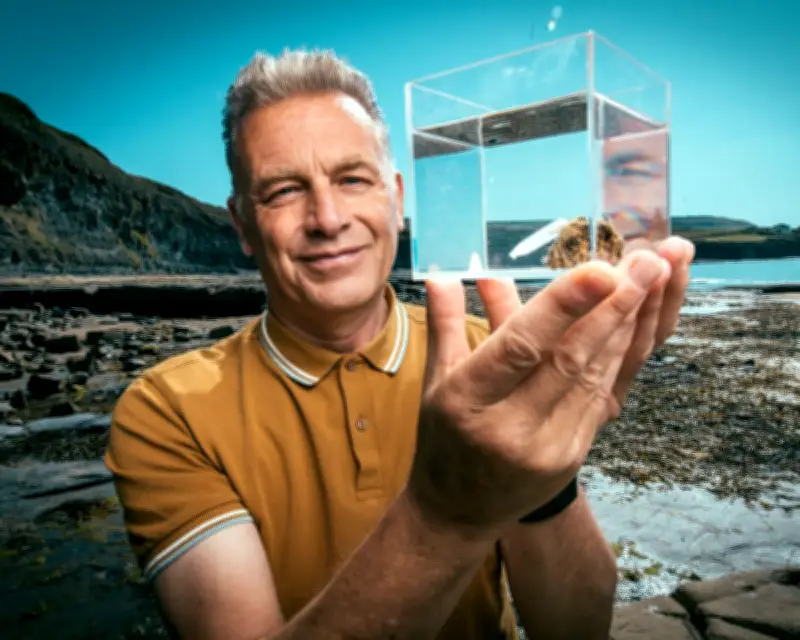
The new BBC documentary series Evolution serves as a coronation, effectively crowning presenter Chris Packham as the successor to David Attenborough. According to the review, Packham possesses Attenborough's passion for the subject and the ability to share knowledge accessibly, treading the line between assuming nothing and not infantilizing the audience.
What Happens in the Series
Evolution is a five-part nature documentary that takes one animal per episode to delve into a particular aspect of its evolutionary journey. The first episode focuses on elephants and their trunks, a prime example of a selection advantage that helped life move from primordial soup to land, air, and even back to water. Packham opens in Kenya, observing African savanna elephants, then uses CGI to travel back 4.2 billion years to LUCA (last universal common ancestor), a single-cell organism that is the progenitor of all life on Earth.
Over generations, mutations creep in. Some cells capture sunlight and convert it to energy, giving rise to plants. Others feed on decay, yielding fungi. Some become multicellular life forms, growing in size and complexity into tiny aquatic worms, then worms with limbs and proto-lungs, eventually dinosaurs and mammals. A meteorite strike wipes out the dinosaurs, and one mammal becomes the elephant's ancestor—small and furry at first, but over 66 million years, mutations shape features like guts that digest plants, different teeth, and a longer nose that proved advantageous.
Episodes and Themes
Episode three features bats to illustrate the importance of bums. Episode two (about ostriches) was not available for review. Dolphins in episode four exemplify selection for intelligence, while horses in the final episode tell the story of movement development, showing how life improves when organisms can move to food rather than waiting for it.
The series is grounded in science; Packham always has a fossil on hand, a modern creature analog, or an experiment demonstrating a principle. The show avoids suggesting evolution is a method of design working toward a goal, instead presenting it as a selection process. Packham expresses wonder at the miraculous-seeming nature of it all, such as the advent of retroviruses invading a placoderm (prehistoric fish), passing viral DNA to offspring, which added myelin sheaths to nerve cells, increasing computing power. As Packham puts it: “Thinking begins.”
Impact and Reception
The review states that Evolution is “television that manages that most beautiful thing: it makes you feel like a child again.” It bombards viewers with new information, mesmerizes with fantastic facts, and lights the touchpaper of curiosity. For children watching, Packham—who was a boy obsessed with nature—may ignite flames of curiosity that never go out. The series airs on BBC Two and is available on BBC iPlayer in the UK, with overseas broadcasts yet to be announced.