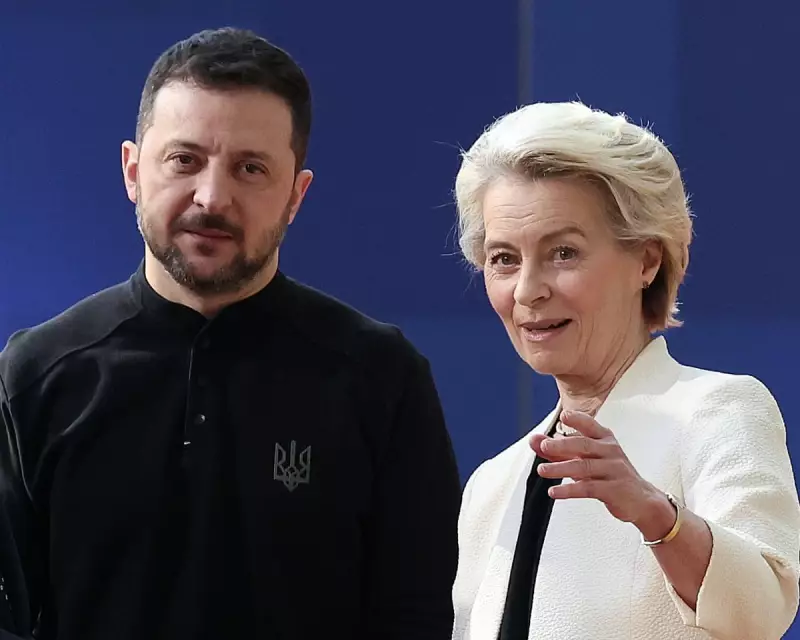
The European Union is confronting a profound crisis of self-confidence as it navigates a tumultuous start to 2026, with its leaders struggling to project strength on the global stage. This internal reckoning comes to a head this Wednesday, as Brussels is due to outline the specific terms of the massive €90 billion loan it has promised to Ukraine.
A Week of Mounting Crises Tests EU Resolve
The immediate challenges are stark. Alongside finalising the Ukraine aid package, which is already causing internal tensions over whether the funds can purchase American-made weapons, the bloc faces simultaneous pressure points. US Secretary of State Marco Rubio is meeting ministers from Denmark and Greenland, following former President Donald Trump's renewed claims that the US will acquire Greenland "one way or another". Furthermore, the EU is under fire for its seemingly weak response to rising violence in Iran, where the body count of protesters is climbing. European Commission President Ursula von der Leyen's weekend statement that the bloc was merely "monitoring" the situation has been widely criticised as inadequate.
This relentless crisis management, however, masks a deeper and more systemic problem. There has long been a recognised disconnect between the EU's substantial economic power and its limited geopolitical influence. Now, barely a year into Donald Trump's second term, this gap appears unsustainable. The "America First" doctrine has left EU leaders frequently reacting to events, often seeking to appease Washington in a bid to salvage remnants of the transatlantic alliance.

The Structural and Mindset Challenges Holding Europe Back
While the strategic need to maintain US support for Ukraine's security is clear, this defensive posture is preventing Europe from asserting itself. To protect its interests and values in an increasingly menacing multipolar world, the EU must start acting with the confidence befitting an economic superpower. The obstacles are both structural and cultural.
Structurally, the decision-making processes of a 27-member union, where veto powers allow small minorities to block action, are increasingly seen as unfit for purpose. Politically, a mindset of timidity and complacency towards both internal and external threats must change. There is growing consensus on the need to accelerate investment in hard military power, a domain long reliant on American guarantees. Europe's belated military catch-up leaves it vulnerable in the interim.
A Twin Priority: Defence and Social Solidarity
Critically, bolstering defence cannot come at the expense of Europe's social model. The rise of national populism across the continent—actively encouraged by Trump and his supporters—is fuelled by disillusionment with inequality and austerity. Therefore, strengthening social solidarity is as vital as strengthening armies. The Covid-19 pandemic proved the EU could mobilise its vast resources creatively and ambitiously during an emergency. The same flexibility and determination are required now to leverage the power of its 450 million citizens.
The bloc must stand up for liberal democratic principles that both the current White House and Vladimir Putin hold in contempt. This will likely necessitate "more Europe"—greater integration in security and economic policy. The alternative is a weak and fragmented union in an era defined by predatory geopolitics, an outcome too dangerous to contemplate.