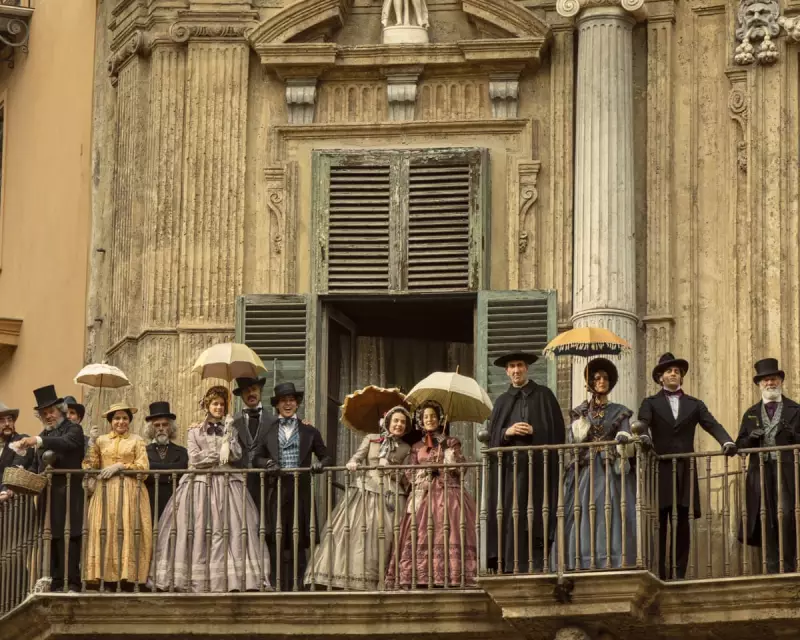
Europe at a Crossroads: The Leopard's Timely Warning for EU Elites
As we move deeper into the 21st century, Europe stands at a pivotal moment. Its global economic share is diminishing, and geopolitical influence wanes, raising fears that relative decline could spiral into absolute collapse. This backdrop makes the 2025 Netflix adaptation of Giuseppe Tomasi di Lampedusa's classic novel, The Leopard, particularly resonant across the continent.
The Parallels Between Sicilian Aristocracy and Modern Europe
Lampedusa's 1958 masterpiece, The Leopard, chronicles the decline of a Sicilian aristocratic family in the 19th century, focusing on elites who cling to power as their world crumbles. Today, Europe's political class mirrors this aristocracy, suspended between pain and complacency, often resigned to a strategy of managed decline. The novel's Prince of Salina, an ageing aristocrat, sees his wealth and privileges ebb away amidst societal change, much like how many Europeans sense history moving against them.
In contemporary Europe, external pressures mount. The US, Russia, and China engage in a scramble for influence, with Moscow seeking hegemony in the east, Beijing targeting European industry, and Washington demanding obedience. Internally, Germany grapples with anxiety about the future, France struggles with budget fixes, and Brussels dismantles climate legislation while appeasing figures like Donald Trump. This has led to a growing sense of déclassement, where European dignity feels eroded.

Managed Decline or Proactive Change: The Choice Facing EU Leaders
Like the Prince of Salina, many Europeans have enjoyed relative prosperity, convinced of their model's superiority—democratic order, tamed capitalism, and refined culture—while often ignoring its foundations in exploitation. Politics has become a contest of nostalgias, with the populist right dreaming of a nationalist past and the mainstream mimicking the prince's tactical adaptations: more debt, welfare cuts, deregulation, and yielding to external pressures.
However, Lampedusa offers a glimmer of hope through the aphorism, "as long as there is death, there is hope." Europe is not necessarily lost if its leaders draw the right lessons. The crucial question from the novel is: if adaptation aims to keep "everything the same," what exactly is being preserved? For the prince, it's a self-serving order; for Europe, it could be principles like democracy, the rule of law, and territorial sovereignty.
Signs of Resistance and the Path Forward
Europeans are showing resilience. Polls indicate that 76% rejected a humiliating trade deal with Trump last summer, 81% support a common EU defence policy, and 74% approve of the EU—a record high. As Russia's war continues, public commitment to Ukraine remains strong. This suggests that, unlike the prince's doomed world, Europe's way of life isn't fated for collapse, especially if it avoids becoming a periphery governed by others.
To protect what matters, Europe must change profoundly. European Commission president Ursula von der Leyen has called for shedding "nostalgia" to build an independent Europe. Each humiliation from Trump, Xi Jinping, or Vladimir Putin makes this case more urgent. The real test is whether leaders will drive change or passively endure it, risking an aristocratic irresponsibility summed up by "après moi, le déluge."
In summary, The Leopard serves as a powerful allegory for Europe's current challenges. By embracing proactive strategies over managed decline, EU elites can uphold democratic values and secure a meaningful future, ensuring the continent remains a global force rather than a fading relic.