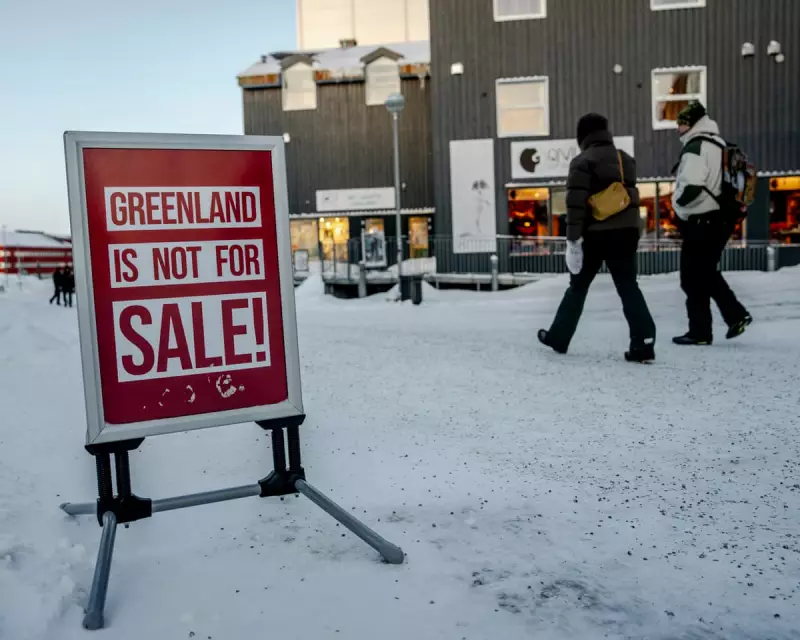
Residents in Nuuk, Greenland, are increasingly dependent on European assistance amid growing geopolitical tensions. This reliance underscores the broader crisis unfolding as Europe confronts a pivotal moment with former US President Donald Trump over the Arctic territory.
Europe's Moment of Truth Over Greenland Looms Large
European leaders are abandoning appeasement strategies as a critical emergency EU summit approaches, potentially marking a turning point in transatlantic relations. The dispute centres on Trump's claims to Greenland, which he has linked to personal grievances, including being overlooked for the Nobel Peace Prize.
Trump's Provocations and NATO Implications
In a recent speech at Davos, Trump escalated his rhetoric, demanding immediate negotiations for Greenland while ruling out military force. However, his insistence that only the US can secure the territory has raised alarms. Belgian Prime Minister Bart De Wever highlighted the surreal nature of the crisis, noting that a NATO country is threatening another with potential invasion.

This situation threatens to undermine the mutual defence clause of NATO, especially as Russia's war in Ukraine continues. Trump has compounded the tension with trade threats, imposing punitive tariffs on eight European countries that deployed troops to the Arctic, with rates set to increase significantly if his demands are not met.
Europe's Potential Retaliation and Unity Challenges
In response, Europe has prepared retaliatory tariffs on €93 billion of US imports, such as soya and bourbon, ready for activation. Additionally, the European Parliament has agreed to suspend ratification of a recent EU-US trade deal. French President Emmanuel Macron advocates for deploying the anti-coercion instrument, a powerful trade weapon designed to counter coercion, though it has never been used before.
Despite rhetorical unity, divisions persist within the EU. Germany and Italy emphasise dialogue, while Macron pushes for a more assertive stance. The outcome of the upcoming summit will test whether Europe can present a united front against Trump's intimidation tactics.
Expert Calls for Stronger Action
Experts argue that Europe must move beyond calibrated responses. Alberto Alemanno, a professor of EU law, urges the use of the anti-coercion instrument alongside a coordinated boycott of the upcoming football World Cup in the US. He warns that the cost of inaction is permanent subordination to an adversarial power.
Georg Riekeles of the European Policy Centre supports this view, suggesting that the EU target US digital platforms and services. He advocates for reactivating tariffs and nullifying recent trade agreements, citing that the legal case for coercion is clear-cut.
The Path Forward for Europe
As the crisis intensifies, European Commission President Ursula von der Leyen has called for abandoning traditional caution and leveraging economic power. However, analysts like Nathalie Tocci remain sceptical, predicting that EU leaders may only implement retaliatory tariffs if Trump proceeds with his threats, holding back on more drastic measures for now.
This standoff over Greenland represents not just a territorial dispute but a fundamental test of Europe's autonomy and resilience in a shifting global landscape.