The geopolitical chessboard of the far north is being redrawn, prompting urgent calls for the European Union to adopt a more assertive and visionary strategy. This comes in response to renewed signals from former US President Donald Trump regarding a potential acquisition of Greenland, highlighting the Arctic's shift from a zone of peace to an arena of strategic competition.
A Looming Geopolitical Shift in the Arctic
The relative stability that characterised the post-Cold War era is eroding, a process accelerated by Russia's war in Ukraine and a broader move towards power politics. For Europe, a continent built on a philosophy of limiting national power through rules-based order and international law, this presents a fundamental challenge. To uphold its core values, Europe must evolve into a more muscular geopolitical actor, and experts argue the Arctic is the critical testing ground.
Once peripheral to major security debates, the Arctic's vast wealth of resources – from hydrocarbons and critical minerals to marine proteins – is now central to economic and strategic calculations. The EU maintains a presence through its Nordic members: Finland, Sweden, and the Kingdom of Denmark (though notably not including Greenland). However, despite an EU Arctic policy existing since 2008, the region has often been an afterthought in Brussels.

Europe's Silent Response and a Missed Opportunity
Donald Trump's revived interest in Greenland, exemplified by his January statement that the US would have the territory "one way or the other," has triggered alarm. While several European nations, including France, Germany, and the UK, issued a joint statement on 6 January, followed by Nordic foreign ministers, the EU's institutional response has been marked by silence or cautious restraint.
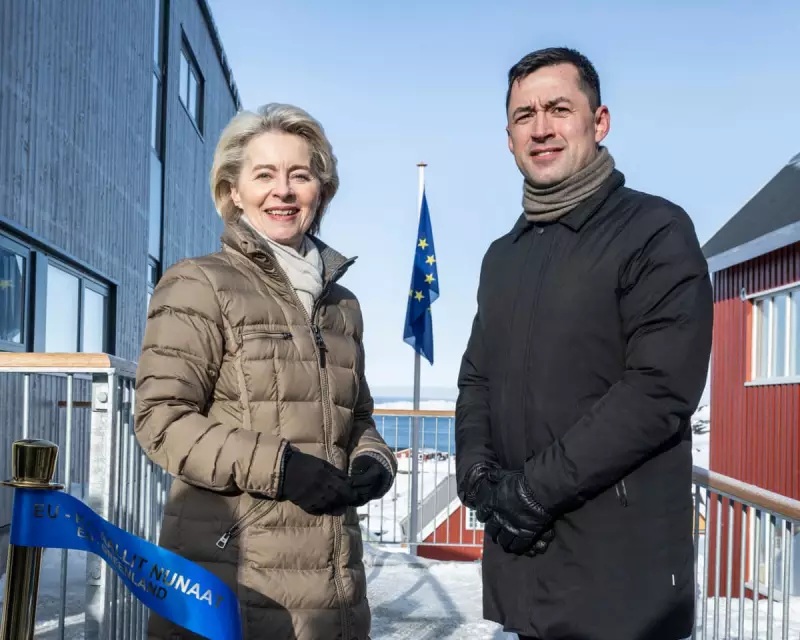
This hesitation was underscored in September 2024 when European Commission President Ursula von der Leyen delivered her annual State of the Union address. She made no mention of the Arctic or Greenland, an omission that reveals the internal challenges of prioritising the region within the EU's complex framework. This institutional quiet stands in stark contrast to the escalating geopolitical manoeuvres.
A Bold Counter-Proposal: Offering Greenland EU Membership
As the European Commission and the European External Action Service work to update the EU's Arctic policy, analysts Robert Habeck and Andreas Raspotnik propose a radical shift. They argue Europe must move beyond reactive statements and present a positive, compelling vision for the European north. This vision should build on the legacy of past cooperation formats like the Northern Dimension and nearly two decades of Arctic policymaking.
The EU's strength, they contend, lies in convening power and offering economic stability through its single market, especially as the US steps back from free trade leadership. The concrete and dramatic centrepiece of their proposed strategy is an explicit offer of EU membership to Greenland, and by extension to the Faroe Islands, Iceland, and Norway.
Greenland left the then-European Communities in 1985 after gaining home rule from Denmark. Today, in a radically altered world, attitudes may have changed. The proposal could be pragmatic and phased:
- Targeting EU membership by 2026 or 2027.
- An early agreement on key sectors like fisheries, with provisions for renegotiation after 5-10 years.
- A substantial investment package focused on infrastructure and the sustainable extraction of critical raw materials.
- A firm commitment to preserving Inuit culture, language, and local decision-making autonomy.
Such an offer would represent Europe stepping decisively into the realm of machtpolitik (power politics). It would position the EU not as a domineering force, but as a convener ensuring the Arctic remains a space for multilateral coordination, not unilateral domination. With the transatlantic relationship shifting from firm alliance to "strategic frenemy," the time for European leaders to articulate a clear, bold counter-proposal is now. The future of the Arctic may depend on it.