European Parliament Leader Demands 'Airbus of Payments' to Safeguard EU Sovereignty
A prominent French politician has issued a stark warning about Europe's vulnerability in global payment systems, calling for urgent action to create a continent-wide alternative to American-controlled networks.
The Trump Factor: A Wake-Up Call for European Independence
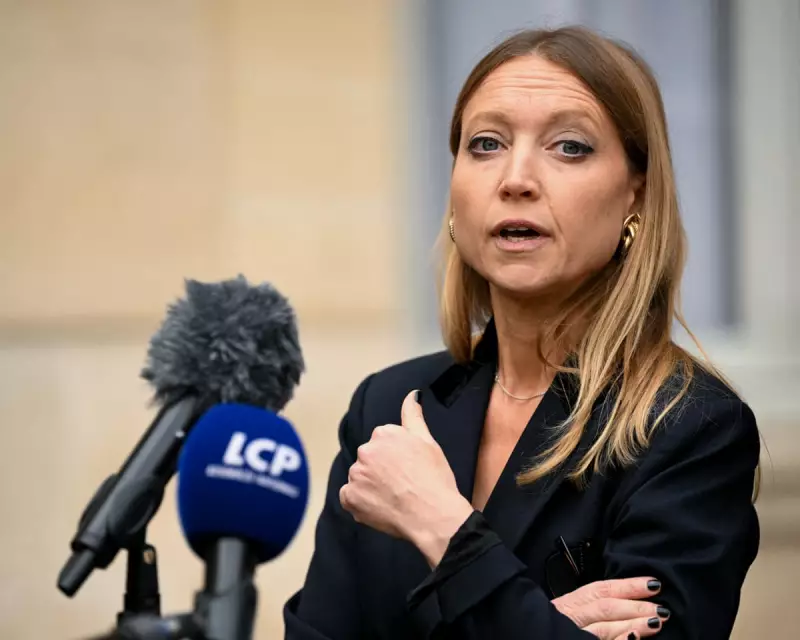
Aurore Lalucq, who chairs the European Parliament's influential economic and monetary affairs committee, sparked widespread concern last week when she highlighted Donald Trump's potential to disrupt Europe's access to international payment systems. Her viral social media post underscored a critical blind spot in Europe's strategic planning.
The reality is starkly clear: the United States maintains direct control over Visa and Mastercard networks, giving it unprecedented leverage over global financial transactions. This power was demonstrated dramatically when Russia faced payment system sanctions following its invasion of Ukraine, leaving ordinary citizens unable to access funds or make purchases.

"Given Trump's stated goal to 'help Europe correct its current trajectory,' the threat is far from theoretical," Lalucq emphasized during recent parliamentary discussions.
India's Blueprint: A Model for European Payments Sovereignty
As European Commission President Ursula von der Leyen visits India this week, experts suggest she should study the subcontinent's remarkable success in building payment independence. India's Unified Payments Interface (UPI) represents exactly the kind of solution Lalucq envisions for Europe.
India's UPI system offers several compelling advantages:
- State-backed universal payment infrastructure requiring no Visa or Mastercard involvement
- Near-zero transaction fees that benefit both consumers and merchants
- Open public standard allowing banks and fintech companies to innovate competitively
- Mobile-first approach that has made digital payments ubiquitous across society
The results speak for themselves: while credit cards' market share in India's digital payments has halved since 2018, UPI now processes billions of transactions monthly with instant bank-to-bank settlement.
The European Challenge: Complexity and Resistance
Creating a European equivalent of India's UPI presents significant hurdles. The EU's institutional complexity, combined with likely resistance from established banks and financial institutions, would test any implementation effort.
Lalucq has already dismissed Europe's existing bank-led payment wallet, Wero, as insufficient because it represents private sector innovation rather than true public infrastructure. "This isn't about improving existing systems," she argues. "It's about fundamental state and bloc autonomy in an increasingly volatile world."
Privacy concerns that emerged during India's UPI implementation would need careful navigation, though Europe's mature data protection framework could provide stronger safeguards than those available in other regions.
Global Context: The New Geopolitics of Payment Systems
Europe's payment sovereignty debate occurs against a backdrop of global competition. China has systematically built a domestically controlled payment ecosystem, while India's UPI represents an open, decentralized alternative that other nations are beginning to adopt.
The strategic implications are profound: payment systems have become instruments of geopolitical influence, with China's Digital Silk Road initiative deliberately locking partner nations into Beijing's technological standards and governance models.
Lalucq's proposal aligns with broader calls for middle-power cooperation, exemplified by Canadian Prime Minister Mark Carney's advocacy for deeper ties between nations seeking strategic autonomy. As the French MEP concludes: "True sovereignty might begin not with grand military alliances, but with how ordinary Europeans pay for their daily purchases."
The coming months will reveal whether European leaders treat payment independence as a technical financial matter or recognize it as the fundamental sovereignty issue Lalucq and her supporters believe it represents.