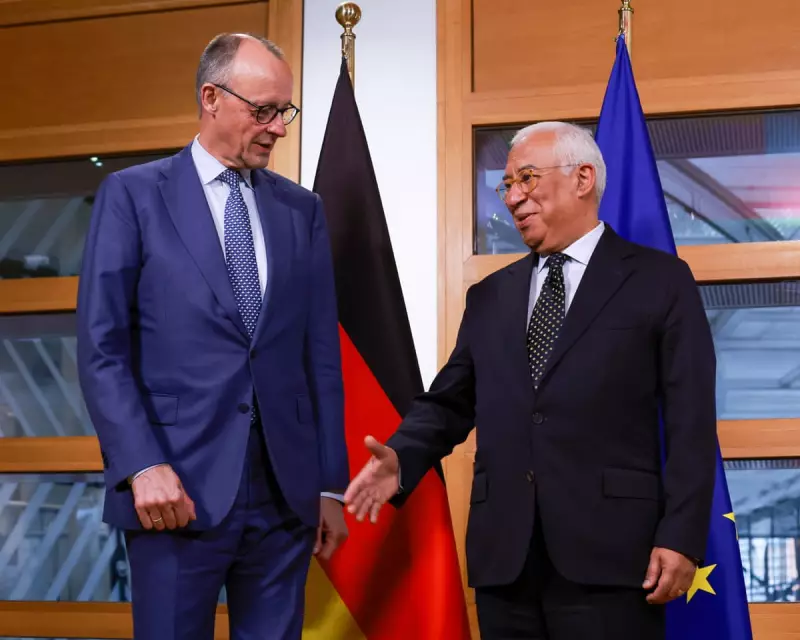
European Union leaders are assembling in Brussels for an informal meeting of the European Council, aimed at addressing the increasingly unpredictable "new normal" in transatlantic relations. This gathering comes after a period of heightened tensions sparked by former US President Donald Trump's threats to impose tariffs on European nations, which were abruptly withdrawn following a vague agreement on Arctic security.
Emergency Summit Proceeds Despite Tariff Retreat
The emergency EU summit was hastily organised earlier this week after Trump announced plans to levy 10% tariffs on eight European countries that had defended Greenland, an autonomous territory of Denmark. Although Trump retracted these tariff threats on Wednesday, EU officials have emphasised that the summit remains crucial for strategic discussions.
A senior European diplomat noted that while Trump's decision to step back from tariffs "evidently changes a little the context of this European Council, it does not remove its interest." The diplomat described the current geopolitical landscape as one of "shifting tectonic plates," where Europeans must demonstrate unity and strength in safeguarding their interests amidst profound global movements involving major military and financial powers.
Reassessing Trade Relations and Response Measures
In response to the recent turmoil, the European Parliament has indicated a willingness to reconsider its decision to freeze the ratification of the EU-US trade deal. This move represents one of the bloc's most robust reactions to Trump's tariff threats to date. Members of the European Parliament had been poised to vote in February on approving zero tariffs for numerous US goods, a key component of the trade agreement signed last summer. However, they paused the process earlier this week in light of the tariff warnings.
Bernd Lange, the German Social Democrat lawmaker who chairs the European Parliament's trade committee, stated that his committee will revisit the issue next week. He stressed the importance of vigilance, remarking, "There is no room for false security. The next threat is sure to come. That is why it is even more critical that we establish clear boundaries, utilise all available legal instruments, and apply them appropriately to the situation."
The EU had been contemplating countermeasures, including imposing duties on €93 billion worth of US goods and deploying its anti-coercion instrument—a powerful economic sanctions tool that would permit the bloc to levy a wide range of penalties on US firms. Even governments within the EU that are typically most aligned with transatlantic interests acknowledged that such responses might be necessary if tariffs were implemented.
Geopolitical Concerns Extend Beyond Tariffs
European leaders have observed with increasing alarm as Trump persistently advocated for a US takeover of Greenland, a move that threatened to fracture NATO and the broader Western alliance. There were fears that failing to resist such an annexation could set a dangerous precedent, potentially legitimising actions like a Chinese seizure of Taiwan or a Russian invasion of Baltic states, thereby undermining the post-1945 rules-based international order.
Although the immediate threat over Greenland has diminished, EU leaders are also expected to express concerns about Trump's proposed "board of peace." This initiative, launched in Davos on Thursday, initially formed part of Trump's peace and reconstruction plan for Gaza but is evolving into an organisation with extensive geopolitical influence under his direct control.
Limited European Support for Trump's 'Board of Peace'
To date, only Hungary and Bulgaria among EU member states have accepted invitations to join the "board of peace," while France, Sweden, along with non-EU nations Norway and the United Kingdom, have all declined participation. An EU official commented, "A very large majority of EU member states have stated they are not in a position to join the board as it currently stands," particularly when questioned about the potential inclusion of Russian leader Vladimir Putin, who is wanted for war crimes in Ukraine.
Putin has yet to confirm whether he will accept the US invitation to join, but he has hinted that he might use frozen Russian assets in Europe—earmarked for Ukrainian reparations—to pay the $1 billion fee required for permanent membership.
Navigating a Complex Transatlantic Future
Summarising the state of transatlantic relations, the EU official described it as a "very strong, but certainly more complex relationship with the United States," characterised by disagreements, tensions, and areas of cooperation. He added, "We must adapt to living with this new complexity," underscoring the need for European unity in facing an unpredictable geopolitical environment.
As EU leaders engage in discussions in Brussels, the focus remains on forging a cohesive strategy to protect European interests while managing the intricacies of this evolving partnership with the United States.