
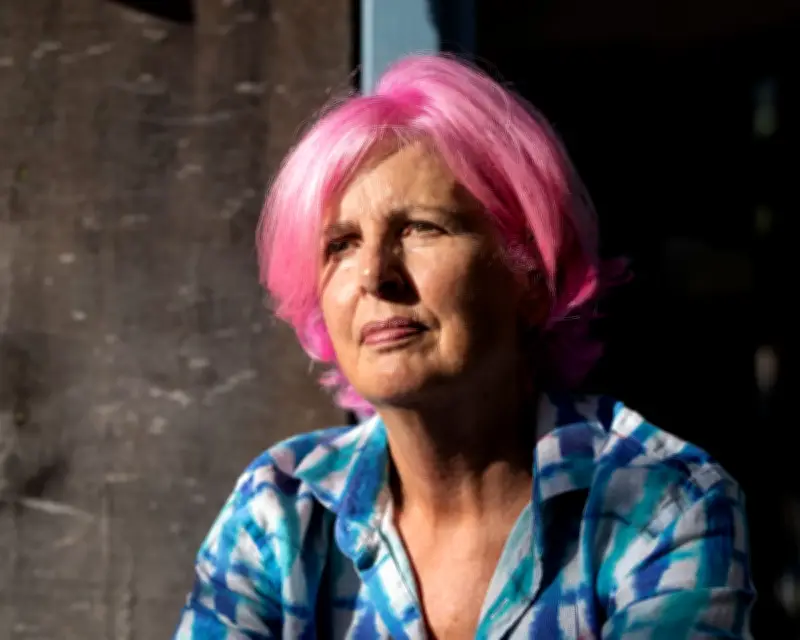
Andy Burnham has vowed to fast-track the Casey Commission, an independent review of adult social care in England, with final recommendations expected by summer 2027. “I think social care in England is as unfair as American healthcare,” Burnham said in a speech outlining his pledge for reform on Wednesday. “The vulnerable pay with everything and it can completely leave them with nothing.”
Mary’s story: Selling the family home for Alzheimer’s care
Mary’s late husband, Richard, was diagnosed with early onset Alzheimer’s disease in 2015 at age 55. She quit her job as a fashion designer to care for him and paid for 15 hours of care a week, costing nearly £27,000 annually. When Richard entered a residential care home in 2024, the couple had to sell their London house to cover £2,000 weekly care bills.
“I’m left with virtually no savings, living on my pension, working a bit and I have very good friends who I rent from,” says the 67-year-old from Kent. She says they worked hard to build a good life, and it was frustrating to give it all up. “I’m a very positive, resilient person but I think I’ve been through a really ugly tunnel with very little help.”
Mary also juggled caring for Richard with daily tasks like shopping and paying bills. While grateful for support from charities like Alzheimer’s Society, she wishes more guidance existed for carers managing finances after a dementia diagnosis. She feels dementia is neglected by the system. “If it is not something you can give a drug to, you’re swept aside. You have to sit quietly until you die and hope your friends and family look after you.”
She now worries about her children’s future. “It’s giving me sleepless nights. My children can’t afford to buy anywhere and when they may need care, they won’t have any savings.” Mary supports paying more tax to fund social care. “We pay insurance for our cars and no one complains. Why can’t we pay insurance to take care of us when we’re older?”
Annabel’s story: High care charges for a son with disabilities
Annabel’s 27-year-old son, Fred, who has Down’s syndrome and is autistic and deaf, lives independently with carer support. North Somerset Council charges him £147.54 weekly from his benefits for care, leaving him with very little. “Fred would be £147 a week better off if he lived in Hammersmith and Fulham, where they don’t charge for home care, and £47 better off in Wales, where the cost cap for care at home is £100,” says Annabel.
She believes the system needs proper government investment. “Charging people on benefits for their care doesn’t seem like a reasonable thing to be doing.” Annabel supports Fred with his phone bill and activities. This year he will run out of his own money, so she will cover all expenses not covered by benefits. “He’s been burning through thousands of pounds of savings from birthdays.”
She worries that working-age adults with serious disabilities receive less attention than older people needing care. She also criticises accusations that young people “scam the system” through disability benefits. “I only know about people like Fred and I know they are not.” Annabel has received advice from charities like Mencap and praises Fred’s carers. She wants social care fully funded like the NHS. She is anxious about the future as her mother, who has dementia, sold her house and moved into a care home, yet Fred cannot provide for himself. “At least she could sell her home. If you are born with a disability, you’re never given the money.”
Jayne’s story: Poor quality care and bureaucratic burdens
Jayne’s daughter Alice, 32, is autistic with complex mental and physical health issues. After inadequate support, Alice initially received home care of “very poor quality with little understanding of her autism.” At 18, Alice was treated in a specialist hospital, then placed in a council-funded residential home in Sussex run by a private provider. “It was horrendous quality, with poorly trained and overworked staff. The place was in chaos,” Jayne says.
“It was clear staff didn’t have adequate training in autism, a lot were agency workers.” Alice was left with trauma and still experiences flashbacks. After being deemed unable to live at home, Alice went back into hospital. Jayne often received calls to collect her daughter, leading to Alice returning home permanently three years ago.
Alice gets 14 hours of home care support but requires 24-hour care daily. Jayne must employ personal assistants alongside caring for Alice and working part-time. “I’ve had to become an employer and do HR which has added to the amount of work that I have to do. I felt I had no choice because of the existing care.” She struggles to access emotional support, with charities overstretched. Her local carers’ support organisation has reduced services, including scrapping counselling and cutting funding for hobbies and trips.
Jayne finds it difficult to talk about her life as a carer. “It breaks you to speak about life as a carer because I don’t want to make her [Alice] feel like it’s her fault.” She wants more cohesion between the NHS and social care. “Instead of being there with our loved ones we are spending so much time managing bureaucracy.” She supports tax increases for social care reform. “We shouldn’t see it as money that results in nothing. We tend to forget about people who have a long-term disability or health issue. There’s an assumption that you’re old and you sell your house to pay for it. It can happen to you at a much younger age.”




