
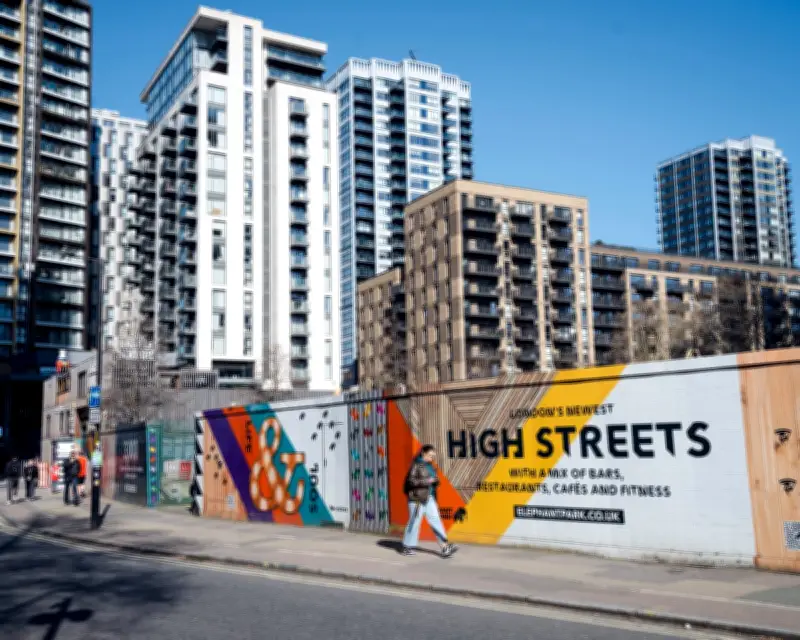
The new £500 million town centre at Elephant and Castle is set to welcome its first commercial tenant this month, but displaced traders argue that promises to allow them to return have been broken, highlighting the area's transformation into what some experts call London's gentrification 'patient zero'.
Displaced Traders Left Behind
Diana Sach, who once employed over 30 people at her Latin American restaurant and delicatessen famous for Peruvian empanadas, now looks longingly at the shiny new buildings that replaced the old shopping centre demolished in 2021. 'I hoped to be part of it. But there has been delay after delay and now I can’t see how it will happen for me,' she said.
Sach is among 90 displaced Latin American businesses that brought colour to the area. They were promised adequate temporary accommodation during construction, but only a handful found viable spaces in a temporary site of metal containers, now set to be dismantled. Many closed due to the difficulty of finding alternatives, compounded by the Covid-19 pandemic.
The New Elephant Development
The Elephant, part of a multi-billion pound reinvention of the area, includes about 40 shops, restaurants, and bars, a cinema, gym, new home for the London College of Communication, 55,000 sq ft of offices, and hundreds of flats. The development replaces the brutalist shopping mall that opened in 1965 and the Heygate housing estate, which was demolished to make way for modern towers surrounding a leafy park.
First tenants include Blank Street Coffee, Marks & Spencer food store, Pret a Manger, Everyman cinema, and DistriAndina, a Latin American supermarket. However, only five of the 40 commercial sites are set aside for local businesses at affordable rents, plus 10 small spaces in railway arches. A food market hall with 14 stalls has no specific provision for former mall tenants.
Affordable Housing Shortfall
Above the shops, there are 485 rental homes across three towers, including just five at social rent, 45 at London living rent, and 124 at discounted market rent. A future phase will add 116 social rent, 12 London living rent, and 37 discounted market rent homes. Critics argue the lack of affordable housing exacerbates gentrification.
Community Concerns
Oli Mould, professor of social, cultural and historical geography at Royal Holloway, University of London, describes Elephant and Castle as 'patient zero of London’s gentrification'. He says the development creates an 'identikit homogeneous gentrified place' that risks destroying community vibrancy.
Get Living, the developer, says it is 'working closely with Southwark council to finalise the affordable retail strategy, with a clear commitment to ensuring that eligible independent traders from the former Elephant and Castle shopping centre are given first priority'. Outgoing boss Rick de Blaby acknowledged a 'decade of destruction' but said 'we have got to make it a place people engage with'.
John Batteson, Southwark council’s cabinet member for climate emergency, jobs and transport, stated it was a 'cast-iron condition of planning permission' that the developer must provide affordable retail space. However, fewer than half of displaced small businesses are being offered new premises, according to Latin Elephant.
Struggling Independents
Even businesses that secured space nearby are struggling. Dario Lopez, an accountant representing Latin American businesses, says Miko, a Venezuelan restaurant, was offered a lease with zero rent in the first year, rising to £3,000 per month. Now, a new landlord wants to double rent to over £6,000 per month. 'The area is still a building site, and in the first five years the developers have failed to invest in anything that will bring people from outside,' Lopez said.
Mould suggests local authorities should consider community-led development, pointing to Brixton traders' efforts to buy their market. 'It might not make as much money short term, but longer term it keeps cultural vibrancy in the area,' he said.




