
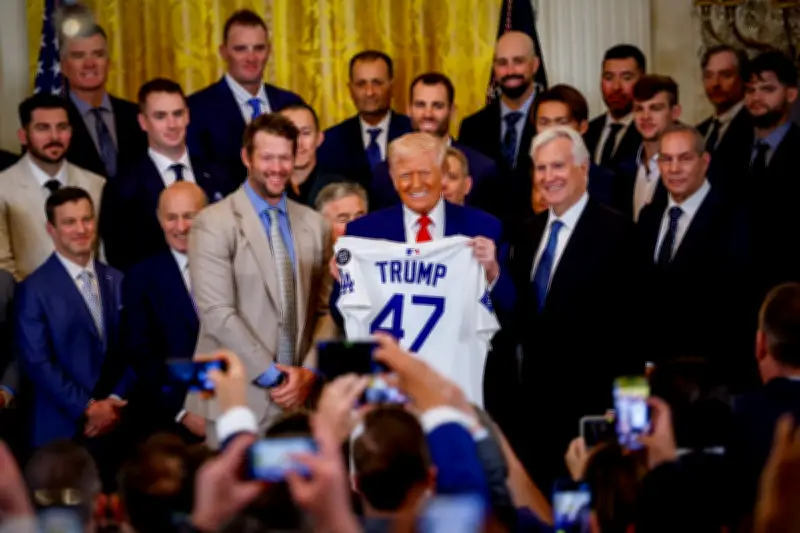
As the Los Angeles Dodgers prepare to visit the White House on Thursday, many of their loyal fans are deeply conflicted. The World Series champions are set to meet President Donald Trump, whose administration has conducted heavy-handed immigration raids in Los Angeles and deployed national guard troops to respond to protests. For Juan, a Dodgers fan of Guatemalan descent, the visit stirs painful memories. His father, a longtime US resident, was deported last year, and he feels the team has not done enough to support its immigrant fanbase.
Mixed feelings among Latino fans
Juan, who asked to be identified only by his first name due to immigration concerns, grew up watching Dodgers games with his family. But after his father's deportation, he stopped attending games. He discovered that Guggenheim Partners, the Dodgers' ownership group, had a stake in the Geo Group, a private operator of immigration detention centers. His family was forced to pay exorbitant fees for basic items while his father was detained. “I don’t think I’ve watched a full Dodger game since,” Juan said. “I don’t want to give my money to an ownership that was profiting off me during a terrible time.”
Team's response to criticism
Under public pressure, the Dodgers told ICE to stay away from Dodger Stadium and pledged $1.1 million to community groups supporting families affected by deportations. They also sold their $12 million stake in the Geo Group, according to Securities and Exchange Commission filings. However, religious and community groups believe the team could do more. Father Brendan Busse of Dolores Mission questioned whether the team prioritizes profit over people. “Are we here to make money off one another, or as a loving community?” he asked.
Players' decisions on attending
Manager Dave Roberts said attendance is up to individual players, noting that White House visits are a tradition. At least two stars will skip the event: Kiké Hernández, who criticized the administration's immigration policies, and Mookie Betts, who plans to spend time with his family. “I’m not trying to make this a whole big deal,” Betts told the California Post. “You don’t get many days off.”
Historical context and broader implications
Natalia Molina, a USC professor, noted that the team's diverse roster—featuring Japanese, Latino, and American players—can promote positive views of other cultures. But she questioned how players can celebrate with Trump. “At the end of the day, it’s jarring to see players smiling with a person who harbors hatred toward our community,” she said. The Dodgers' history in Los Angeles includes building their stadium on land from which Latino families were evicted, adding to the ambivalence.
Hope for symbolic gestures
Some advocates hope the team will use the visit to send a message. Busse suggested that showing up can be a way to assert that the White House belongs to all Americans. Molina warned that even wearing Jackie Robinson's number could be seen as a radical act under this administration. “Once you are in the zone of self-policing, I don’t know how much the visit is about celebration,” she said.




