Denmark Braces for Complex Coalition Negotiations After Inconclusive Election
Denmark is preparing for what promises to be lengthy and challenging coalition negotiations after Tuesday's general election failed to deliver a clear majority for either the leftwing or rightwing political blocs. The political landscape has been dramatically reshaped, with neither bloc achieving the necessary parliamentary seats to form a government independently.
Prime Minister Submits Resignation Amid Electoral Setback
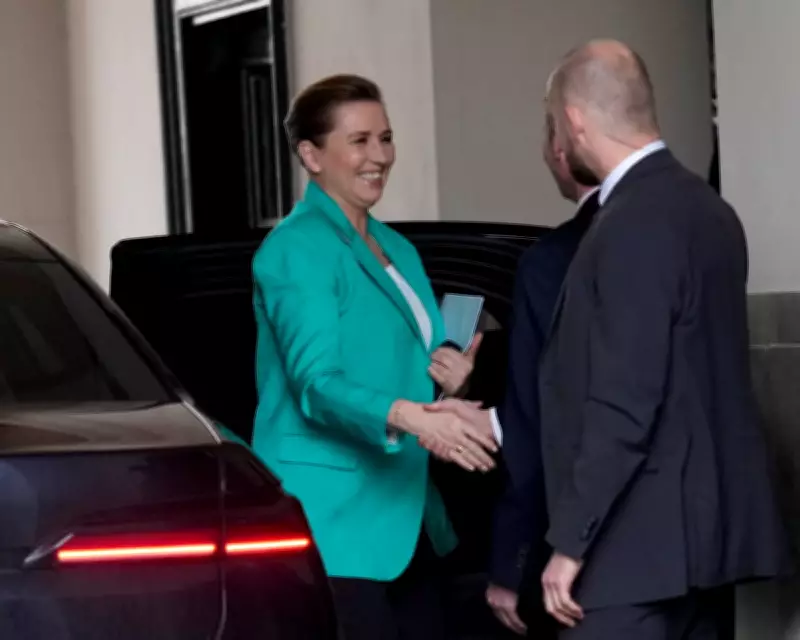
Prime Minister Mette Frederiksen arrived at Amalienborg Palace this morning to formally submit her government's resignation to King Frederik X. This ceremonial yet significant step follows what has been described as a bruising night for her Social Democrat party, which despite remaining the largest party in the Danish parliament, recorded its worst general election performance since 1903.
The Social Democrats' disappointing results came as part of a broader pattern where the left-leaning "red bloc" secured 84 seats while the right-leaning "blue bloc" obtained 77 seats, both falling short of the 90 seats needed for a majority in the 179-seat Folketing, Denmark's parliament.
Moderate Party Emerges as Potential Kingmaker
The political deadlock has positioned Lars Løkke Rasmussen's centre-right Moderates party, with its 14 parliamentary seats, as a potentially decisive force in the upcoming coalition negotiations. Rasmussen, a committed centrist who has twice served as prime minister, now finds himself in what many are calling a "kingmaker" position.
In his election night speech, Rasmussen made a direct appeal to both Frederiksen and Troels Lund Poulsen, leader of the liberal Venstre party, urging them to "come down from the trees" and join him in pursuing centrist political ground. "What is clear – with all conceivable reservations – I think is that there is no red majority to the left of us, and there is no black-blue majority to the right of us," Rasmussen declared to enthusiastic cheers from supporters.
Frederiksen's Determination Amid Political Uncertainty
Speaking at a leaders' debate in Copenhagen on Wednesday, Frederiksen acknowledged that voters had created a "troublesome" party situation but emphasized that "a government must be formed." She noted the pressing international context, stating, "The world is not waiting for us out there, and it has only become even more restless than when the election was called."
The prime minister expressed her intention to explore the possibility of forming a left-leaning government with support from Rasmussen's Moderates, though she stressed that parties must first appoint a "royal investigator" – a traditional Danish political role tasked with exploring potential government formations.
Venstre Leader Rules Out Coalition with Social Democrats
Troels Lund Poulsen, leader of the Venstre party, has firmly ruled out forming a coalition with the Social Democrats, declaring himself still a candidate for prime minister. "We need a new government," Poulsen told supporters, adding, "And that's also why I'm happy that Venstre has become the largest blue party."
This declaration sets the stage for what could be complex three-way negotiations between the Social Democrats, Venstre, and the Moderates, with each party holding different visions for Denmark's political future.
Traditional Process of Government Formation Begins
The royal palace has confirmed that King Frederik X received the prime minister's resignation and will begin meeting with representatives of all political parties elected to the Folketing starting at 1pm Danish time. In a formal statement, the palace noted that after explaining the election results and parliamentary situation, "the prime minister submitted the government's resignation and advised that representatives of the political parties that have been elected to the Folketing should now be given the opportunity to speak about the upcoming government formation."
Throughout Wednesday, parties will arrive at the palace in order of their parliamentary size, beginning with the Social Democrats, to advise the king on who should be appointed as royal investigator. This role, typically held by the person who eventually leads the government, will be crucial in navigating the complex negotiations ahead.
Historical Context and Future Implications
Frederiksen addressed her party at Christiansborg in the early hours of Wednesday morning, acknowledging that the results were "not as good as I had hoped" but describing them as "OK." She reaffirmed her commitment to leadership, stating, "We reach out for responsibility – even when it comes at a price. I am still prepared to take on the job as Denmark's prime minister. There is just no indication that it will be easy."
Political analysts expect coalition negotiations to extend for several weeks as parties navigate the unprecedented parliamentary mathematics and ideological differences. The outcome will determine not only Denmark's domestic policies but also its position on European and international matters during a period of global uncertainty.
The election results represent a significant shift in Danish politics, with traditional party alignments proving insufficient to secure governing majorities. This development suggests potential realignments and new political configurations that could reshape Denmark's governance for years to come.