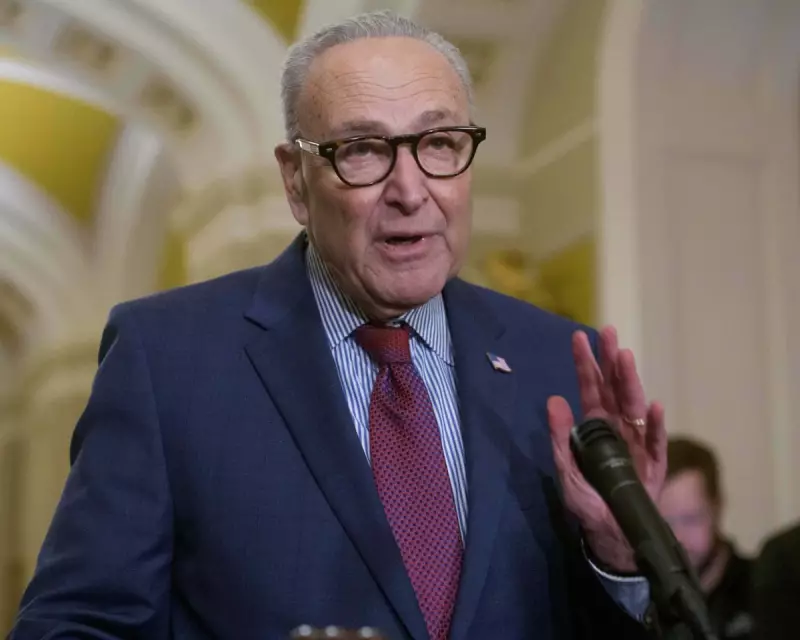
In a dramatic escalation of political tensions, Senate Democratic leader Chuck Schumer has declared that his party will block a critical government funding package unless a substantial $64.4 billion allocation for the Department of Homeland Security is completely removed from the legislation.
Immediate Response to Minneapolis Tragedy
This decisive announcement comes directly in response to mounting anger within the Democratic Party following another fatal incident involving federal officers. Early on Saturday morning in Minneapolis, Minnesota, federal agents violently restrained and then fatally shot US citizen Alex Pretti, sparking widespread outrage and condemnation.
"What's happening in Minnesota is appalling - and unacceptable in any American city," stated Schumer, the senior senator from New York, in an official statement released on Saturday evening. "Democrats sought common sense reforms in the Department of Homeland Security spending bill, but because of Republicans' refusal to stand up to President Trump, the DHS bill is woefully inadequate to rein in the abuses of ICE."

Schumer's Firm Stance on Voting
The Senate leader made his position unequivocally clear, declaring: "I will vote no. Senate Democrats will not provide the votes to proceed to the appropriations bill if the DHS funding bill is included." This firm stance significantly increases the likelihood of another government shutdown as Congress approaches critical funding deadlines.
The funding package in question had already passed through the House of Representatives earlier this week, although Democratic minority leader Hakeem Jeffries had previously indicated that most Democrats would not support the provisions funding Immigration and Customs Enforcement. Despite this opposition, seven Democratic representatives ultimately voted in favour, allowing the legislation to progress to the Senate.
Senate Passage Requirements and Political Dynamics
For the comprehensive funding package to successfully pass through the Senate, it requires sixty votes to overcome potential filibusters and secure approval. With Republicans currently controlling fifty-three seats in the chamber, bipartisan support from Democratic senators becomes essential for the legislation's passage.
The extensive funding package encompasses allocations for multiple government agencies beyond Homeland Security, including substantial funding for the defense, state, education, labor, and transportation departments. Within the DHS portion specifically, approximately $10 billion is designated for Immigration and Customs Enforcement operations.
Growing Democratic Opposition
Following the tragic shooting of Alex Pretti, several Senate Democrats who had previously appeared supportive of the funding package have begun publicly announcing their opposition. Nevada senator Catherine Cortez Masto issued a strongly worded statement condemning the current administration's approach.
"The Trump administration and Kristi Noem are putting undertrained, combative federal agents on the streets with no accountability," Cortez Masto declared. "They are oppressing Americans and are at odds with local law enforcement. This is clearly not about keeping Americans safe. It's brutalizing US citizens and law-abiding immigrants."
Her Nevada colleague, Senator Jacky Rosen, expressed similar concerns through social media platform X, writing: "As a member of the U.S. Senate, I have the responsibility to hold the Trump Administration accountable when I see abuses of power - like we are seeing from ICE right now. That is why I'll be voting against any government funding package that contains the bill that funds this agency, until we have guardrails in place to curtail these abuses of power and ensure more accountability and transparency."
Virginia's Democratic senator Mark Warner added his voice to the growing chorus of opposition, stating plainly: "I cannot and will not vote to fund D.H.S. while this administration continues these violent federal takeovers of our cities."

Broader Implications and Political Standoff
This developing situation represents a significant political standoff with potentially far-reaching consequences for government operations and inter-party relations. The Democrats' united front against DHS funding reflects deepening concerns about immigration enforcement practices and federal overreach in American cities.
As the Senate prepares to vote on the funding package next week, all eyes will be on whether Republican leadership can negotiate a compromise or whether the government will face another potentially damaging shutdown. The tragic events in Minneapolis have clearly reshaped the political landscape, transforming what might have been routine budgetary negotiations into a high-stakes confrontation over immigration policy and federal authority.