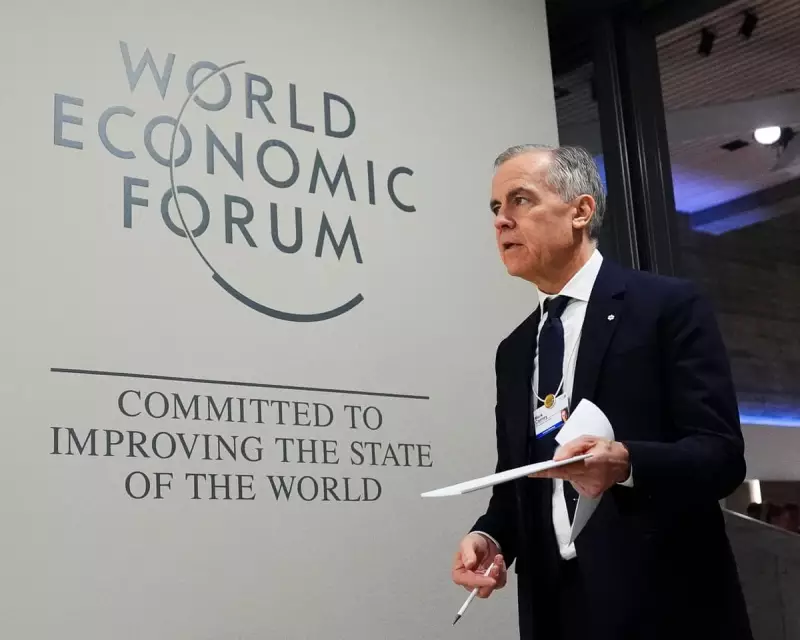
Canadian Prime Minister Mark Carney delivered a sobering assessment at the World Economic Forum in Davos, Switzerland, last week, becoming the first Western head of state to openly declare that the established rules-based international order is fading amidst a profound global rupture. His intervention highlights a growing recognition among global elites that the post-war framework governing international relations is undergoing irreversible transformation.
The Three Pillars of a Declining Order
The rules-based order that has dominated global affairs for decades was built upon three interconnected components. The first was structural, comprising the network of international institutions like the EU, NATO, the UN, the WTO, and the IMF that were designed to maintain political stability, prevent conflicts, and promote mutual economic interests among powerful nations.
The second component involved the normative principles that these countries ostensibly adhered to in both action and rhetoric. This included commitments to avoid aggressive protectionist economic policies against one another, respect territorial sovereignty, and refrain from interfering in each other's domestic affairs.

The Ideological Facade
The third and perhaps most crucial element was the ideological justification that presented these arrangements as being rooted in liberal ideals rather than mere transactional convenience. This framework promoted universal human rights, self-determination, and individual freedoms as its guiding principles.
As Carney acknowledged, this ideological component represented what he termed a "pleasant fiction" that masked the reality of American hegemony. The United States and its allies frequently violated or overlooked international law while maintaining the appearance of coherence, operating under the premise that they sometimes needed to breach the order to preserve it as custodians of global security and moral standards.
The Progressive Unraveling
The "war on terror" marked the first significant challenge to this narrative, demonstrating how powerful nations could justify extraordinary measures including invasions, illegal renditions, and indefinite detentions without due process. While Western publics received reassurances about combating existential threats, the affected populations experienced their lands becoming theaters for foreign military operations with devastating consequences.
The situation in Gaza has accelerated this unraveling, exposing the selective application of international rules. The scale of civilian casualties and humanitarian deprivation, coupled with the diplomatic and military support provided to Israel by its Western allies, has made it impossible to maintain the fiction that the order operates according to universal principles rather than hierarchical privilege.
Institutional Contradictions
Gaza has also revealed internal tensions within the order itself, as some Western nations have found themselves at odds with international institutions they helped create. The refusal to respect International Criminal Court rulings regarding Israeli officials, and in the case of the United States, imposing sanctions on the court, demonstrates how these institutions function primarily as clubs where insiders enjoy immunity.
The most recent development involves the American hegemon turning against the very structures it established, with Donald Trump's administration challenging European allies, NATO, and international trade agreements. This represents a fundamental shift from covert supremacy to overt confrontation, forcing allies to reconsider their relationships with the United States.
The Challenge of Reconstruction
Carney's acknowledgment, while belated from the perspective of those who have long recognized the order's flaws, presents particular challenges for Canada and other close US allies. For nations deeply integrated into American security, economic, and ideological networks, this rupture represents a breach of fraternal compact rather than business as usual.

As custodians of the fading order contemplate what might replace it, they face the difficult realization that much of the existing system retains vitality. Moving beyond the current framework requires not merely foreign policy adjustments but dismantling an entire interconnected system encompassing globalized capital, trade agreements, dollar dominance, and deeply embedded values and norms.
Proposed Solutions and Their Limitations
The solutions currently being discussed – including enhanced coordination among middle powers, increased defense spending, and reduced trade barriers to counter American isolationism – largely perpetuate the security and economic supremacy of the old order. Those seeking liberation from this framework remain constrained by the very structures they helped create and continue to believe in.
The fundamental question facing global leaders is not simply what can be built from the ruins of the old order, but rather how much of that order's assumptions and privileges remain embedded within their own thinking and institutions. The path forward requires confronting not only external geopolitical shifts but also internal contradictions that have long sustained an unequal international system.