Inside the Exclusive World of Davos 2026
This week, the global elite has descended upon the picturesque Alpine town of Davos in Switzerland for the annual World Economic Forum meeting. The event, a magnet for world leaders, billionaires, and influential figures, is unfolding against a backdrop of significant geopolitical shifts and growing public scrutiny.
A Gathering Shrouded in Conspiracy and Change
For decades, Davos has captivated conspiracy theorists who view it as a clandestine hub where wealthy individuals and government officials conspire to control populations. However, the 2026 forum is generating headlines for a more substantive reason: serious contemplation of a new world order. Analysts suggest that the traditional rules-based international system is eroding, largely due to the audacious actions of leaders such as Donald Trump and Vladimir Putin.
This year's discussions are poised to address how these political upheavals reshape global economics, security, and diplomacy, marking a potential turning point in international relations.

UK Representation and Political Dynamics
At the time of reporting, Prime Minister Sir Keir Starmer had no plans to travel to Zurich to deliver a keynote speech, unlike counterparts such as Canadian PM Mark Carney and French President Emmanuel Macron, who have already made impactful addresses. Instead, the UK delegation includes Foreign Secretary Yvette Cooper, Business Secretary Peter Kyle, and National Security Adviser Jonathan Powell.
The most senior UK political figure present is Chancellor Rachel Reeves, who appears to be approaching the forum with a focus on economic deals. A Treasury press release highlighted significant private investments, including £1 billion from pension fund M&G and £500 million from biopharmaceutical firm UCB, underscoring the UK's commitment to fostering business partnerships.
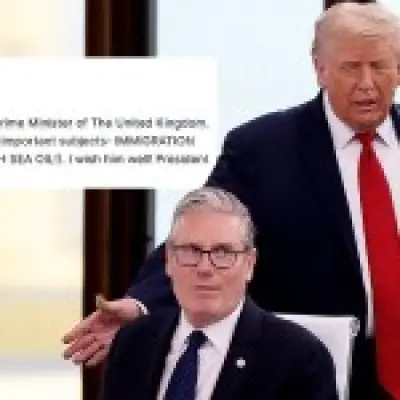
Meanwhile, in Westminster, Starmer used Prime Minister's Questions to assert his stance on international issues, declaring he 'will not yield' to pressure from President Trump regarding Greenland. While not as dramatic as some Davos speeches, this moment was perceived as a critical juncture in UK-US relations, reflecting the broader tensions discussed at the forum.
Protests and Public Backlash
Davos has long attracted protesters aiming to voice dissent directly to the powerful attendees. This year, a group called Everyone Hates Elon made a striking statement by unfurling a 400-square-metre banner on a field beneath the helicopter flight path to Davos. The banner featured images of Elon Musk, Jeff Bezos, and Mark Zuckerberg with the message: 'Hey Davos billionaires: shut up and pay your tax.'
Jason, a spokesperson for the group, explained their motivation: 'We wanted them to realise that they're going to be kind of quaffing champagne and spending a few days talking about solutions, when the real solution is staring them in the face. If they actually just go up and pay their tax, then, you know, that is the solution. That's how we counter poverty around the world. That's how we solve some of our biggest challenges. That's how we tackle climate change.'
In a further act of protest, the group 'hacked' a bus stop advertisement in Davos to read 'Know your parasites: ticks, worms, billionaires,' targeting local residents rather than the private jet class. These actions coincide with a new Oxfam report revealing that billionaires' wealth has surged by 81% since 2020, fueling debates over wealth inequality and tax reforms.
The Historical Context of Davos
Since its inception in 1971, the World Economic Forum has evolved into a symbol of elite convergence, where the wealthy and powerful network over canapés and champagne. Over the past fifty years, it has cultivated a reputation as a venue for discussing strategies to maintain influence and prosperity, often drawing criticism for its perceived exclusivity and detachment from everyday societal issues.
As global challenges like climate change, economic disparity, and political instability intensify, Davos remains a focal point for both high-level dialogue and public activism, highlighting the ongoing tension between global governance and grassroots movements.