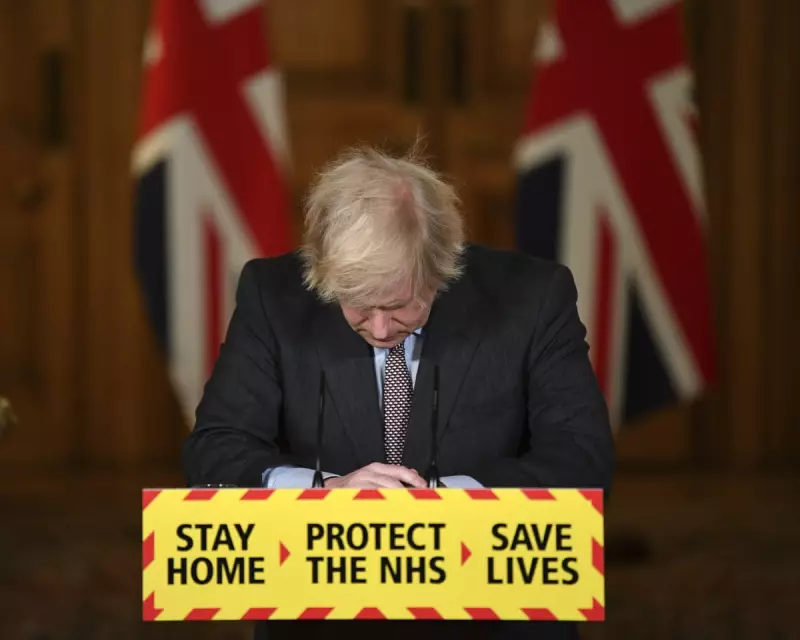
A scathing official report has delivered a devastating verdict on the UK's handling of the Covid-19 pandemic, concluding the response was consistently 'too little, too late' across all four nations.
The inquiry, chaired by retired judge Heather Hallett, found that a culture of toxic chaos inside Boris Johnson's Downing Street directly contributed to catastrophic delays. The report states that imposing a national lockdown just one week earlier, on 16 March instead of 23 March 2020, could have prevented nearly half the deaths in England's first wave, potentially saving 23,000 lives.
A Litany of Failures and Lost Opportunities
The nearly 750-page document paints a grim picture of systemic failure from the pandemic's outset. It singles out February 2020 as a 'lost month', noting with surprise that then-Prime Minister Boris Johnson failed to chair a single Cobra emergency meeting that month.
During the February half-term break, the report reveals Johnson spent the entire week at the Chevening country retreat, receiving no significant briefings on the escalating crisis. This period of governmental paralysis occurred despite mounting international evidence, including the unfolding disaster in Italy, which the inquiry states 'should have prompted urgent planning'.
The situation by mid-March was described as 'little short of calamitous', with no effective testing regime and consequently no understanding of how widely the virus had already spread throughout communities.
Toxic Culture and Flawed Science
The report delivers stinging criticism of the operational environment within Number 10, describing it as toxic and chaotic, a culture which it says the former Prime Minister 'actively embraced'.
This environment, heavily influenced by Johnson's adviser Dominic Cummings, created a 'culture of fear' where the loudest voices dominated and women were frequently sidelined. The inquiry also highlights problematic assurances from then-Health Secretary Matt Hancock, who it notes had a reputation for 'overpromising and underdelivering'.
Scientific advice also came under scrutiny. The report criticises the 'unwise' concept of 'behavioural fatigue' promoted by chief scientific advisers Patrick Vallance and Chris Whitty, noting this theory 'had no grounding in behavioural science' and directly contributed to dangerous delays in implementing necessary restrictions.
Repeated Mistakes and 'Inexcusable' Failures
Perhaps most damning is the finding that the same critical errors were repeated throughout 2020. The inquiry describes as 'inexcusable' the pattern of slow reaction and underestimation that occurred during subsequent waves.
The summer 2020 exit from restrictions is labelled 'unwise', a move pushed in part by then-Chancellor Rishi Sunak. Later that year, all four UK governments compounded earlier mistakes by offering 'false hope' about Christmas relaxation, only to impose last-minute restrictions as cases surged.
The second volume of the report details additional systemic failures, including poor communication of complex localised restrictions, inadequate economic modelling, and insufficient protection for vulnerable groups. It concludes that the UK's pandemic response represents a consistent pattern of inaction despite overwhelming evidence, leaving a legacy of tragic and preventable loss.