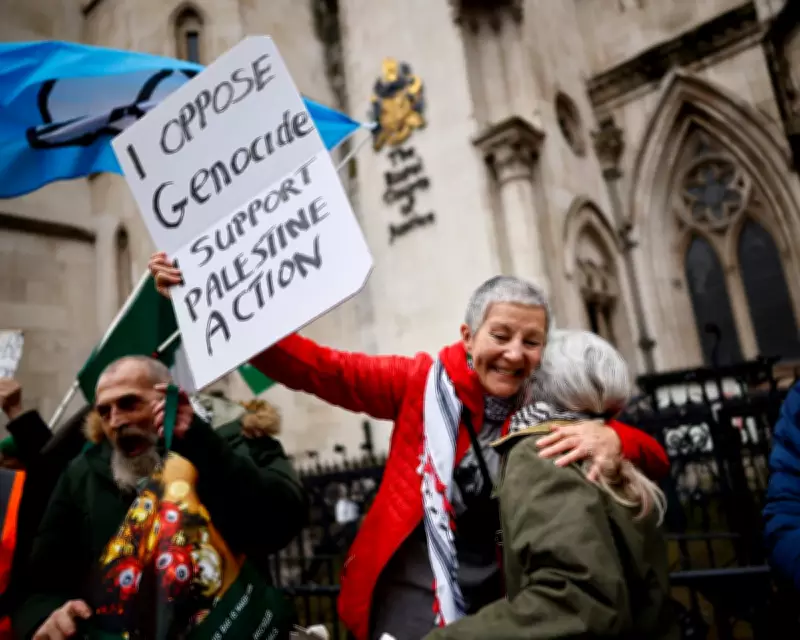
High Court Delivers Historic Blow to Labour's Palestine Action Proscription
In a stunning legal development, the High Court has ruled that the Labour government's decision to proscribe the direct action protest group Palestine Action as a terrorist organization was unlawful. This landmark judgment, delivered on Friday, represents a significant setback for Prime Minister Keir Starmer's administration and has far-reaching implications for thousands of individuals arrested under the controversial ban.
Unprecedented Legal Challenge Succeeds
Palestine Action has become the first group in British history to successfully challenge its proscription under terrorism legislation. The organization, founded in 2020 by Huda Ammori and Richard Barnard, had been placed alongside groups like Islamic State when it was banned last year. This marked the first time a direct action protest group had been prohibited under such laws, triggering what became one of the largest civil disobedience campaigns in modern British history.
The proscription resulted in more than 2,700 arrests across the United Kingdom, with over 500 demonstrators facing charges under terrorism legislation. Many of those detained were pensioners, clergy members, and war veterans holding placards stating: 'I oppose genocide. I support Palestine Action.' These arrests and charges may now be deemed unlawful following the court's decision.

Legal Grounds for the Ruling
The High Court found the government's proscription unlawful on two primary grounds. First, the judges determined that the ban represented a significant interference with fundamental rights to freedom of speech and assembly. Second, they ruled that then-Home Secretary Yvette Cooper failed to properly apply her own policy when making the decision.
According to legal experts, the Terrorism Act 2000 allows proscription for serious property damage linked to ideology, but this application to a protest group surprised many in the legal community. Internal government assessments acknowledged this was a novel use of the law, as Palestine Action was being banned primarily for property damage rather than violence against persons.
Immediate Consequences and Ongoing Uncertainty
Despite the ruling declaring the ban unlawful, Palestine Action remains a proscribed organization for the time being. The prohibition stays in place pending a potential government appeal, creating what the Metropolitan Police described as 'unusual circumstances' that could cause confusion.
The fate of those arrested and charged now hangs in limbo. While the Metropolitan Police has stated it will stop arresting people for showing support for Palestine Action while the legal position is clarified, it may continue gathering evidence for potential future prosecutions. Current Home Secretary Shabana Mahmood has expressed disappointment with the court's decision and indicated the government will appeal.
Political Fallout for Labour
This ruling arrives at a particularly challenging moment for Prime Minister Keir Starmer and the Labour Party. Already facing criticism over leadership and policy decisions, the judgment provides opponents with another example of a high-stakes government decision unraveling in real time.
Yvette Cooper defended her original decision, stating she followed clear advice and recommendations from various agencies and police. She emphasized that the court acknowledged Palestine Action was 'not a normal protest group' and had committed acts of terrorism not aligned with democratic values.
Broader Implications for Protest Rights
The case has raised significant questions about the boundaries of legitimate protest and the application of terrorism legislation in the United Kingdom. Human rights groups and environmental organizations had criticized the ban as an unacceptable impingement on the right to protest.
Huda Ammori described the ruling as a 'monumental victory,' arguing that the group was banned not for national security reasons but because its disruption of Elbit Systems UK - a subsidiary of an Israeli arms manufacturer - had cost the company millions and jeopardized contracts. She claimed the ban has 'massively backfired' and called for its suspension pending any appeal.

What Comes Next
The legal battle is far from over. The government must first obtain permission to appeal, and if granted, the process could take many months to resolve. During this period, the unusual legal limbo will continue, affecting both those already charged and potential future prosecutions.
This case has transformed Palestine Action from a relatively unknown protest group into a symbol of resistance against what critics describe as government overreach. The organization now finds itself at the center of a national debate about protest rights, terrorism legislation, and government accountability that will likely continue regardless of the appeal's outcome.