
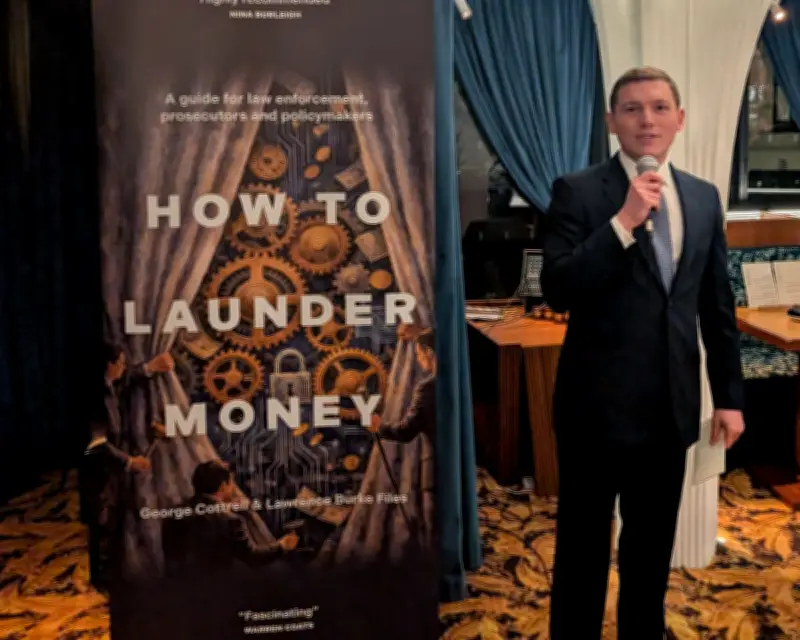
The Guardian's parliamentary sketch writer John Crace has penned a satirical review of George Cottrell's book, 'How to Launder Money', imagining the thinking behind the former Brexit Party figure's controversial publication. Crace's piece highlights the irony of Cottrell, who was convicted for conspiring to launder money, offering advice on the subject.
Global AML Failures Highlighted
Crace notes that anti-money-laundering laws are supposed to stop the illicit flow of money but have had minimal impact. According to the sketch, about 5% of the global economy is illicit, yet only 0.05% is stopped by AML laws. Cottrell is portrayed as a rarity among criminals—the one who actually got caught.
Cottrell's Criminal Past and Book
Crace imagines Cottrell recounting his arrest at Chicago airport after telling undercover US IRS agents he could launder drug money. Cottrell pleaded guilty to wire fraud and served eight months. The book, co-authored with Lawrence, purports to inform authorities but Crace suggests it actually teaches readers how to avoid Cottrell's mistakes.
Satirical Take on Political Finance
The sketch mocks Nigel Farage, referred to as 'Daddy', for receiving a £5m gift from a Thai crypto billionaire shortly after mentioning funding needs for a parliamentary bid. Crace notes the payment was reported to the National Crime Agency (NCA) over money laundering concerns. The piece also references Farage's Cameo videos and the use of shell companies.
Money Laundering Methods Satirized
Crace lists several methods, including buying fake Van Gogh paintings, bribing undercover agents, and becoming prime minister to hand suitcases to Vladimir Putin. Cryptocurrencies are described as 99.9% scams, but Cottrell recommends those endorsed by Kwasi Kwarteng. Donations to Reform UK are questioned due to Suspicious Activity Reports.
Conclusion
The sketch ends with Cottrell advising anonymity in financial dealings, using pseudonyms like 'Graham Cottrell', and losing money on crypto polymarkets. Crace's satire underscores the ongoing challenges in combating money laundering and the opaque nature of political funding.




