Three senior Church of England bishops have issued a powerful condemnation of the UK government's approach to the Israeli-Palestinian conflict, accusing British authorities of fostering a "culture of impunity" that enables Israel's ongoing de facto annexation of the West Bank. The bishops' intervention comes after a recent visit to Palestinian Christian communities in the occupied territory, where they witnessed firsthand the devastating human impact of settlement expansion and systemic violence.
A Pastoral Visit Reveals Humanitarian Crisis
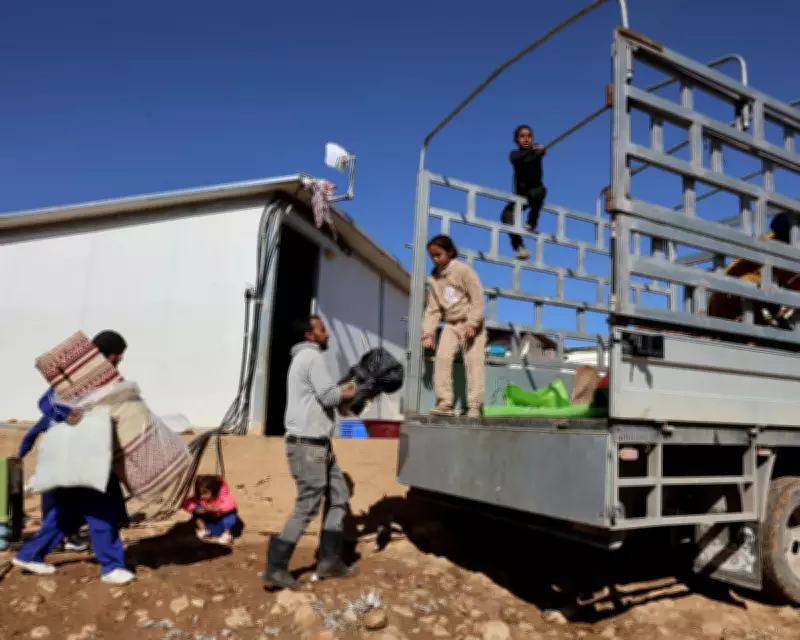
Bishop Guli Francis-Dehqani of Chelmsford, Bishop Rachel Treweek of Gloucester, and Bishop Graham Usher of Norwich traveled to the West Bank last week to meet with Palestinian Christian communities. In a detailed letter published by the Guardian, they describe encountering families "living in fear and torment – an unending nightmare where they are denied any possibility of living with even minimal dignity." The bishops report hearing accounts of people who feel they "have no other choice but to leave [their homes] or to die standing."
Systematic Pressure on Palestinian Communities
The bishops outline what they describe as Israel's intentional strategy to displace Palestinians through multiple coordinated mechanisms. They identify administrative changes, continuous settlement expansion, intensifying violence by Israeli troops and settler militia, road closures, house demolitions, restricted access to water and electricity, legal segregation, and unequal governance systems as key instruments of this policy. Since October 2023, violent attacks by right-wing settlers have accelerated dramatically, with a recent UN report documenting killings, property destruction, livelihood elimination, forced displacement, and community fragmentation.

UK Government Inaction Under Scrutiny
Particular criticism is directed at the British government's failure to publish its legal response to the International Court of Justice's July 2024 advisory opinion, which ordered Israel to end its unlawful occupation of Palestine. The bishops express being "incredulous" at this delay, stating that "this inaction has contributed to a culture of impunity which the Israeli government has used to accelerate its de facto annexation of the West Bank." They contrast this with world leaders meeting in Davos to discuss futuristic Gaza reconstruction plans that they characterize as largely disconnected from the harsh realities on the ground.
Call for International Action
The bishops make an urgent appeal for the international community to "uphold its obligations under international law to protect Palestinians." They specifically call on the British government to immediately publish its response to the ICJ ruling and take all necessary measures "not to render aid or assistance in maintaining the situation created by Israel's illegal presence in the occupied Palestinian territory," as stipulated by the court. Describing the West Bank situation as "a tragedy foretold," they conclude with a moral imperative: "Before it is too late, we must stand up and do the right thing."
The bishops' intervention represents a significant religious voice entering the political debate about UK foreign policy toward Israel and Palestine, highlighting the particular plight of Palestinian Christian communities who face displacement alongside their Muslim neighbors. Their firsthand accounts add weight to existing documentation of systematic pressure on West Bank Palestinians, while their specific focus on British governmental responsibility marks a direct challenge to current policy approaches.