The Unprecedented Social Experiment: Childhood Monetised Online
We are witnessing a colossal social experiment unfolding before our eyes, with an entire generation of children serving as unwitting guinea pigs. From the moment of birth – sometimes even before – their lives are documented, curated, and broadcast to vast online audiences. This phenomenon represents a fundamental shift in how childhood is experienced and commodified in the digital age.
The Instagram Nursery: Childhood as Content
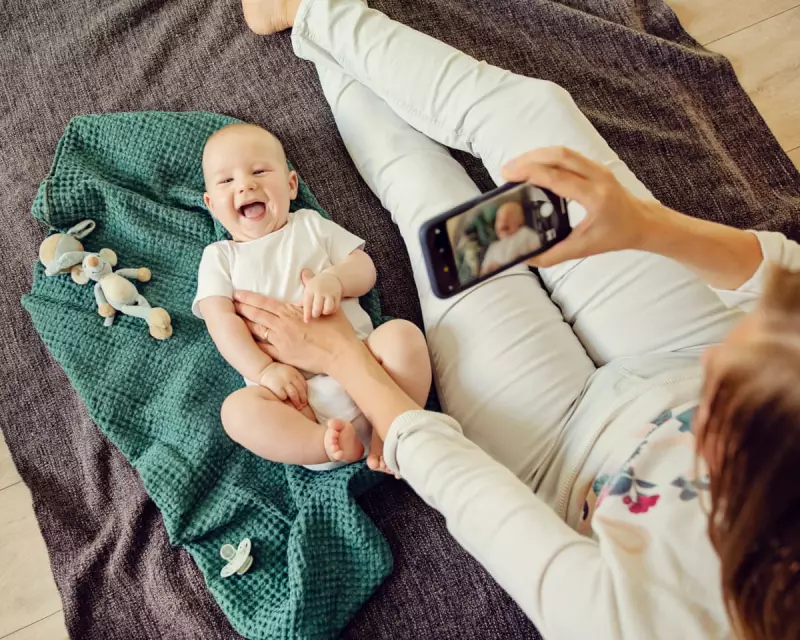
The journey begins before a child takes their first breath. Ultrasound scans are shared with eager followers, while meticulously designed nurseries are presented as advertorial spaces awaiting their tiny inhabitants. The actual birth becomes a public spectacle, with newborns held aloft for the camera while still covered in vernix, their entrance into the world mediated through smartphone screens.
Every subsequent milestone – first smiles, first words, first steps – becomes content to be monetised. Children grow up understanding the black mirror that regularly appears before them, learning to perform for an audience of strangers. Some days they happily engage with the camera; other days they push it away, only to learn that suppressing this natural resistance makes their parents happy. This performance is rarely called what it is – instead, it's marketed as authenticity.

Brooklyn Beckham and Prince Harry: The Canaries in the Coal Mine
While Brooklyn Beckham predates Instagram's dominance, his experience of growing up in the public eye serves as a powerful warning. The Beckham family's approach to monetising their children's lives has paved the way for today's influencer parents, normalising what should be considered extraordinary violations of privacy.
Prince Harry represents another casualty of this system – men who have struggled to construct their identities under constant public scrutiny. Their attempts to articulate the psychological damage caused by this exposure are often met with accusations of ingratitude, as if fame and fortune could possibly compensate for a stolen childhood.
The Psychological Cost of Constant ObservationWhat does a child truly need? The fundamentals remain unchanged: nourishment, love, attention, interaction, and safety. Nowhere on Maslow's hierarchy of needs will you find "brand partnerships" or "social media followers." Constant documentation deprives children of the essential freedom to develop without self-scrutiny, a cornerstone of psychological wellbeing that carries into adulthood.
The Wholesome Facade and Hidden Dangers
Much of this content appears deceptively wholesome – matching pyjamas, birthday celebrations, beach outings, and family dances. Even moments of vulnerability, tears, and tantrums are shared under the guise of authenticity and teachable moments. While extreme cases like YouTube vlogger Ruby Franke represent shocking exceptions, any influencer who centres their children in their content operates on the same continuum of exploitation.
The public has become increasingly inured to this mass monetisation of childhood, often failing to recognise the fundamental violation occurring. Watching other people's children online has been normalised, with spectators justifying their consumption by noting that "the children seem happy enough."
The Inevitable Backlash: When Children Speak Out
A painful reckoning awaits these parents when their children inevitably find their voices. Brooklyn Beckham's public denunciation of his family's system represents just the beginning of what could become a #MeToo moment for the children of celebrities and influencers. The psychological damage claimed by those who grew up in the public eye should serve as a stark warning to today's Instagram parents.
A Call for Conscious ConsumptionEven those who recognise the problem aren't immune – many of us have shared photos of our children online or followed accounts that make us uneasy. The solution begins with examining that discomfort and taking action: pressing unfollow, locking accounts, and reconsidering what we normalise through our consumption. This isn't about perfection but about awareness and change.

We stand at a critical juncture in human history, where children's right to privacy has never been so systematically violated by the very adults entrusted with their protection. Everyone who engages with this content – whether as creator or consumer – bears some responsibility. The experiment continues, but the subjects are beginning to speak, and their voices will only grow louder.