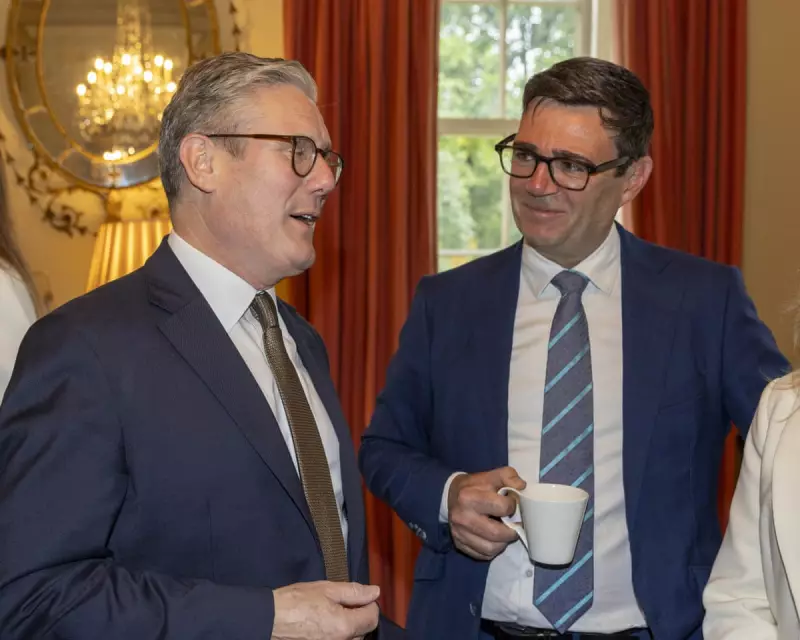
Manchester Mayor's Parliamentary Ambition Fuels Labour Tensions
The political landscape within the Labour Party has been dramatically reshaped by Manchester Mayor Andy Burnham's audacious bid to return to Westminster. His application to stand in the crucial Gorton and Denton byelection has been widely interpreted as the opening gambit in a potential challenge to Keir Starmer's leadership, sparking immediate countermeasures from the Prime Minister's closest allies.
The 'Stop Andy' Campaign Emerges
Within moments of the byelection being confirmed, Starmer's supporters launched what has become known as the 'Stop Andy' campaign. This coordinated effort aims to prevent Burnham from securing the Labour nomination, with party machinery tightly controlled by Morgan McSweeney, Starmer's chief of staff. The resistance highlights deep concerns within Number 10 about Burnham's ultimate intentions.
Party insiders point to significant practical obstacles, particularly the substantial financial implications. A mayoral byelection campaign in Greater Manchester would require approximately £500,000 of party funding to be diverted from other crucial races across Britain. "That alone should be enough to say no," revealed one National Executive Committee source, emphasising the resource allocation dilemma facing Labour decision-makers.

Burnham's Assurances Meet With Scepticism
In his carefully timed letter to Labour's ruling National Executive Committee, Burnham directly addressed leadership speculation. "I would be there to support the work of the government, not undermine it, and I have passed on this assurance to the prime minister," he stated unequivocally. However, these assurances have been met with considerable scepticism across Westminster corridors.
One serving minister expressed widespread doubt: "If anyone believes he's doing it to support rather than undermine the government, I have a bridge to sell them. The NEC should just make the argument that we all know what Andy is up to and they won't stand for it." This sentiment reflects broader concerns about Burnham's long-term ambitions within the party hierarchy.
Historical Parallels and Political Calculations
Several Labour MPs have drawn striking parallels with Boris Johnson's political trajectory. The former Conservative leader similarly re-entered Parliament through a byelection while serving as London Mayor, consistently denying any leadership ambitions before systematically undermining subsequent prime ministers to eventually reach Downing Street. This historical precedent has heightened anxieties among Starmer's supporters.
Despite this resistance, Burnham commands significant support from influential party figures. His backing includes Deputy Leader Lucy Powell, her predecessor Angela Rayner, former leader Ed Miliband, London Mayor Sadiq Khan, the two largest trade unions, numerous sitting MPs, and substantial party membership. This powerful coalition could create significant internal discord if Burnham's candidacy were to be blocked by the NEC.
Electoral Challenges and Regional Popularity
Even if Burnham secures the Labour nomination, substantial electoral hurdles remain. The Gorton and Denton contest could feature challenges from Reform UK candidates, pro-Gaza independents, and potentially even Green Party leader Zack Polanski, who is reportedly considering standing. This crowded field complicates what might otherwise appear a straightforward Labour victory.
Burnham's regional popularity, however, represents a significant asset. Known affectionately as the 'King of the North', his approval ratings in the northwest stand at an impressive +25 according to recent Ipsos research. This makes him the only politician with positive ratings in the region, contrasting sharply with Nigel Farage's -29 and Keir Starmer's -40. This regional strength could prove decisive in both the byelection and any future leadership contest.

Leadership Dynamics and Party Unity Concerns
The potential for a leadership challenge creates complex dynamics within Labour. While many MPs express growing despair about Starmer's ability to reverse declining poll numbers, the Prime Minister's operation has been actively working to shore up support since autumn. Starmerites argue that attempting to remove their leader during a period of global instability would be profoundly unwise, emphasising the vast difference between running a city region and governing a nation.
Lucy Powell, one of Burnham's closest allies, addressed these tensions in her recent Fabian conference speech. "I've been saying openly and publicly over the last few weeks that people have got to get behind Keir Starmer," she told delegates. "We are one Labour team, and I don't want to see this byelection emerge into more infighting and talking about ourselves." This plea for unity received the loudest applause of her address, highlighting widespread concern about internal divisions.
Another significant factor that could ultimately protect Starmer's position is the fear among MPs that a leadership coup less than two years after winning a substantial majority would damage Labour's credibility. The prospect of mirroring the Conservative Party's instability—with five prime ministers in under a decade—alarms many within the parliamentary party who remember the electoral consequences of such perceptions.
The upcoming May elections represent the next critical moment for Starmer's leadership, with potential losses creating further vulnerability. Should Burnham successfully return to Westminster, he would be strategically positioned to capitalise on any significant setbacks. The political chess game within Labour continues to unfold, with the Gorton and Denton byelection serving as the opening move in what could become a much larger contest for the party's future direction and leadership.