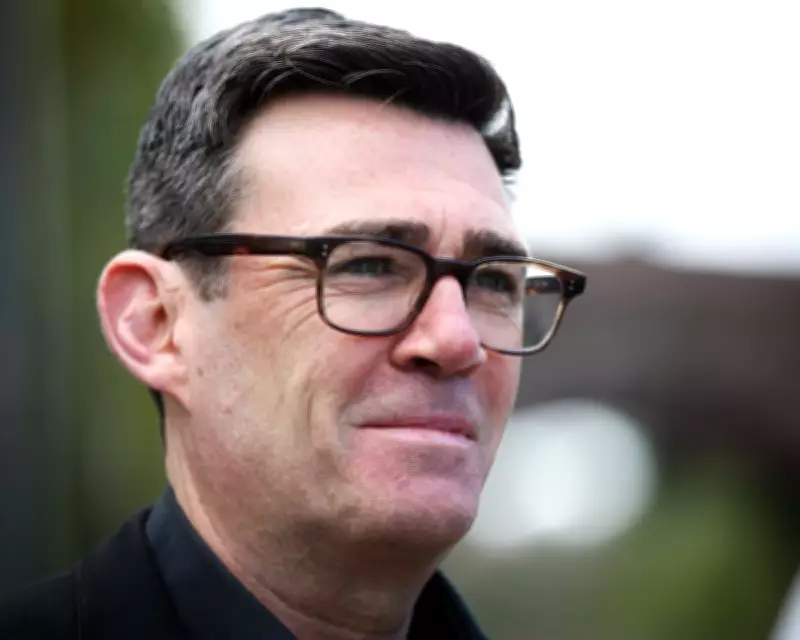
Burnham's Revolutionary Vision: A Direct Challenge to Thatcherism and Westminster Politics
In a bold move that signals a seismic shift in British political discourse, Greater Manchester Mayor Andy Burnham has unveiled a revolutionary plan aimed at fundamentally reshaping the United Kingdom's economic and political landscape. His proposal represents a direct challenge to the legacy of Thatcherism, advocating for a restoration of politics at the very heart of economic decision-making. This intervention comes at a critical juncture, as the nation grapples with profound stagnation and a pervasive crisis of public trust in its leadership.
The Crisis of Leadership and Economic Stagnation
Prime Minister Sir Keir Starmer finds himself in an increasingly precarious position, with personal approval ratings plummeting into deeply negative territory. Historical patterns suggest that recovery from such lows is exceptionally rare, typically requiring either a dramatic economic rebound, a complete political reset, or a catastrophic collapse of the opposition. Instead, Sir Keir has responded to sliding support with defiant rhetoric, a strategy that risks being perceived by voters as denial rather than strength.
The broader economic context exacerbates this leadership crisis. According to recent analysis from the Resolution Foundation, living standards in Britain are projected to grow by a mere 0.3% annually until 2029-30. This sluggish growth rate is even weaker than the 0.4% annual increase recorded over the previous decade, a period that included the unprecedented disruptions of the COVID-19 pandemic and a severe global energy crisis. Under Sir Keir's stewardship, the UK economy is now forecast to expand more slowly during so-called normal times than it did during these national emergencies.

A Coalition of Dissent: Challenging the Status Quo
This economic stagnation has exposed the fundamental inadequacy of the current governing model, prompting interventions from across the political spectrum. Liberal Democrat Treasury spokesperson Daisy Cooper has called for a radical shake-up of Whitehall, proposing the breakup of the Treasury and its replacement with a new Department for Growth based in Birmingham. This department would assume responsibility for setting fiscal policy, potentially creating space for productive public investment with an acknowledgment that fiscal deficits may be necessary to rebuild social democratic institutions.
Meanwhile, the Green Party, buoyed by Zack Polanski's surge in support, has made radical economic discourse increasingly respectable. The Greens are pushing aggressive redistribution policies as part of a wider revolt against Britain's entrenched economic model. This growing chorus of dissent highlights the political dangers of persistent cost-of-living pressures and a status quo that is clearly failing to deliver for ordinary citizens.
Burnham's Constitutional Revolution
Andy Burnham's proposal, however, stands out as the most comprehensive and revolutionary vision. Having been effectively sidelined from Westminster politics after his path back was closed by Sir Keir Starmer, Burnham now operates with considerable freedom to speak truth to power. His plan logically implies an enhanced constitutional role for metro mayors like himself, positioning them as key players in a reconfigured United Kingdom.
At the heart of Burnham's revolution is a call for sweeping electoral reform, including the abandonment of the parliamentary whip system and the replacement of the House of Lords with an elected senate representing the nations and regions of the UK. He argues that such a new political settlement is an essential precondition for achieving meaningful public control over essential services like housing and utilities, which he believes would reduce costs and support productivity growth.

A New Vision for British Governance
In Burnham's envisioned future, the national government would retain responsibility for setting the macroeconomic framework, while regions would gain control over critical infrastructure and housing policy. The proposed elected senate would serve as a crucial safeguard for territorial interests, creating a more balanced and representative system of governance. This represents a dramatic departure from today's Treasury-dominated unitary state, offering what many would consider a welcome and necessary alternative.
As Britain approaches a potentially transformative Manchester byelection in what was once considered a safe Labour seat, these debates about economic models and political structures have become inescapable. From Labour's soft left, Andy Burnham offers structural overhaul; the Liberal Democrats promise a new growth engine; and the Greens push for aggressive redistribution. Meanwhile, Sir Keir Starmer's Labour government appears trapped inside a failed model rather than working to replace it—a position that looks increasingly politically fatal as public trust continues to erode.