
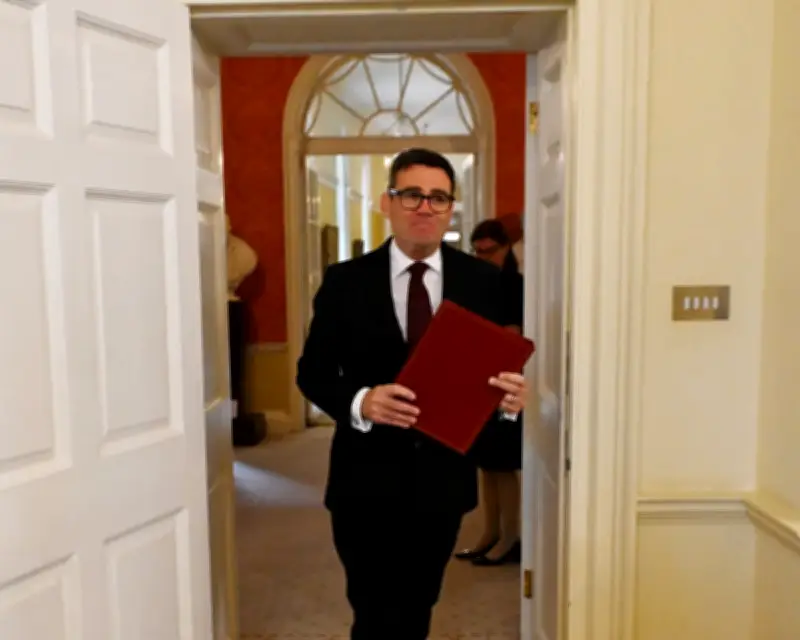
Prime Minister Andy Burnham is under mounting pressure to explain how he will pay for his policy pledges as he implored his new cabinet to examine “all possible ways” to tackle the cost of living crisis. On his first full day in power, Burnham faced questions about funding the removal of VAT from electricity bills and an expected uplift in defence spending – an issue that led his new chancellor, John Healey, to resign as Keir Starmer’s defence secretary last month.
Cost of living measures announced
Sources say measures to ease the cost of living will include reducing the national bus fare cap by a third, from £3 to £2, with the prime minister set to announce the move on Wednesday. The Guardian has also learned Burnham plans to accelerate the timetable for implementing his promise to roll out a national care service, a move that could cost further money before the election.
Gathering his cabinet in Downing Street for the first time, Burnham told ministers his would be a “cost of living government”, adding that his priority would be to make life cheaper for voters – albeit within existing borrowing rules. “What can we do just to take that little bit of pressure off people’s shoulders, just to give them that little extra sense that help is coming so that they can have that bit of hope that things are getting better?” he asked colleagues. “And that’s the mission that we’ve got to set ourselves together.”
VAT cut and funding questions
Burnham began the process on Tuesday morning with an announcement that VAT would be removed from electricity bills from 1 October, reducing the electricity price cap by £45 at a total cost of £850m next year. No 10 has ruled out using defence bonds to pay for higher military spending.
However, Burnham’s promise to pay for the VAT cut by scrapping the government’s digital ID scheme was immediately called into question by Darren Jones, the minister in charge of the policy until recently, who said the money for that scheme had not yet been identified. “The DigitalID program was unfunded,” he posted on X on Tuesday. “The government will have to set out how it will pay for its new policies at the budget.”
Downing Street said on Tuesday that the tax cut was funded for the next financial year, but money would have to be found in future years from existing departmental budgets, suggesting spending cuts to come. No 10 has also ruled out using defence bonds to pay for higher military spending.
Wider disquiet and reshuffle
The intervention from Jones came amid wider disquiet among allies of Starmer over Burnham’s pledge to end factional infighting, after more than half of the outgoing prime minister’s cabinet were removed or demoted in Monday’s reshuffle. One outgoing official said: “It’s less a purge of Starmerites than getting rid of people who were loyal to a Labour leader, while promoting people who were serially disloyal. That’s a dangerous message to send your MPs.”
Burnham is set to continue making ministerial appointments this week, including giving the Scottish Labour leader Anas Sarwar a seat in the Lords and a job in the business department. Sarwar was the first major Labour figure to call for Keir Starmer to resign as prime minister earlier this year.
Social care service plans
Sources have told the Guardian Burnham is now working on a major social care announcement in the coming weeks as he looks to begin laying the groundwork for a social care service before the election. This would involve bringing forward the review of social care by Louise Casey, who is due to report by 2028, but is now likely to do so as soon as next year. Those consulted on the policy say Burnham will give Casey scope to work up a range of options, including a new national service funded by taxes or a social insurance model that could see social care costs capped for a limited period of time.
They admit, however, that any funding model is likely to trigger a political backlash with previous proposals having been abandoned amid a storm of controversy about the prospects of a new “death tax” being used to pay for them. Burnham told reporters this week: “I am ready to use some of my political capital on this issue … I would not want to leave office having done what Westminster has done, not just for 15 years – actually, I think you’re getting close to 30 years. It’s not defensible. How many people have lost their homes and their savings in that time? We need to face it and fix it.”
Fiscal constraints and tax plans
Burnham admitted on Tuesday that he would face financial constraints as he looks to both ease the cost of living for voters and implement lasting social reforms. “We have got to show fiscal discipline, we have got to show our commitment to the fiscal rules is real,” he told his cabinet. As a result, allies say he has abandoned a nascent plan to raise the threshold at which workers start paying income tax, which has been frozen for several years.
The prime minister told the Times this week the issue had come up more than any other during the Makerfield byelection, but he is now understood to have dropped expensive plans to reverse the policy. This could have involved increasing the top rate of income tax to pay for it, but Burnham’s advisers believe this could be seen as a violation of Labour’s manifesto pledge not to raise income tax, national insurance or VAT.
Future plans and relocation
Burnham will spend the end of the week in Manchester, with the government encouraging civil servants working on growth to move to the city. A spokesperson said there would be relocation packages on offer for anyone choosing to do so.




