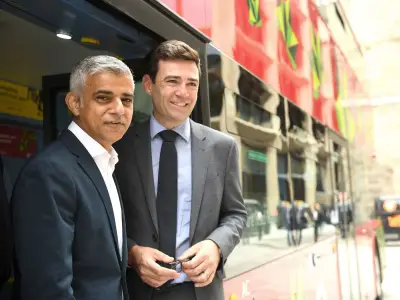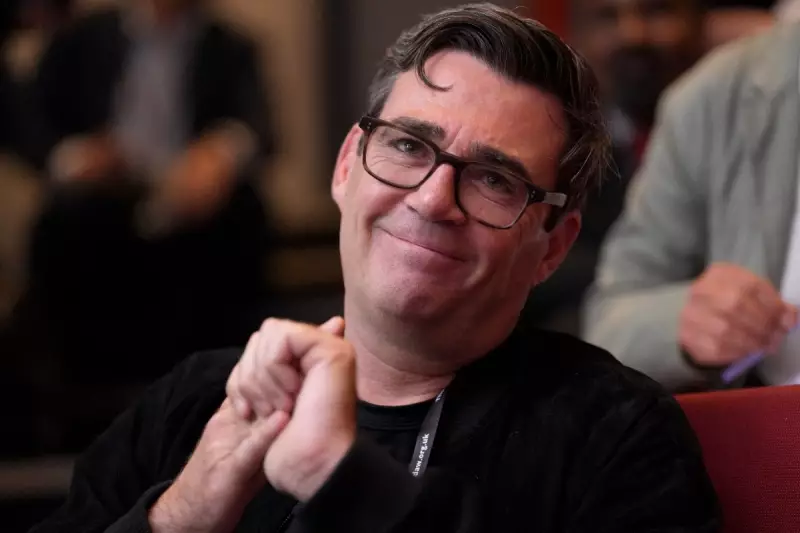
Burnham's Blocked Bid Exposes Labour's Deepening Leadership Crisis
The strategic decision to block Andy Burnham's candidacy in the Gorton and Denton by-election represents far more than a procedural disagreement within Labour's National Executive Committee. This move has inadvertently transformed a local contest into a comprehensive stress test of Prime Minister Keir Starmer's authority, exposing significant vulnerabilities at the heart of his leadership.
A Self-Inflicted Wound That Signals Weakness
British voters possess considerable political acumen, and they recognise that Starmer's perceived vulnerability has triggered this entire debacle. Avoiding direct confrontation does not resolve underlying tensions; rather, it broadcasts weakness to both internal factions and external opponents. Every rival within the Labour Party, every dissenting faction, and every political adversary now has increased incentive to test the Prime Minister's diminishing grip on power.
Political leaders maintain authority only when they successfully aggregate and consolidate power. Leaders facing deeply negative personal approval ratings, while being held responsible for one of the most dramatic polling declines experienced by a new government in recent history, find themselves holding remarkably few strategic cards. The situation presents Starmer with an unprecedented challenge at this historical juncture.

The Fragmented Political Landscape
Rather than operating within a traditional two-party system, Labour now confronts a fragmented multi-party political environment. This requires the "agent of change" to fight simultaneous battles on multiple fronts, stretching resources and diluting messaging. Polling expert Peter Kellner has noted that while four governments have recovered from similar polling declines to win subsequent elections, such dramatic turnarounds typically necessitate substantial "change"—either through dramatic external events or, more perilously for Starmer, through leadership replacement.
Kellner argues that only genuine risk-taking and political belligerence can deliver the transformative "wow" factor that might constitute a political Hail Mary pass. Months spent mired in internal Labour politics and procedural skirmishing over selection rules will not achieve this necessary breakthrough.
Burnham's Stealth Leadership Pitch
Meanwhile, Andy Burnham continues to advance what amounts to a stealth leadership campaign. His letter requesting permission to stand reads like a comprehensive political manifesto, featuring romantic invocations of historical Manchester, populist turns against Westminster establishment politics, acknowledgments of progress made, and confident declarations about electoral viability. Blocking his candidacy does not silence this message; if anything, it amplifies its resonance and provides Burnham with additional political capital.
The Manchester Mayor will undoubtedly continue prosecuting his distinctive "Manchesterism" message, encouraging other potential challengers to articulate their alternative visions for the party's future. Whether these voices belong to Wes Streeting, Angela Rayner, or other prominent figures, they risk eclipsing a Prime Minister who has never fully mastered the art of political theatre or the bully pulpit.
The Technocrat in a Gladiatorial Arena
The barrister who excelled in technical legal argument has always appeared more comfortable with written articles than television interviews, with policy detail rather than rhetorical flourish. In a political moment demanding compelling narrative and dramatic presentation, Starmer has brought a technocratic quill pen to what has become a bloody gladiatorial arena. Hiding behind Labour's internal rulebook may secure this particular procedural victory, but it simultaneously invites broader rebellion and erodes party discipline.
Party machines can be temporarily subdued and managed, but they can never be completely tamed into permanent submission. Dissent will be registered, grudges will be banked for future settlement, and overall discipline will continue to erode. The current machinations represent merely the prelude to deeper fractures that could eventually accelerate the timetable toward an early general election.

Strategic Consequences and Electoral Risks
In the immediate term, this internal chaos hands valuable momentum to Labour's political adversaries. One argument against Burnham's candidacy suggests the Manchester mayoralty could fall to Reform UK, but defining a governing party's strategy primarily through fear of opponents represents a fundamentally losing posture. It cedes initiative and allows others to set the political narrative.
With rumours circulating that Zia Yusuf might run for Reform UK, and bookmakers placing the Greens in pole position for certain contests, the Gorton and Denton by-election risks becoming a proxy battle for the next general election: Reform versus Greens, with Labour squeezed into electoral irrelevance. If this by-election occurs before Scottish, Welsh, and local elections, it could generate dangerous momentum for Labour's rivals at precisely the worst possible moment.
A National Referendum on Labour's Direction
This will not be a quiet, localised contest. It has become a national referendum on Labour's strategic direction, Starmer's personal authority, and the viability of a fragmented political left. Starmer's attempt to block a rival and draw a line under what he termed "psychodrama" has instead deepened the crisis considerably.
While Kemi Badenoch benefited from ousting Robert Jenrick after his defection to another party, the Prime Minister faces a more complex challenge. The leader of the opposition must maintain party unity, but the Prime Minister must accomplish far more substantial governance. Starmer should theoretically possess sufficient confidence to welcome talent to his parliamentary benches, rather than burning through his remaining political capital fending off internal rivals.
Politics is ultimately won through narrative control, momentum generation, and dominance of the public conversation—not through procedural victories in rulebook skirmishes.
Broader Implications for Political Stability
Financial markets should take careful note that significant political instability continues building beneath the surface. The Bank of England is widely expected to maintain unchanged interest rates during its upcoming meeting, with policymakers adopting a cautious stance while domestic and global political uncertainty plays out. While gilt auctions may proceed without immediate incident, and other countries demonstrate more immediate political risks, bond markets remain central to questions of fiscal sustainability.
By blocking Andy Burnham, Labour has elevated the Gorton and Denton by-election beyond a simple local contest. It has become a comprehensive national stress test of Keir Starmer himself, posing the inevitable and uncomfortable question: if Labour genuinely requires substantial change to recover politically, is Starmer the leader who can deliver that transformation, or has he become the obstacle that must be removed to enable renewal?