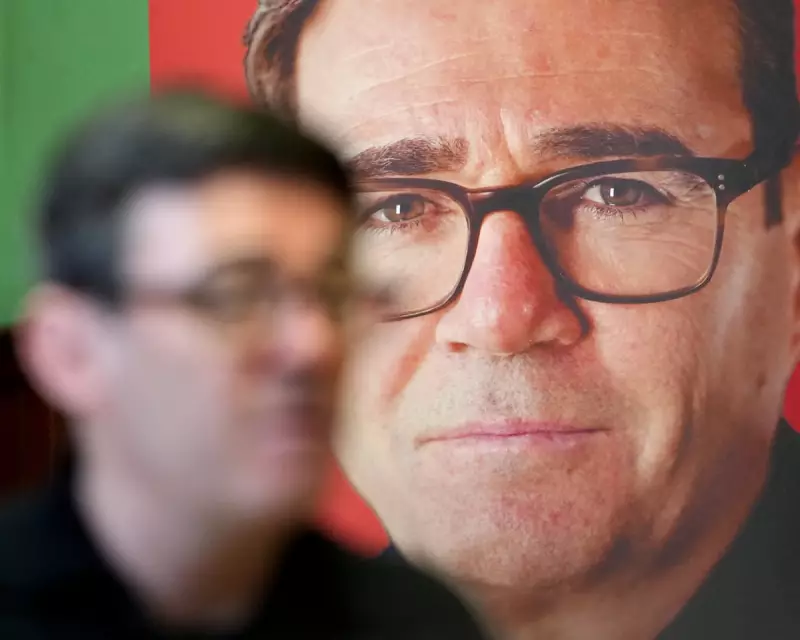
In a significant political development, Andy Burnham, the Mayor of Greater Manchester, has formally applied to stand as the Labour Party's candidate in the forthcoming Gorton and Denton byelection. This move marks a potential return to Westminster for Burnham, who left Parliament nearly a decade ago to focus on regional leadership.
A Difficult Decision with Clear Reasoning
In a detailed letter addressed to the chair of Labour's National Executive Committee (NEC), Burnham described this as a "difficult decision" that required careful consideration of both party and regional interests. He emphasised that nobody anticipated a byelection at this time, but he believes the moment demands a robust defence of Labour's principles and Manchester's longstanding achievements.
Burnham articulated that Manchester has historically championed equality, citing the 1862 cotton workers who refused to handle slave-picked cotton as a foundational example. He stated, "In my time as mayor, I have drawn strength from that tradition and worked hard to unite people."

Confronting a Direct Threat to Manchester's Values
The mayor expressed concern about a "brand of politics which seeks to pit people against each other," describing it as a poison that threatens Greater Manchester's core identity. He views the byelection as the frontline in a battle to preserve the "Manchester way" of togetherness and progress.
Burnham wrote, "I feel I owe it to a city which has given me so much to lead it from the front, despite the risks involved." He pledged that, if permitted to stand, his campaign would be hopeful and unifying, focusing on positive achievements while addressing public alienation from politics.
Reflecting on Westminster and Regional Leadership
Burnham recalled leaving Westminster ten years ago due to a sense that the system wasn't working for people in his region. As mayor, he has pioneered alternative approaches with some success, but he now believes that Manchester cannot fully thrive without corresponding changes at the national level. This conviction underpins his desire to return to Parliament.
He highlighted struggles faced by many in Greater Manchester, such as affordability issues, questioning why control over these matters was relinquished and in whose interests the country is run. Burnham commended the current government for addressing these challenges, noting progress on rail renationalisation, bus re-regulation, housing, and devolution.
Commitments to Party and Region
Burnham assured the NEC that his role in returning to Westminster would be to support the government's work, not undermine it, using his experience to accelerate progress. He also committed to giving his all to a subsequent Greater Manchester mayoral byelection if successful, confident in Labour's ability to win and advance the city-region's success story.
Out of respect for Labour's internal processes, Burnham stated he would make no further public statements until the selection is concluded. He expressed sadness over the circumstances leading to the byelection and acknowledged the dedicated service of former MP Andrew Gwynne, despite his mistakes.
This application signals a pivotal moment in Burnham's political career, blending local leadership with national ambitions to shape policy from within Parliament.