
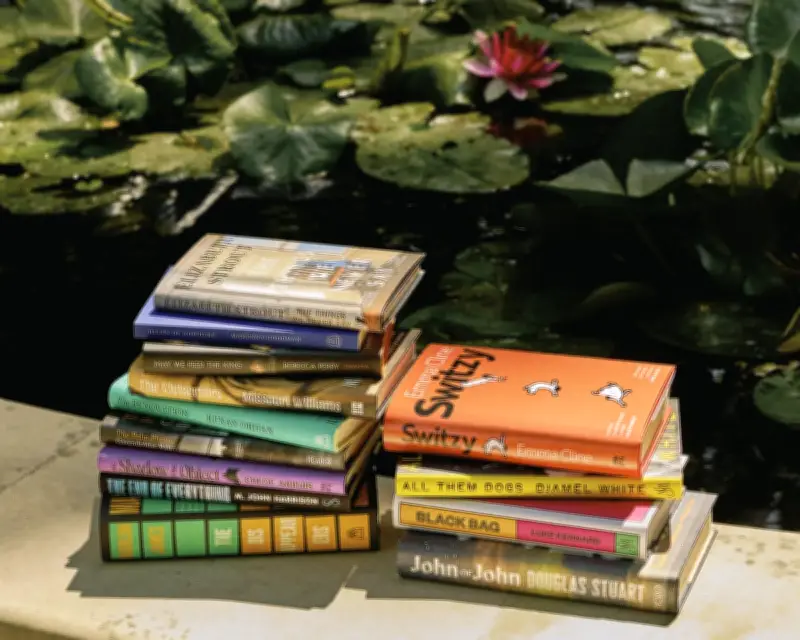
Two previous winners of the Booker prize, Douglas Stuart and Marlon James, have been named on the 2026 longlist, alongside three-time nominee Elizabeth Strout. The 13 novels selected for the £50,000 award, announced on Tuesday, feature authors from seven nationalities across three continents, with almost half from the UK. Ten writers appear on a Booker longlist for the first time, including three debut novelists: Kenan Orhan, Rebecca Perry and Djamel White.
Judges' Perspective
Chairing this year's judging panel is classicist and broadcaster Mary Beard, joined by Pulp frontman Jarvis Cocker. Beard said each book on the longlist “brilliantly musters the power of words on the page to take the reader to new places, to see old places from new angles, to change minds.” She added, “I would not be telling the truth if I said that I hadn't occasionally felt daunted, as a new box of 30 or so gleaming volumes landed on my doorstep.”
Leading Contenders
Marlon James is longlisted for his fifth novel, The Disappearers, based around a homophobic mob attack in 1980s Jamaica, to be published in September. The judges called it “a reckoning” from “a singular literary talent.” James won the prize in 2015 for A Brief History of Seven Killings. Douglas Stuart, who won in 2020 with his debut Shuggie Bain, returns with his third novel, John of John, praised for its “rich, textural detail.” Should either win again, they would become only the fifth author to take the Booker twice, joining JM Coetzee, Peter Carey, Hilary Mantel and Margaret Atwood.
Elizabeth Strout picks up her third Booker nomination for The Things We Never Say, her critically acclaimed 11th novel reckoning with Trump's America. Strout was longlisted in 2016 for My Name Is Lucy Barton and shortlisted in 2022 for Oh William!
Diverse and Historic Selections
Gaby Wood, chief executive of the Booker Prize Foundation, said the judges' “range of tastes” and “openness of mind” produced a list that “shows how capacious an art form the novel is,” adding it “rewards risk” and contains “genuinely original work.” The list includes two potential firsts: Chloe Aridjis, Mexican-British, longlisted for The Shadow of the Object, could become the first winner of Mexican heritage. Kenan Orhan, Turkish-American, longlisted for his debut The Renovation (in which a woman discovers her bathroom has become a prison cell), could become the first of Turkish heritage.
At 81, M John Harrison is the oldest on the list, longlisted for the first time for The End of Everything after 12 previous novels. Should he win, he would surpass Margaret Atwood as the prize's oldest recipient (she was 79 when she jointly won in 2019). At the other end, 28-year-old Djamel White is the only Irish writer on the list, with his debut All Them Dogs, set in west Dublin's “criminal badlands.”
Other Notable Titles
The longlist also includes Emma Cline's Switzy (September release), about a man's final journey to a euthanasia clinic in Zurich; Luke Kennard's Black Bag, a comedy about a struggling actor; Rebecca Perry's May We Feed the King, already winner of the 2026 Waterstones debut fiction prize; Gwendoline Riley's The Palm House, a portrait of literary London; and Missouri Williams's The Vivisectors, billed as an antidote to the “cosy campus novel.”
Judging Panel and Process
Joining Beard and Cocker on the panel are writer Raymond Antrobus, Booker-shortlisted novelist Patricia Lockwood, and Guardian journalist Rebecca Liu. Cocker follows entertainers like Sarah Jessica Parker, Adjoa Andoh, and Robert Webb. “I was aware that I was, shall we say, the least formally qualified person on this jury, but I didn't really let that bother me,” Cocker said. “Knowing that the Booker prizes tend to create panels including people who aren't necessarily part of the literary world – but can read! – helped me.”
A total of 163 books were submitted, all written in English and published in the UK or Ireland between 1 October 2025 and 30 September 2026. The shortlist will be announced at the Southbank Centre in London on 22 September, with the winner named on 9 November. Last year's winner was David Szalay's Flesh.




