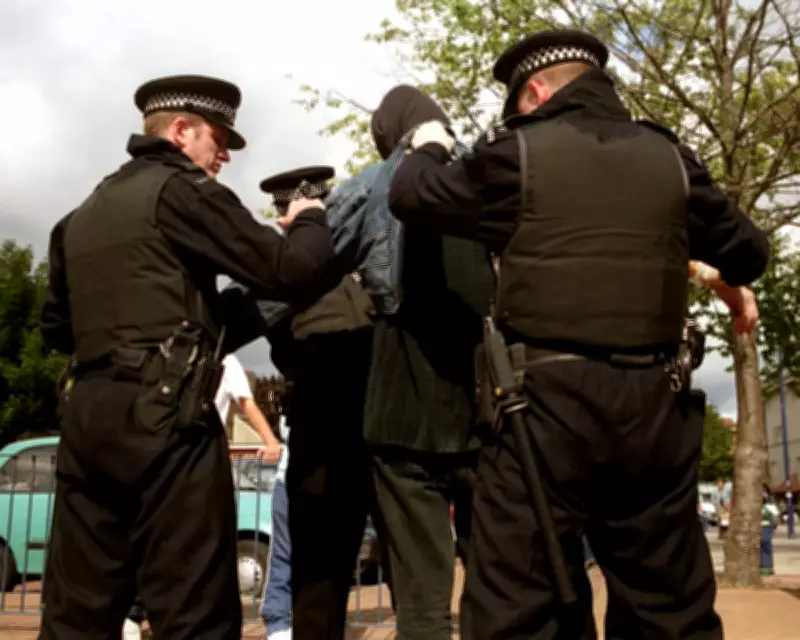
Black Children Face Drastic Disparities in Police Strip-Searches Across England and Wales
A shocking new report from the children's commissioner for England has uncovered that Black children in England and Wales are almost eight times more likely to be subjected to strip-searches by police compared to their white peers. This alarming statistic highlights a deepening racial divide in law enforcement practices, with the findings pointing to a reversal of previous progress in reducing such disparities.
Worsening Racial Bias in Police Interactions
Rachel de Souza, the children's commissioner, emphasized that Black children are consistently overrepresented in cases where police use force, including handcuffs, firearms, or Tasers. The report notes that officers frequently cite the "size, gender, or build" of Black children as justification for using force, whereas for white children, mental health needs are more commonly referenced. This pattern underscores concerns about the "adultification" of Black children, where they are perceived as older and less deserving of protection, a issue that has persisted since the high-profile case of Child Q over five years ago.
In that incident, a Black 15-year-old schoolgirl was strip-searched while menstruating in a "disproportionate" and "humiliating" event at a school in east London, leading to the dismissal of two Metropolitan Police officers for gross misconduct. The latest data, covering July 2023 to June 2024 across all 44 police forces in England and Wales, shows that out of 362 strip-searches of under-18s, 31% involved Black children, despite them making up a smaller proportion of the general population. Adjusting for demographics, Black children are disproportionately almost eight times more likely to be strip-searched than white children and over five times more likely than Asian children.

Inadequate Safeguards and Questionable Practices
The report reveals that nearly half of all strip-searches result in no further action, raising serious questions about the necessity and proportionality of these intrusive measures. Alarmingly, some searches are still conducted in public view or without an appropriate adult present, violating safety protocols. Additionally, 30% of strip-searches involve children who have been searched at least once before, indicating a pattern of repeated targeting.
Force was used in almost a fifth (17%) of all stop and searches of children between April 2024 and March 2025, yet in 43% of these instances, no further action was taken. De Souza criticized this as undermining the "necessary and proportionate tests" required for police interventions. She stated, "My latest research presents an uncomfortable truth. Despite some promising green shoots of progress as overall searches of children have fallen since 2020, racial bias continues to influence practice drive numbers – and the strip-searching of children is far from being eliminated."
Responses from Authorities and Ongoing Reforms
In response to the findings, a Home Office spokesperson announced plans to introduce extensive safeguards for children and young people regarding strip-searches, along with reforms to improve policing standards, vetting, and misconduct handling. Meanwhile, the National Police Chiefs' Council, led by deputy chief constable Andy Mariner, acknowledged that while strip-search numbers have been declining, policing is committed to addressing disproportionate use through updated policies and increased transparency.
Mariner noted, "We are committed to increasing transparency around our use of stop and search, including strip-search, which is a legitimate and useful policing tool to help us in removing dangerous weapons and drugs from the streets, but we know that when it is used inappropriately, it can damage our relationships with affected communities." However, the report stresses that without urgent action to eliminate racial bias, trust between police and communities will continue to erode, perpetuating a system that treats children differently based on appearance.