
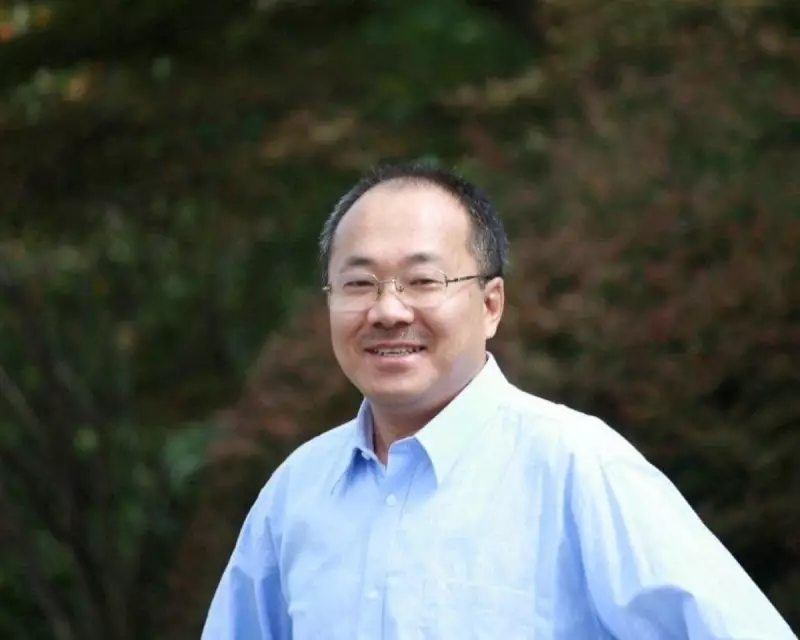
Journalist's Espionage Conviction Faces Crucial Appeal Hearing
A Beijing court is set to deliver its ruling on Thursday in the appeal case of Dong Yuyu, the Chinese journalist currently serving a seven-year prison sentence for espionage. The outcome of this hearing will determine whether the controversial conviction stands or is overturned.
Dong has been detained since February 2022 when he was arrested while having lunch with a Japanese diplomat in Beijing. The diplomat was briefly detained but released hours later, while Dong remained in custody. He was formally charged with spying in April 2023 and ultimately convicted in November 2024.
International Outcry and Career Background
The case has drawn significant criticism from human rights organisations and press freedom advocates worldwide. The US government has joined international groups in condemning Dong's detention, while the Committee to Protect Journalists plans to honour him with an International Press Freedom award later this month.
Dong built a distinguished career in Chinese media, serving as a senior columnist for the Communist party newspaper Guangming Daily. His work also appeared in Chinese editions of the New York Times and Financial Times. In 2006, he received the prestigious Nieman fellowship at Harvard University and had served as a visiting scholar at two Japanese universities.
The Nieman Foundation has publicly described Dong as a "cherished member" of their international community and has called for his immediate release.
Legal Challenges and Family Response
Under Chinese law, espionage convictions can carry sentences ranging from three to ten years for less severe cases, with life imprisonment possible in more serious circumstances. Dong received a seven-year sentence following his November 2024 conviction, prompting his appeal the following month.
Dong's son, Dong Yifu, has strongly criticised the legal basis of the case. "It's pretty obvious there is no legal argument to uphold the verdict," he stated. "There's really no evidence."
The family points to unusual aspects of the indictment, noting that several senior Japanese diplomats mentioned in the charges have not been expelled from China despite allegedly being involved with what prosecutors described as an espionage ring.
Dong Yifu expressed concern that the case sends a dangerous message: "Chinese people can be penalised very severely for just interacting and talking to foreigners. And it's also sending a message to the world that any foreigners in China can be labelled a spy."
Ian Johnson, a writer and friend of Dong's, suggested the case reflects broader political shifts in China. He noted that Dong "represents a time when Chinese people were encouraged to go out and participate in the outside world" and that his international experience is now being used against him.
Throughout his career, Dong became known for reporting on sensitive topics including social issues, corruption and constitutional reform. He was considered one of the rare independent voices within China's tightly controlled media environment. In 2017, he faced demotion threats after a Communist party investigation deemed his writing "anti-socialist."
Beh Lih Yi, Asia Pacific regional director of the Committee to Protect Journalists, warned that Dong's imprisonment "creates a chilling effect designed to stop or prevent any Chinese from speaking with foreigners." The organisation has urged the Chinese government to release Dong immediately.
The Chinese government has not responded to requests for comment regarding the case or the impending appeal decision.




