Conservative Leader Deploys Rare Parliamentary Tactic in Mandelson Appointment Probe
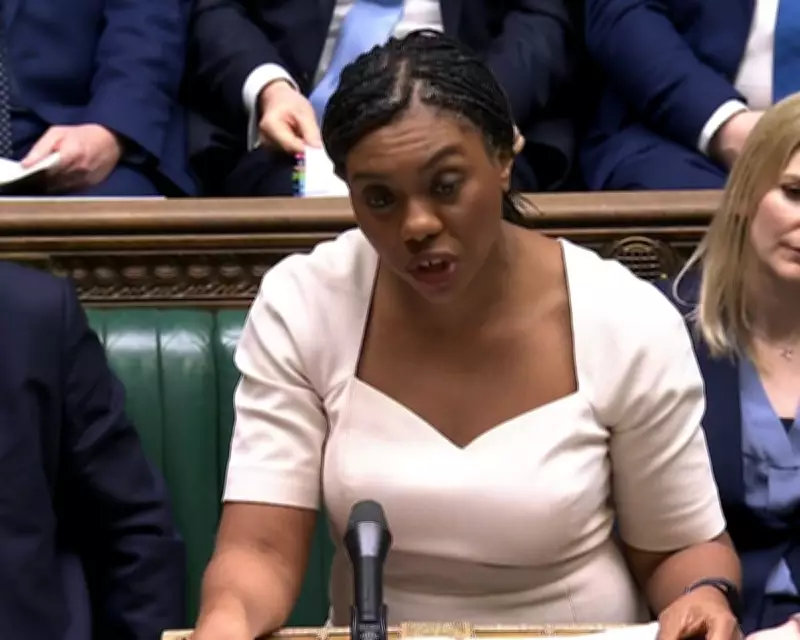
Kemi Badenoch, the leader of the Conservative Party, is employing an obscure parliamentary mechanism known as a humble address in an effort to force the government to disclose documents related to the appointment of Peter Mandelson as Britain's ambassador to the United States.
This procedural move aims to secure the release of sensitive materials, including due diligence assessments conducted by the Cabinet Office and email correspondence between Mandelson and Morgan McSweeney. McSweeney, a close associate of the former peer, currently serves as chief of staff at Number 10 Downing Street.
Understanding the Humble Address Procedure
A humble address represents a formal motion occasionally tabled by opposition parties on days allocated for debates on topics selected by non-government members of the House of Commons. Officially framed as a petition to the monarch, this mechanism can be utilised to extract information or documents from the government, particularly from departments overseen by a secretary of state.

Like other parliamentary motions, a humble address can be debated, amended, and subjected to a vote. In the current instance, the government has appended an amendment stipulating that all documents will be published, with the exception of those deemed prejudicial to UK national security or international relations.
Once agreed upon, humble addresses are generally considered binding on the House, compelling the government to comply with the request for documentation.
Historical Context and Modern Usage
The humble address has a long but infrequent history in British parliamentary practice, dating back to 1715 during the first parliament of George I. It was initially employed to address perceived national security threats linked to domestic treasonable activities.
In the 19th century, liberal philosopher and MP John Stuart Mill utilised a humble address as part of the campaign to extend voting rights to women, showcasing its potential for advancing significant social reforms.
In recent decades, the procedure has experienced a resurgence, with opposition parties increasingly weaponising it as a procedural tool to compel the disclosure of sensitive government documents. A pivotal moment occurred in 2017 when the Conservative-led government was forced to release dozens of confidential economic impact assessments related to Brexit following a humble address tabled by the Labour Party.
This use sparked controversy, with critics accusing Labour of attempting to draw the monarchy into the Brexit debate. Nevertheless, humble addresses were deployed again in 2018 and 2019 for further Brexit-related matters.
More recently, in 2022, Keir Starmer employed a humble address to force the publication of security advice concerning Evgeny Lebedev's peerage, embarrassing the government by securing support from Conservative rebels.
Legal and Parliamentary Authority
The binding nature of humble addresses has been affirmed by key parliamentary figures. During a 2017 debate, Keir Starmer, then Labour's shadow Brexit secretary, asserted that such motions are binding. Former Conservative MP Jacob Rees-Mogg highlighted that Erskine May, the authoritative guide to parliamentary practice, describes the power to call for the production of papers as forceful and substantive.
John Bercow, the speaker at the time, concluded that motions of this kind have traditionally been regarded as binding or effective, reinforcing their legal weight. The passage of a motion for a return also raises the possibility of the government being held in contempt of parliament if it fails to adhere to the resolution.
As noted in a 2017 blog post by Andrew Defty of the University of Lincoln, the repeated use of this procedure by Labour placed pressure on the government, prompting inquiries into its appropriateness. Now in opposition, the Conservatives are themselves turning to this rare parliamentary tactic in their pursuit of transparency.