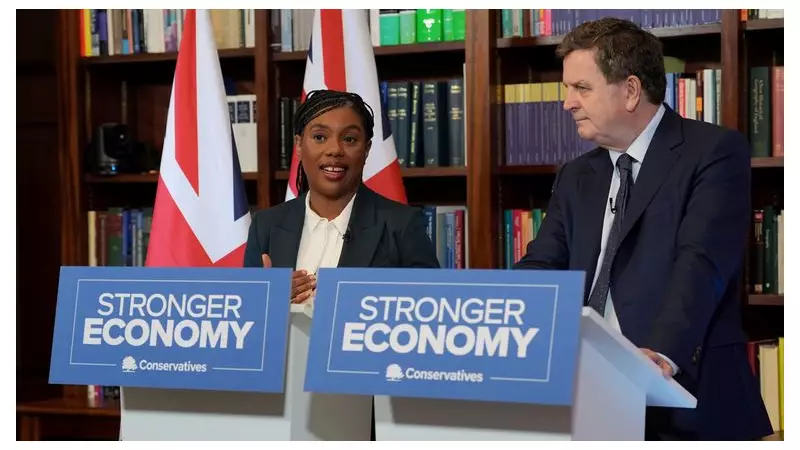
Conservative leader Kemi Badenoch has declared her party will maintain the state pension triple lock for the present moment, while leaving the door open to potential future reforms depending on the economic situation her government might inherit.
The Current Commitment and Future Uncertainty
In an interview with Sky News, Ms Badenoch emphasised that the triple lock remains official Conservative policy, describing it as a Conservative idea that rightly protects those who have contributed to the welfare system. However, she notably declined to rule out changes in the next parliament, stating she would not say she would "never" reform it.
The Tory leader framed the issue around Britain's economic performance, pointing to growth of just 0.1% as the core challenge. She contrasted this with Argentina, where she noted President Javier Milei could block pension increases because the country is growing at 6%.
The Economic Reality of the Triple Lock
The policy commitment comes with significant financial implications. The Office for Budget Responsibility states the triple lock has increased state pension spending by £12 billion annually compared to if pensions had risen in line with average earnings alone.
Recent government data reveals the scale of pension spending, with 55% of social security expenditure in 2025-26 directed towards pensioners. The triple lock mechanism guarantees the state pension rises by the highest of three measures: average earnings growth, inflation, or 2.5%.
Political Positioning and Broader Debate
Ms Badenoch's conditional support echoes similar sentiments expressed by Reform UK leader Nigel Farage, who also described the triple lock's future as a matter of "open debate" dependent on the state of the economy. When pressed on timing, both leaders used similar language, with Farage stating decisions would be made "nearer the election" rather than now.
The Tory leader directly linked the policy's sustainability to economic performance, stating: "If we were growing at 2% to 3%, you wouldn't have a problem with pensions." She identified boosting growth as the primary solution, noting "growth is flatlining" and emphasising the need to "start with getting growth."
When questioned about how long her current position would last, Ms Badenoch pointed to the upcoming budget, saying: "Let's see what mess Reeves leaves for us," referencing Labour Shadow Chancellor Rachel Reeves.