
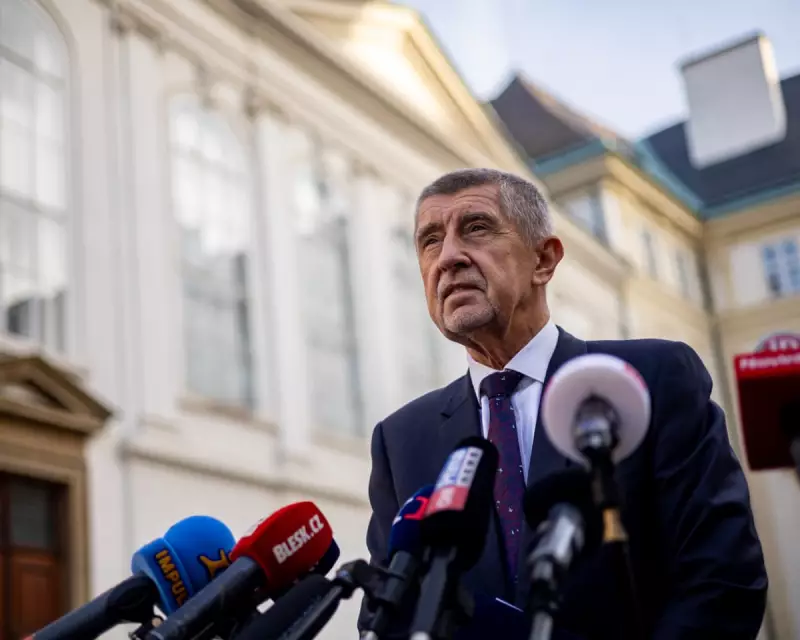
Billionaire Populist Defies Calls to Sell Business Empire
Andrej Babiš, the self-styled 'Trumpist' billionaire who secured victory in last month's Czech election, is standing firm against mounting pressure to divest his massive business holdings. The political leader, whose ANO party emerged as clear winners in October's parliamentary vote though fell short of an outright majority, has publicly declared he will never sell his Agrofert conglomerate.
In a social media statement released on Thursday, the 71-year-old politician made his position unequivocally clear. "I have repeatedly said I will never sell Agrofert," Babiš stated, adding "This is not like selling a roll in a bakery." His remarks came as he faces constitutional requirements to resolve potential conflicts of interest before assuming the role of prime minister.
Constitutional Hurdles and Presidential Demands
The controversy escalated when Czech President Petr Pavel intervened on Wednesday, demanding that Babiš provide a public explanation about how he intends to eliminate conflicts of interest stemming from his extensive business activities. The presidential office emphasised that the Czech constitution "explicitly requires the president to take into account the possible emergence of a conflict of interest" when appointing government ministers.
President Pavel's statement clarified that he wants specific details about how Babiš will fulfil his constitutional and legal obligations. However, the president also indicated readiness to appoint Babiš as prime minister "without delay" once the matter is satisfactorily resolved.
The core issue revolves around Babiš's Agrofert empire, a sprawling conglomerate encompassing farming, food processing and chemical operations across the Czech Republic and central Europe. The business receives tens of millions of euros in both national and EU subsidies, alongside numerous public contracts, creating a direct conflict with Czech law that prohibits government ministers from benefiting from public aid or contracts.
Legal Precedents and Coalition Complications
This isn't the first time Babiš has faced such challenges. During his previous term as prime minister from 2017 to 2021, he encountered multiple legal battles and an EU investigation concerning conflict of interest allegations. His solution at the time involved moving assets to trust funds while maintaining some influence over them, an arrangement that both Czech courts and the European Commission subsequently deemed insufficient.
Transparency International, the corruption watchdog, has been unequivocal in its assessment. The organisation insists Babiš must either sell his businesses, refuse public contracts, or remain out of government to avoid conflicts of interest.
Meanwhile, Babiš has been forging political alliances that could reshape Czech foreign policy. He has signed a coalition agreement with two rightwing fringe parties: the far-right, pro-Russian SPD, which advocates for an EU membership referendum, and the Motorists for Themselves party, known for opposing the EU's Green Deal.
This potential government formation raises concerns about strengthening the populist bloc in central and eastern Europe and could potentially strain western support for Ukraine. However, Babiš has personally assured Ukrainian President Volodymyr Zelenskyy of continued Czech support.
President Pavel has additionally demanded that the coalition's programme include a clear position on Russia's war in Ukraine and a commitment to fulfilling NATO obligations. The president had previously stated he would reject any ministerial nominees who might question the Czech Republic's commitments to the EU and NATO.




