
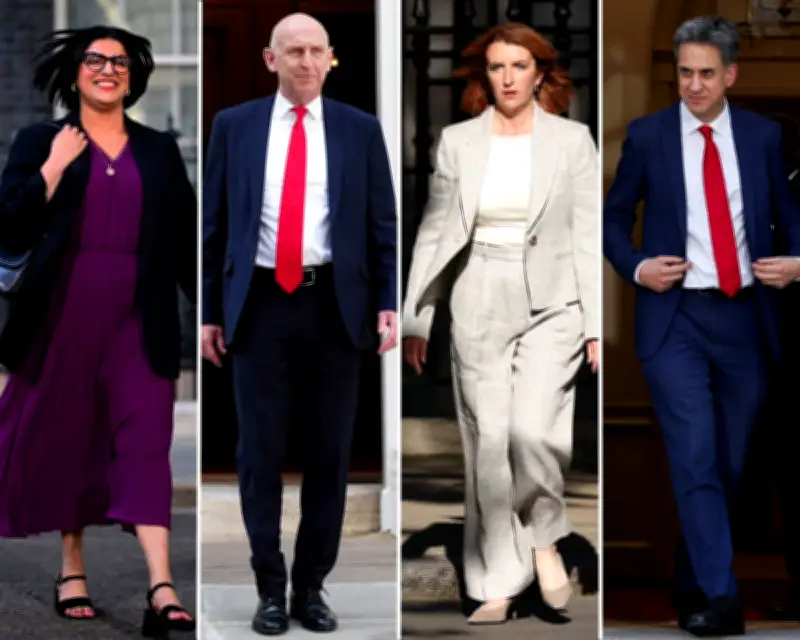
Andy Burnham has appointed his first cabinet as prime minister, rewarding loyalists and sidelining allies of former premier Keir Starmer. The new cabinet includes John Healey as chancellor, Shabana Mahmood as home secretary, Ed Miliband as foreign secretary, and Louise Haigh as first secretary of state. Key departures include former chancellor Rachel Reeves, former foreign secretary David Lammy, and several other Starmer-era ministers.
Who Is In
John Healey – Chancellor
John Healey, 66, former defence secretary who resigned over defence funding, is the surprise appointment to the Treasury. He has been an MP since 1997 and served as a Treasury minister under Tony Blair. Healey grew up in Wakefield, studied political science at Cambridge, and worked as a journalist and campaigns director at the Trades Union Congress before entering parliament. Burnham expects Healey to push for fuller defence funding and reindustrialisation.
Shabana Mahmood – Home Secretary
Mahmood retains her role, having been appointed by Starmer last year. Considered on the Blue Labour right, she is socially conservative and tough on crime. The 45-year-old Birmingham MP studied law at Oxford, worked as a barrister, and ran Labour’s 2024 election campaign. A cabinet colleague said she “never wastes a word” in meetings. She has advocated for a more pro-Palestinian stance.
Ed Miliband – Foreign Secretary
Miliband, a former Labour leader, was a leading contender for chancellor but concerns over his soft-left positioning and net-zero commitments spooked financial markets. He studied PPE at Oxford and has been an MP since 2005. He replaces Yvette Cooper and is expected to take a more pro-Gaza stance and potentially restore UK aid to 0.7% of national income.
Louise Haigh – First Secretary of State and Cabinet Office Minister
Haigh, 38, becomes Burnham’s chief organiser and deputy. She was sacked by Starmer as transport secretary over a fraud conviction for a missing mobile phone. She studied politics at LSE and Nottingham, worked for Unite and Aviva, and was one of 36 Labour MPs to nominate Jeremy Corbyn for leader. She replaces Darren Jones.
Who Is Out
Rachel Reeves – Former Chancellor
Reeves, the UK’s first female chancellor, was judged too close to the Starmer project. Her critics blamed early missteps like the winter fuel payment cut and employer national insurance rise for stymying growth. She turned down another senior role. In her departure statement, she said: “It has been the privilege of my life to serve as the chancellor of the exchequer.”
David Lammy – Former Foreign Secretary
Lammy served as foreign secretary and then deputy prime minister. He wrote on X: “I would have been proud to continue serving in cabinet. But a new prime minister is entitled to build his own team.”
Darren Jones – Former Chief Secretary to the Prime Minister
Jones tweeted: “Andy Burnham has called to tell me I won’t be a part of his new cabinet.” He had been central to spending negotiations as chief secretary to the Treasury.
Steve Reed – Former Housing Secretary
Reed, a loyal Starmer ally, warned Burnham not to disadvantage London in his departure letter. He served as environment secretary before housing.
Peter Kyle – Former Business Secretary
Kyle took on the business role after Angela Rayner’s departure. He has been criticised for being too open towards tech companies.
Richard Hermer – Former Attorney General
Hermer, Starmer’s close friend, was made a peer but became a rightwing press target over the Chagos Islands and past legal work. Maurice Glasman called him “an arrogant, progressive fool”.
Liz Kendall – Former Science and Technology Secretary
Kendall, on the right of Labour, thanked Starmer and said she was ready to support Burnham “in any way I can”.
Jo Stevens – Former Wales Secretary
Stevens, a Starmer backer, had served as shadow Wales secretary under Corbyn but resigned over Brexit.
Hilary Benn – Former Northern Ireland Secretary
Benn, a Labour grandee with over 25 years in parliament, tweeted his departure. He held ministerial jobs under Blair and Brown.




