
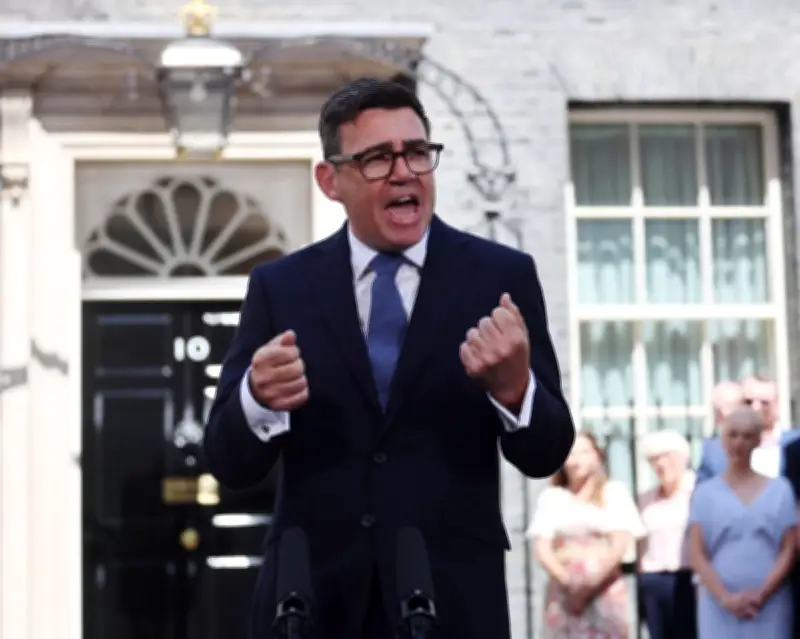
Andy Burnham has entered Downing Street with a reputation for warmth, audacity, and knowhow, but much rests on hope as he faces the monumental task of delivering the biggest changes in 40 years. The new prime minister has pledged to build a new economy and end rough sleeping immediately, a highly visible test of his power.
Experience and Ambition
Burnham is the most experienced prime minister to take office in recent years, having served as chief secretary to the Treasury, run the NHS, and led Greater Manchester. He knows Whitehall and Westminster intimately, as well as the disgruntled mood outside where incomes stagnate. He claims to have a plan, though cynics note that wars, plagues, and unforeseen events can upset any strategy.
He arrives at a moment of hope, but also with a reminder that time is short. Keir Starmer, whom he succeeded, left the country stronger and fairer according to his own assessment, but was ousted by a hostile public: only 28% approved of his performance, against 64% who did not.
Popularity and First 100 Days
Burnham is the most liked incoming PM in recent times, with net popularity far higher than Keir Starmer, Boris Johnson, Liz Truss, or Rishi Sunak enjoyed at the start of their terms. He knows popularity can quickly tank and expects an avalanche of signature policies in his first 100 days. Key cabinet appointments include John Healey as chancellor, Ed Miliband as foreign secretary, and Shabana Mahmood as home secretary.
Burnham showed audacity by standing for election in Makerfield, where Reform had swept every council seat. He also dares to disrespect Margaret Thatcher, blaming her for 40 years of neoliberalism and the parlous state of public utilities and council housing.
Economic and Political Landscape
Burnham may be luckier than Starmer: the Financial Times reports an unexpected extra £16bn for capital spending. Economists suggest billions can be gleaned without breaching manifesto promises or frightening bond markets. Will Hutton declares that the cupboard is not bare.
His adversaries also play to his advantage. Nigel Farage makes a spectacle of himself in Clacton, while Kemi Badenoch leads her party further from voters by opposing net zero targets and planning to eject "wets" who back the European Convention on Human Rights. Burnham will hold steady on manifesto pledges, while the public regrets Brexit and wants closer European ties.
Personal Qualities and Relatability
What Badenoch dismisses as "airy fairy" about Burnham is a warmth and likeability she lacks. He is described as relatable, connecting, clicking, listening, and understanding. Burnham is lavish with language and mood music. He has grown in stature and self-confidence with each promotion, acknowledging his journey without humble-bragging or inverted snobbery.
When asked about a moment when class embarrassed him, Burnham recalled being invited to dinner at Cambridge as a working-class boy but turning up for lunch instead. This experience gave him impostor syndrome, but he now seems at ease anywhere, proud of his roots. Unlike Keir Starmer, who was seen as a "sir" in a suit despite his humble background, Burnham is seen as relatable in a T-shirt.
The Unpredictability of Leadership
The qualities that make a successful prime minister are mercurial; no manual exists. It is impossible to know until too late how firm their backbone or how steely their resolution. Burnham may buckle under adversity or bend when necessary. The public warmed to neither Starmer nor Gordon Brown, both clever and decent men who turned out not to be leaders.
Listening to Burnham's words in Downing Street, we hear a good speech-maker with a good political record and good character who brings goodwill with him. The rest is hope.




