
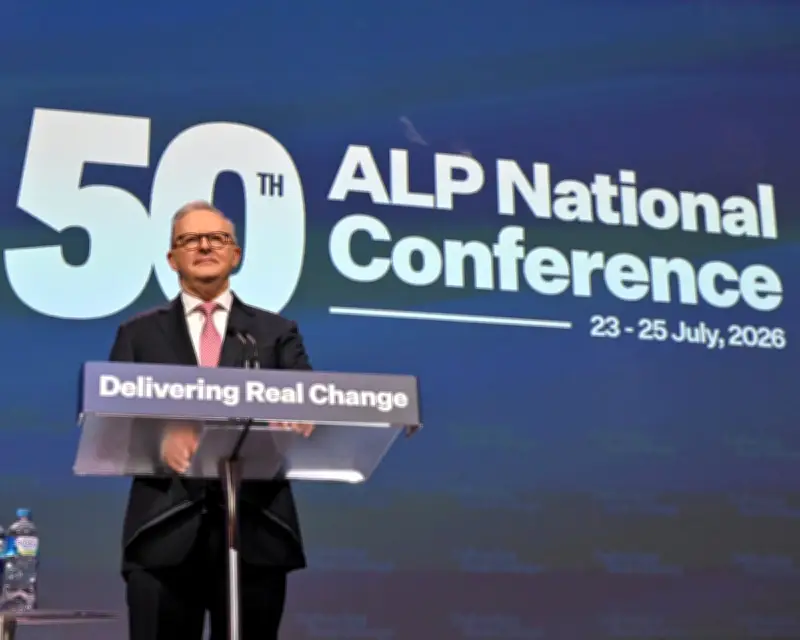
The Albanese government is in robust health as it approaches the midpoint of its second term, but a clean bill of health is only ever temporary, according to spin doctor Peter Lewis. Writing for Guardian Australia, Lewis offers a diagnosis based on the recent 50th Australian Labor party national convention in Adelaide and broader political trends.
Strong vitals and stable posture
Labor presents with strong vitals, including a commanding majority and stable posture, Lewis notes. There have been no catastrophic incidents requiring major surgery since the last public examination. However, an external scan reveals concerning spots, particularly the global outbreak of divisive populism, though this contagion appears to be receding.
Heartbeat and internal probe
The government's pulse has strengthened after embracing a new fiscal regime that rebalances the tax system to unwind investor privileges, a position discarded in 2019. The internal probe at the Adelaide convention, focusing on gas policy, cleared the party bowels of any obvious blockage. Lewis recalls that ALP conferences have rarely processed complex inputs so smoothly.
Ed Husic and unresolved issues
The one political polyp is Ed Husic, whose irritation from factional processes risks becoming chronic and causes referred pain to the leader. While Husic could not summon support for his motions, the lack of balanced diet on Gaza and Aukus means these lesions remain untreated, with risk of turning nastier.
Health offerings and Medicare
Central to the government's fitness are health offerings that powered its successful 2024 physical. The Medicare card remains a constant companion. The government set ambitious benchmarks, including a promise that 90% of all GP visits would be bulk-billed by 2030. Lewis notes that when the system works, no one notices, but this is a sign of good health.
Ergonomic risks and resistance work
A broader challenge is recognizing ergonomic risks of its ascendant position. When too relaxed, one can become sedentary and atrophy. Lewis recommends more focused resistance work, whether on energy, housing, or foreign relations. The launch of Fair AI, a group driving thinking on technology impacts, is the sort of exercise that should be embedded into daily routine.
Sustaining self-narrative
The key to a healthy life is psychological as much as physical. What differentiates this government from other Australian political parties is its sustaining self-narrative, which should be viewed as an elixir. Former treasurer Wayne Swan, receiving life membership, offered a second opinion. He urged honesty, recognizing the party earns a hearing only by championing economic justice: real wages, Medicare, social safety net, and living standards of working men and women.
Membership decline and future energy
Swan challenged the ascendant room to keep working on its core, noting membership is declining, ageing, and dying. Finding new sources of energy is critical to longevity. He shared an insight from decades of door-knocking: people will tell you the key is whether voters like you, but the most important thing is whether they think you like them. Wellbeing emerges from within.
Conclusion: robust but temporary
Lewis concludes that while the body politic is delicate, exposed to global events, local misadventure, a media craving adrenaline, and toxic social platforms, a clean bill of health is only temporary. Every day of government is one day closer to mortality. However, on objective analysis, this government is in robust health. Provided it remains conscious of its lifestyle choices, it should continue to age well. That's the boring truth, but who doesn't want a boring health check?




