
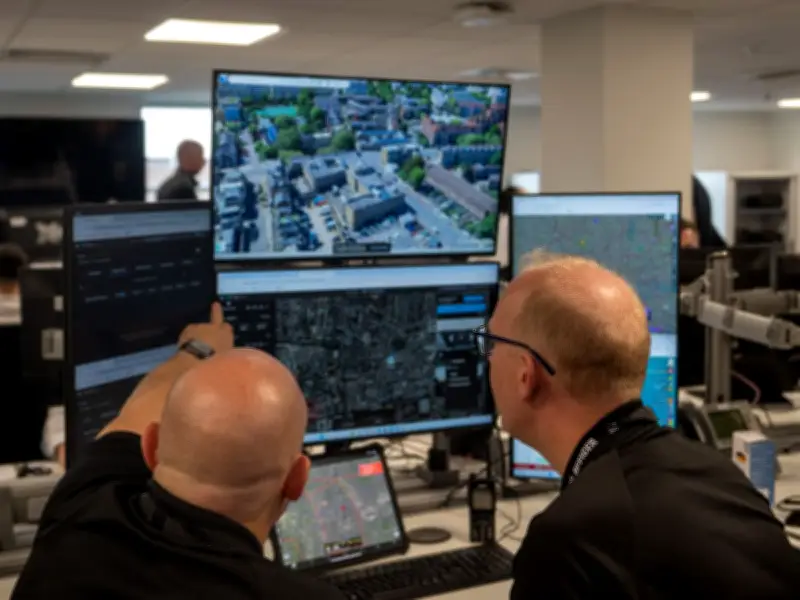
Experts have warned that oversight of Artificial Intelligence (AI) in policing must keep pace with deployment, after the Metropolitan Police was told to "seize the opportunities" that technological advances can bring to policing in London.
Met Commissioner bullish on AI benefits
Sir Mark Rowley, the force's Commissioner, has been bullish about the opportunities of AI, including helping scan and process evidence, which frees up officers for frontline policing in communities. However, concerns remain over whether the oversight of the Met's use of such technology is sufficient.
No framework for oversight exists
Experts told the "Policing for London in the Age of AI" summit held this week at City Hall that no framework for oversight currently exists, and that it was essential for the Met to take Londoners with them at every stage of technological advancement.
Ruth Ehrlich from Liberty, a human rights organisation, said: "The starting point is getting justice for the people these systems are meant to serve. As it currently stands, there is no overarching framework for how police use technologies. We need to make sure regulation is in place so it can deliver for victims. Safeguards should look at every stage of the technology, including the human in the loop. The problem with bias starts with the data itself. Communities subject to historic over policing are overrepresented. We need a robust and independent regulator to prevent this; it's why oversight is so important."
AI to transform policing methods
Professor Marion Oswald of Northumbria University suggested that AI will completely transform policing methods, citing remote weapon detection as an example. "AI is going to usher in a new era of police culture as the old systems are being eroded and a new police force is being created," she said. "Traditional stop and search works when an officer forms a reasonable suspicion and only then conducts a physical search. This remote AI weapons detection reverses this. The search happens first before the officer has any suspicion. This transforms stop and search into search and stop."
Professor Oswald added: "Governance and oversight are essential; they're not an inconvenience. They are there to make sure we have reliable and valid technology that works in the policing context and ensure processes uphold the principles of fairness that the UK expects. We all need to remember why we are there - not to save ourselves time and be efficient, but to get justice for members of the public. When adopting this type of technology, it needs to be done in a way which commands confidence, protects fair trial rights and provides value for money."
Mayor's office addresses concerns
The Mayor of London, Sir Sadiq Khan, has previously addressed such concerns, suggesting that despite the "exciting opportunities", there is also a sense of "uncertainty and concern to the public." In a statement to Assembly Members last month, he said: "In our system of policing by consent, it is vital that such advances are transparent and have the trust of Londoners in mind. The Mayor's Office for Policing and Crime's continuing role is to oversee how the MPS uses emerging technologies such as AI to make London safer and deliver a more efficient service to make sure they represent value for public money and to assure Londoners that these tools and the data they use are managed appropriately."
Deputy Mayor echoes concerns
Kaya Comer-Schwartz, the Deputy Mayor for Policing, echoed these concerns at the summit, stating: "AI is no longer a future issue, but a present reality that society is grappling with. The Mayor has been clear that innovation must go hand in hand with transparency, value for money and improving public confidence. We have already seen how technology can help officers and tackle crime on our high streets - but every new technology raises important questions about how it should be used and who oversees it. Trust can be undermined very quickly if they do not understand when, where and how AI is being used, or what safeguards are in place. Principles of fairness, accountability and legitimacy require conversations about how we work through these challenges."




