Water UK, the trade body representing water companies in Britain and Northern Ireland, has warned that the UK lacks sufficient water to support future data centres, calling the government's AI growth plans 'fatally flawed'. In a written briefing to MPs, Water UK stated that the government's water forecasts 'explicitly exclude' data centres and 'make not a single mention of water' in its AI policies, including the AI opportunities action plan and AI for science strategy.
Data centres' water demand
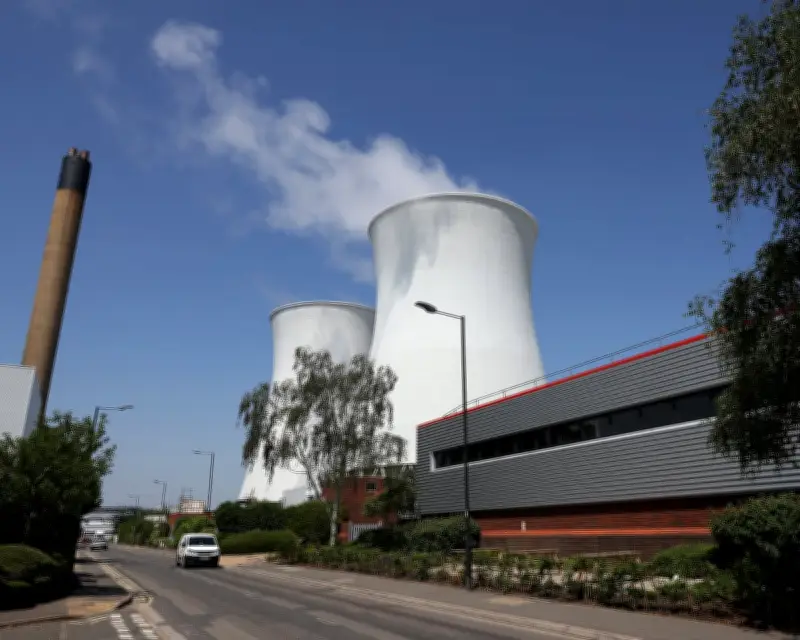
Data centres require large volumes of water for cooling towers, chillers, and humidification systems to manage heat from densely packed servers. Currently, data centres in England use 6.6 million litres of drinking water daily. With the government's ambition to triple data centre capacity by 2030, this could rise to 19.8 million litres per day, according to Water UK. Jon Chappel, Water UK's deputy director, described this as 'unforgivable' and a 'genuine failing of government'.
Water-stressed regions
More than three-quarters of the UK's data centres are located in the south and east of England, regions already under water stress. Millions of residents face hosepipe bans due to extreme heat and low rainfall. Affinity Water, serving Slough—the area with the highest concentration of data centres—reported that 125 data centres are proposed or under construction in its region. Some facilities request up to 3 million litres of water daily, equivalent to the peak demand of 3,500 homes. Affinity told MPs that the planning framework 'has not adapted to commercial users whose water needs can match those of a market town'.

Environmental and supply challenges
Water UK noted that new reservoirs can take up to 15 years to plan and build, and current leakage reduction targets are already ambitious. The Environment Agency's 2025 national framework for water resources failed to estimate data centre water demands. England faces a 5 billion litre per day shortfall for public water supplies by 2055, according to a House of Lords report. Water UK estimated the current shortfall at 220 million litres per day, met by accepting environmental harm and drought restrictions.
Critical national infrastructure status
The government designated data centres as critical national infrastructure, potentially prioritising them over households during water shortages. Oliver Hayes of Global Action Plan warned that data centres running 'benign and wasteful' AI chatbots could receive favourable treatment. Water UK has urged the government to publish a drought hierarchy to clarify sector priorities, but ministers have yet to do so. Chappel stated, 'Without this there will be a trade-off across society'.
Government response
A government spokesperson said: 'The environment and sustainable development must go hand-in-hand and we will protect our water supply while unlocking growth, including looking at alternatives or ways to minimise impact on supplies and output of wastewater from data centres. We are also taking decisive measures to secure water supplies and meet higher demand, including record levels of infrastructure investment and building nine new reservoirs.'
Broader implications
Similar concerns have emerged in Ireland, where hosepipe bans sparked criticism over data centre water usage. At the end of June, water companies, Ofwat, the Environment Agency, the Met Office, and Natural Resources Wales launched a £75 million campaign to encourage water conservation. Water use per person in England and Wales remains among the highest in Europe. The government's national policy statement for AI growth, expected in February, has been delayed.