Andy Burnham could easily ignore the UK's falling aid commitment, but he would be wise not to, warns Halima Begum. The Foreign, Commonwealth and Development Office's annual report, quietly released as Keir Starmer left office, cements aid allocations until 2029, locking in cuts that shift focus from supporting countries most in need to seeking returns.
Malawi embodies the cuts
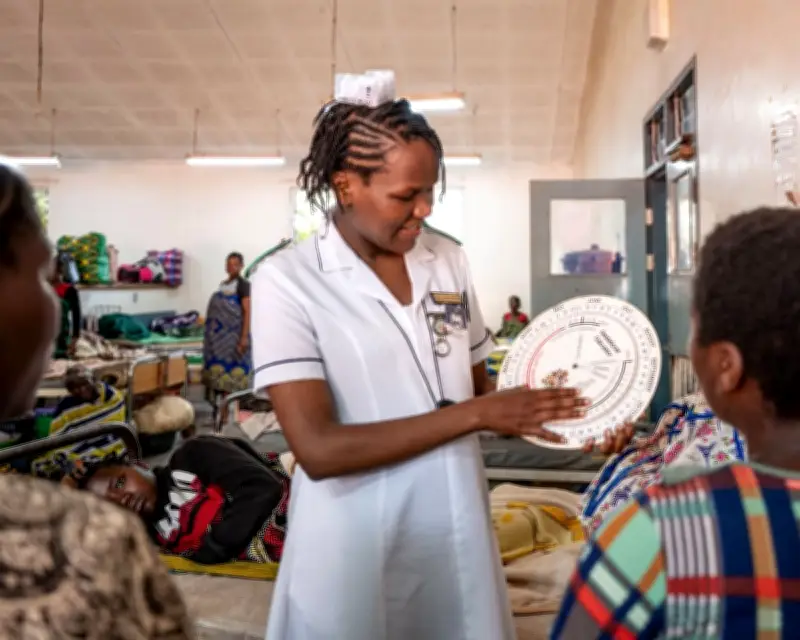
Malawi, where three-quarters of the population lacks electricity, will see its £50.2 million allocation fall to £5 million by 2028-29. Across Africa, bilateral support is halved over the same period. The already diminished £13 billion aid budget will fall a further £6.5 billion before Burnham must call the next general election.
Human consequences of cuts
The Foreign Office's equality assessment concedes cuts will “inevitably have negative impacts.” The Wish reproductive health programme, cut by 30%, will now avert 9,500 maternal deaths instead of 11,900 across fragile African states. This means 2,400 more maternal deaths and 600,000 more unsafe abortions than current funding would prevent, in one of the few programmes described as “relatively protected.”

That projected rise in maternal deaths sits uneasily beside the Starmer administration's pledge that 90% of bilateral aid programmes will “contribute to gender equality” by 2030. When a government publishes its own estimate of deaths and carries on regardless, that “contribution” begins to sound less like a policy than an alibi.
Geopolitics replaces need
Need is no longer the primary logic of UK aid; geopolitics is, with budget cuts going to fund defence. The latest blueprint, the UK's modern development approach, shifts lexicon from “donor to investor, service delivery to system support, grants to expertise.” This means moving away from directly funding frontline services—clinics and classrooms whose closure the FCDO impact assessment counts in lives.
Central to this transition is British International Investment (BII), a government-owned body that puts ODA money into businesses in developing countries. Its 2026-31 strategy commits up to £8 billion of BII capital over five years, aiming to attract a further £6 billion to £7.5 billion from private investors.
Investments flow to profit, not essentials
Investments must be repaid, so they flow to profitable sectors—banks, power grids, telecoms—and away from health, education, and other essential services. This tests Burnham's convictions: he is expected to bring failing services like Thames Water into public ownership at home because markets alone cannot deliver essential public goods, yet he inherits an aid policy that increasingly depends on market forces to improve life for the world's poorest.
Multilateral channelling reduces accountability
Surviving funds will also travel further from those they are meant to reach, routed through multilaterals like the World Bank. The government takes a “shareholder” role pressing for “reform” from a “seat at the table”—a boardroom voice rather than a builder of clinics. While British voters can hold a bilateral programme to account through parliament, they have no equivalent leverage over pooled contributions channelled through unelected institutions abroad.
If the Burnham government continues this path, it risks handing critics of UK aid an argument that has proved potent in the recent past—look at Brexit. Channelling more through multilaterals is an explosive grievance waiting to be deployed.
A strategic choice for Burnham
The Starmer administration was not simply trimming the UK aid budget; it was continuing a transition in its underlying purpose. Britain's emphasis has shifted from supporting those most in need to seeking a return from the world's poorest countries. Burnham has inherited this choice.
The case for reversing that creed is strategic, not sentimental. Aid cuts in the name of security become a security cost elsewhere: a region responding to Chinese soft power is not one where British influence grows, and the next Ebola outbreak will spread regardless of any spending review.

The road back to the 0.7% commitment required by the International Development (ODA Target) Act 2015 will demand political judgment about the role Britain wants to play in the world. The timing of the publication means the incoming prime minister need never look at the allocations. He should. The £5 million left for Malawi tells Burnham more about Britain's development priorities than any ministerial briefing ever could.