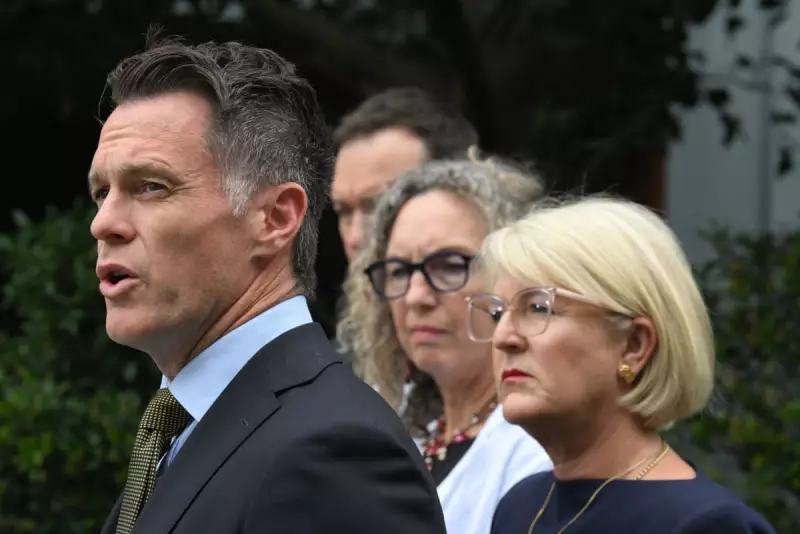
In a swift legislative response to the Bondi beach terror attack, the New South Wales government has recalled parliament to push through a significant package of new laws. Premier Chris Minns is seeking to rush the legislation through this week, with the bill passing the lower house on Monday night and expected to clear the upper house on Tuesday.
Key Components of the New Legislation
The omnibus Terrorism and Other Legislation Amendment Bill bundles together changes across several critical areas. The NSW Liberals have voted with Labor to support the bill, though it faces opposition from the Nationals and the Greens over specific provisions.
Major Firearms Law Overhaul
The bill introduces the most substantial changes to NSW's firearms regime since the 1996 Port Arthur massacre. Key measures include imposing a cap on the number of firearms an individual can own. Recreational licensees will be limited to four guns, while those with commercial purposes, including farmers, can own up to ten.

Other significant changes include reducing standard licence terms from five to two years, mandating Australian citizenship for licensees, and banning belt-loaded magazines like those allegedly used in the Bondi attack. The legislation also reclassifies certain firearms, including straight-pull and pump-action models, to a more restrictive category.
The Nationals have opposed these gun control measures, arguing they impose "arbitrary limits" on farmers. The Greens, however, support the changes and have called for even tighter restrictions.
Ban on Terrorist Symbols and Expanded Police Powers
The legislation amends the Crimes Act to prohibit the public display of symbols associated with banned terrorist organisations. This includes the Islamic State flag, which police allege was found in the Bondi attacker's car. The maximum penalty for displaying such symbols would be two years' imprisonment or a $22,000 fine.
Constitutional law expert Professor Anne Twomey notes the state law is similar to a Commonwealth one but may be easier to prosecute as it doesn't require proof of harm to a specific person or group.
Controversial New Protest Restrictions
The most contentious part of the bill grants new powers to police in the wake of a declared terrorist incident. The Police Commissioner would be able to issue a "public assembly restriction declaration" for a specified area, valid for up to 90 days.
While the government states this is not aimed at peaceful gatherings, it would mean protests in the zone are not authorised under normal protections, allowing police to move on participants. The Greens' justice spokesperson, Sue Higginson, has condemned this as "the most draconian, authoritarian anti-protest laws this country has ever seen."
The laws are designed to apply retrospectively to protests following the Bondi attack if passed in time. The NSW Council for Civil Liberties has criticised the two-year review period for these powers as showing a "surprising lack of transparency."
Political Divisions and Next Steps
The bill has revealed clear political fault lines. While the Liberals support the overall package, they seek amendments to increase penalties for displaying terrorist symbols and to make all protests unlawful under a police declaration. The Nationals oppose the gun laws, and the Greens plan to challenge the protest provisions in the upper house.
As the legislation moves to its final vote, the rapid process has sparked debate about balancing community safety with democratic freedoms and the rights of specific groups, such as farmers. The outcome will set a significant precedent for state-level responses to national security incidents in Australia.