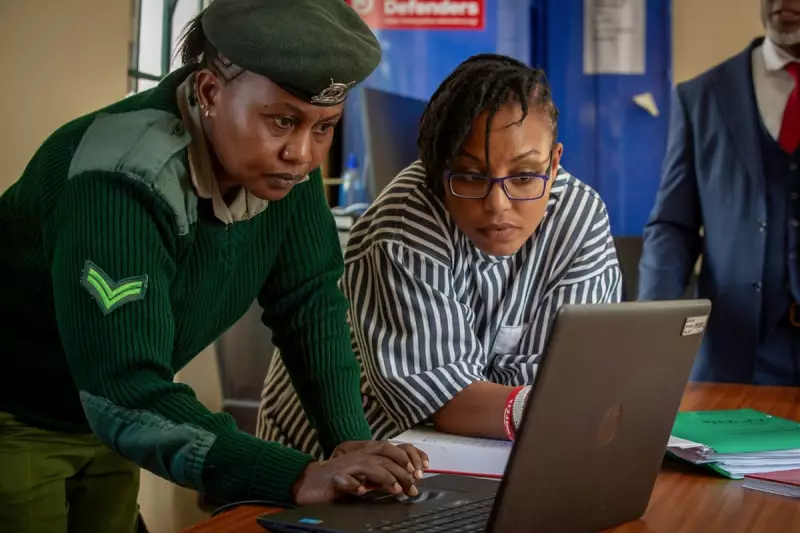
In the quiet confines of Lang'ata Maximum Security Women's Prison in Nairobi, a remarkable transformation is unfolding. Ruth Kamande, a 30-year-old serving a life sentence for murder, has graduated with a University of London LLB law degree and is now a pivotal legal resource for her fellow inmates. Her journey from convict to qualified legal mind highlights profound issues within Kenya's justice and penal systems.
A Path Forged in Adversity
Kamande's entry into the legal world was born of necessity. In 2015, at age 21, she was arrested for the murder of her boyfriend, Farid Mohammed, whom she stabbed 25 times. Initially sentenced to death in 2018, her penalty was commuted to life imprisonment in 2023. She maintained she acted in self-defence upon discovering Mohammed's HIV-positive status, a claim dismissed by the courts. Feeling failed by her legal representation, she sought to understand her own case.
Her opportunity came in 2016 through Justice Defenders, a non-profit offering legal rights sessions in prisons. Kamande enrolled to become a paralegal. "I felt that my lawyers were not listening to me," she recalls. "I was craving help." This basic step ignited a passion. She soon realised many women around her, detained for petty offences and unable to afford lawyers, were in far more desperate need.

Becoming a Beacon of Hope Behind Bars
Armed with growing knowledge, Kamande began assisting others. Her first success was securing an acquittal for a woman charged with obtaining money under false pretences. This victory fuelled her "zeal and morale to continue." She now helps incarcerated women dissect court statements, draft legal arguments, and prepare cross-examinations, achieving numerous bail grants and case wins.
Her work addresses a critical gap. Official figures indicate over 19,000 women are in Kenyan jails, a number rising sharply. Most are imprisoned for poverty-related crimes and languish in pre-trial detention, unable to pay for bail or lawyers. Kamande's intervention is often their only form of legal aid.
Balancing this advocacy with her studies, Kamande enrolled in a law degree programme in 2019, supported by Justice Defenders and encouraged by a dedicated prison officer. She graduated as valedictorian in November 2024. She has since appealed to Kenya's Supreme Court, arguing her case should consider 'battered woman syndrome', though this was dismissed in April 2025.
Campaigning for Systemic Change from Within
Kamande's perspective is now focused on reform. She has joined a working group to scrutinise policies and identify legal shortcomings. A key issue for her is the indefinite nature of a life sentence in Kenya. "Prison is to rehabilitate, it's not to destroy," she argues. "At the moment, when you sentence someone to life, are you rehabilitating the person or are you destroying them?"
She advocates for a definite term for life sentences and clear conditions for parole. Her life in Lang'ata, which she describes as relatively supportive thanks to rehabilitative-focused leadership, contrasts with darker areas of the facility, including a gloomy cell block for the two women remaining on death row.
Kamande has also sought personal redemption, contacting her victim's family to ask for forgiveness. After initial refusal, Mohammed's mother eventually called the prison in 2021 to offer forgiveness, a moment Kamande describes as profoundly emotional. She now receives visits from some of his relatives.
Ruth Kamande's story is one of profound contradiction: a woman who took a life now dedicates her own to preserving the rights and futures of others. From a cramped dormitory in Ward 12, she is not only rewriting her own narrative but also fighting to reform the very system that confines her, proving that rehabilitation can flourish even in the most unlikely of places.