
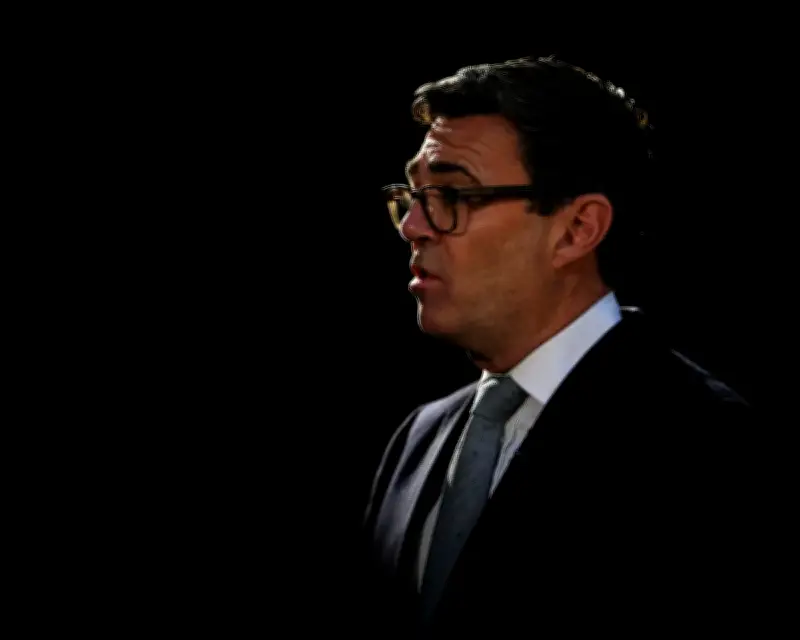
The prime minister, Andy Burnham, has shown no interest in fostering warm relations with US President Donald Trump, continuing a pragmatic approach that marked the end of Sir Keir Starmer's tenure. His foreign policy, though still evolving, largely mirrors the previous Labour administration, with red lines on EU single market and customs union membership remaining firmly in place.
Continuity with Starmer's Approach
In negotiations with the European Union, the constraints that prohibit rejoining the single market or customs union are unchanged. This continuity extends to defence and security matters, where the dense integration between the UK and the US means that any prime minister, regardless of ideology, must invest time in building a bond with the White House. Ed Miliband, the new foreign secretary, has already opened a constructive dialogue with his US counterpart, Marco Rubio.
Observers hoping for a dramatic transatlantic rupture or a sudden rapprochement with Brussels will be disappointed. The patterns of consistency date back beyond the recent Labour leadership change, rooted in decisions made by previous Conservative governments. Support for Ukraine against Russian aggression, a stance credited to Boris Johnson, has persisted through four changes of prime minister.
Rebuilding European Relations
The process of mending ties with European neighbours began before the 2024 general election. Rishi Sunak negotiated the Windsor framework for Northern Ireland and scrapped a bill that would have caused chaos for businesses by automatically scrapping retained EU laws without a replacement timetable. The business secretary who executed this U-turn, defying the Tories' Eurosceptic wing, was Kemi Badenoch, though she did not highlight this during her Conservative leadership bid.
Having retreated to an ideological comfort zone, the Conservative Party still cannot claim Brexit has been a success. Sir Keir Starmer became increasingly vocal in attributing Britain's economic difficulties to the Brexit terms, but his rhetoric was not matched by substantive policy changes due to a manifesto commitment. Mr Burnham has accepted the same constraint as part of his inherited mandate.
Domestic Focus vs. Global Pressures
Given the parameters of the hard Brexit and acknowledged security dependence on Washington, the prime minister has limited room for foreign policy innovation. He has shown little interest in geopolitical matters, preferring to concentrate on domestic issues that resonate more with voters. This is a rational priority for a new leader aiming to win over sceptical voters.
However, with global volatility showing no signs of abating, an international crisis is likely to force itself onto Mr Burnham's agenda. Global strife, particularly when it creates economic headwinds, quickly translates into domestic political pressure. The prime minister has proven skilled at connecting with local audiences, but this advantage will diminish if he cannot link his domestic agenda to a coherent strategy for global engagement.




