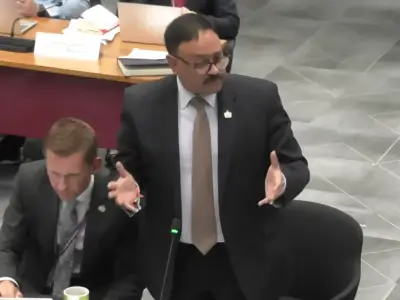
Andy Burnham, the frontrunner to replace Keir Starmer as Labour leader, has significantly softened his stance on government borrowing in an effort to reassure City investors. The Greater Manchester mayor, who previously warned that Britain was too 'in hock' to bond markets, now supports the current fiscal rules and has promised a plan to reduce debt.
Change in Tack
Last year, Burnham criticized the influence of bond markets on UK economic policy. However, with global market conditions becoming more volatile due to the Iran war and rising inflation, he has shifted his position. 'I have never said you can just ignore the bond markets,' Burnham told ITV. 'I said that politicians have placed Britain in hock because of the way in which we lost control of our finances and public spending.'
Market Pressures
UK government borrowing costs have risen sharply, with long-term yields reaching their highest levels since 1998. This reflects higher inflation and expectations that the Middle East conflict will hit UK growth harder than other G7 economies. Investors are also wary of political instability, as the UK faces the prospect of its sixth prime minister in seven years.

Burnham's earlier comments, along with his radical policy agenda including renationalisation of energy and water, have put him at a disadvantage in the City. Investors currently favour keeping Starmer and Chancellor Rachel Reeves, who have shown readiness to balance the books.
IMF Warning
The International Monetary Fund has signaled that Britain has 'limited fiscal space' to deviate from current policies. With debt levels near 100% of GDP and rising borrowing costs globally, any increase in borrowing could risk a debt spiral, squeezing out spending on other priorities.
Political Calculations
Within Labour ranks, the memory of Liz Truss's mini-budget and the subsequent bond market backlash remains fresh. Burnham's policy circles believe that Reeves's fiscal rules can only be overhauled from a position of strength. However, they argue that Labour has more scope to tweak tax and spending than currently utilised, if Downing Street is willing to make the case.
As the leadership contest intensifies, Burnham is likely to maintain a pragmatic stance—neither fully ignoring bond markets nor being entirely constrained by them. This balancing act will be crucial in his bid to succeed Starmer.