
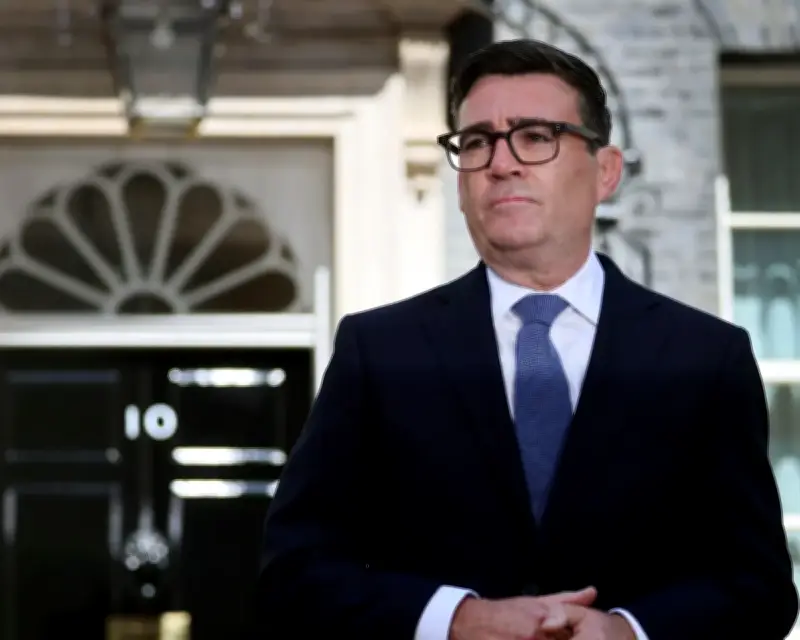
Andy Burnham will tell MPs on Tuesday that bringing essential services back into public control is the only way to improve growth across the UK, marking his first major Commons statement since becoming prime minister six weeks ago.
Addressing the House from the frontbench for the first time in 16 years, Burnham will use the statement to put public control at the heart of his priorities for the coming months, sources told the Guardian. He will argue that this approach will unlock investment, jobs and growth, and that the cost of everyday services to family budgets is holding back the economy, promising a plan to regain control of costs.
A 'bring back hope' agenda
A No 10 source said: “Andy is optimistic about our country’s future. He has a clear plan for how we turn things round. He is determined we make this the moment we bring back hope.”
Burnham will give a scathing analysis of how privatised services have done little for the public, saying utilities and transport have not been run in the public interest and are neither reliable nor affordable. He will point to action already taken to bring more bus routes under public control, including through a partnership between No 10 North and the West Midlands Combined Authority. The Liverpool City Region will start taking control of bus services from next weekend.
The prime minister has promised a 10-year project to take public control of utilities, which is expected to be a major focus of his next few months in power. Allies have said Burnham is “completely committed” to putting utilities such as energy and water companies into public control and is looking at every option.
Crunch decisions ahead
Burnham will face an early test of his commitment to public control as he mulls legislation to make it easier to bring struggling utilities such as Thames Water under government ownership. The Guardian reported last week that Burnham is considering laws to make it easier to put companies into insolvency proceedings and then take control of them afterwards.
He will also face crunch decisions on possible changes to the immigration bill to exempt carers, as well as pressure from MPs to back moves towards electoral reform. A quasi-judicial decision on whether to allow more North Sea drilling is also expected soon, a highly divisive issue within the party.
During the two-hour grilling, MPs will question policies announced over the summer, including a cut to VAT on energy bills, £2 bus fares, the scrapping of digital ID, a major expansion of devolution and a plan for a national care service. Opposition MPs are expected to ask tough questions on how the pledges will be funded, as well as how Burnham expects to fill a £4.7bn gap in the defence investment plan left by his predecessor, Keir Starmer.
Political pressure and electoral reform
Later in the week, Burnham will face Conservative leader Kemi Badenoch for his first prime minister’s questions. Badenoch has already sacked her shadow chancellor Mel Stride and shadow foreign secretary Priti Patel, promoting Andrew Griffith in Stride’s place and replacing Patel with Tom Tugendhat, in the hope of making further inroads in attacking Burnham’s economic approach.
Burnham will also need to navigate the growing number of Labour MPs who are heaping pressure on him to toughen up the representation of the people bill, which returns to the Commons this week. Nearly 100 MPs have called on Burnham to back a commission on electoral reform, given the prime minister has previously been a vociferous supporter of changing the voting system. MPs have also been angered by the decision to drop any cap on party donations, after pressure from trade unions, despite the prime minister having previously backed a cap of £500,000.
The Liberal Democrats said on Monday they would put their full backing behind an amendment from the Labour MP Alex Sobel that calls for a commission on electoral reform to be established within 100 days. The party’s leader, Ed Davey, said it was a chance for Burnham to prove he was different to Starmer. “Reform stand to benefit from our terrible voting system and could manipulate it all the way to No 10,” he said.
Davey added: “Keir Starmer never would have agreed to a national commission. He failed to grasp that it is our role as progressives to fix the broken system the Conservatives created. The only question now is: what kind of politician is Andy Burnham? Is he willing to do the right thing?”
On Tuesday, the justice secretary, Alex Norris, will also present the government’s plans to cut the number of prisoners eligible for early release, including the killers of PC Andrew Harper. Though the decision will see most of those convicted of manslaughter remain in prison to serve longer sentences, it has also raised alarm that the number of prison places may reach crisis point faster.
Reform will host its party conference this week in Birmingham, with Farage speaking on Friday. In the latest poll from More in Common, Labour hold a four-point lead over Reform, with the Tories a point behind. The latest Opinium poll found that Burnham’s net approval rating has also increased over the last fortnight by three points.




