
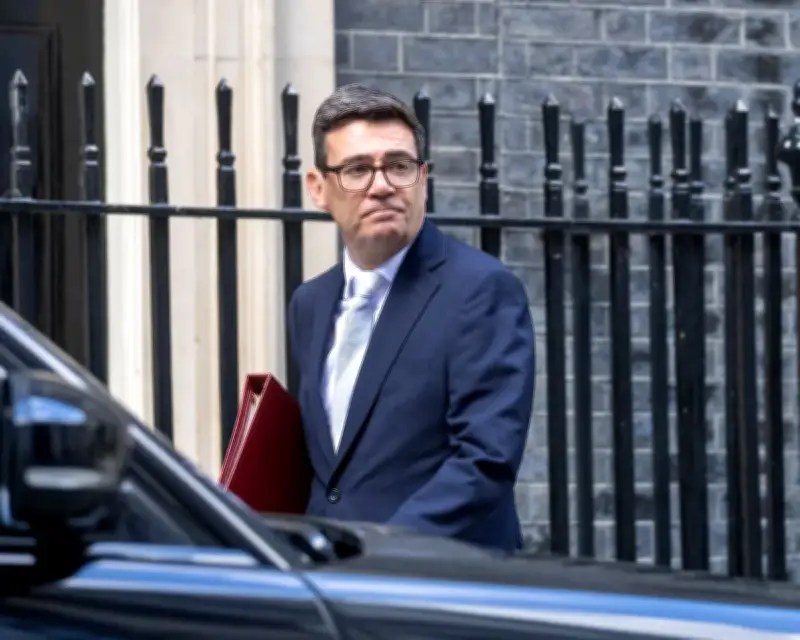
Andy Burnham faces Kemi Badenoch at Prime Minister's Questions for the first time today, with the UK's long-term borrowing costs having reached their highest level since early 1998, eroding £12bn from the Treasury's fiscal safety net. The Conservative leader rehearsed her likely questions at a press conference yesterday, pressing Burnham on defence spending, border security, foreign-born prisoners, taxes, and benefit cuts.
The Conservatives' press release summarised five questions Badenoch asked Burnham to answer: setting out a plan to get defence spending to 3% of GDP, confirming whether Labour will use a Rwanda-style deal to secure borders, setting out a timeline to get foreign-born prisoners out of British prisons, pledging no new taxes at the forthcoming budget, and standing up to his own backbenchers to cut benefits. The release claimed Burnham "floundered and couldn't give straight answers to clear, straight questions."
Borrowing costs jump to 1998 high
While Westminster focused on Burnham's Commons debut, the more significant story was on financial markets. According to Heather Stewart's report in The Guardian, the government's long-term borrowing costs jumped "to their highest level since early 1998 on Tuesday as investors dumped government bonds," though this was mainly the result of international factors. Graeme Wearden's business live blog notes that Australia, India, and Germany are among other states facing similar problems.
The rise in borrowing costs means the Treasury has lost £12bn from its fiscal safety net. An economist quoted by Stewart said that "based on Tuesday's yields, [the Treasury's] headroom against the current budget rule would fall from £26bn at Rachel Reeves's spring forecast to £13.8bn before covering any additional spending plans."
Tax rises loom for defence spending
When Badenoch challenged Burnham over tax yesterday, he pointed to two tax-cutting announcements in his first week in office but refused to rule out tax rises in the budget. Today, the Resolution Foundation published a report stating that if Burnham wants to raise defence spending, taxes will probably have to rise for ordinary workers.
The report says: "International data shows that the rise in employer national insurance contributions (NICs) last year and frozen tax thresholds in the UK have led to the largest annual rise in taxes on average workers across 33 comparable OECD rich countries. Strikingly, however, this was from a very low base – lower than the US, for example. The UK remains in the bottom third of such countries for the level of tax on an average worker, and the effective tax rate on a typical earner is still lower than it was before the financial crisis. Indeed, no country raises more in total tax as a proportion of GDP without also asking more of single average earners. This analysis strongly suggests that any politician promising a bigger state and lower taxes on middle earners is not being realistic. So if we want to increase defence spending, then there is a clear case for paying for this through broad-based tax rises that include typical earners paying more."
PMQs agenda and other political events
PMQs is likely to be dominated by questions about tax and borrowing. Today's agenda includes: at 9.15am, energy minister Michael Shanks, Ofgem officials, and energy experts giving evidence to the Commons energy committee about the electricity market; at 9.30am, social security and disability minister Stephen Timms giving evidence to the Commons work and pensions committee; in the morning, Welsh First Minister Rhun ap Iorwerth holding a press conference in Cardiff; at noon, Burnham facing Badenoch at PMQs; after 12.30pm, MPs debating the remaining stages of the Representation of the People Bill; and in the afternoon, Reform UK leader Nigel Farage giving an interview to BBC political editor Chris Mason ahead of the party's conference starting Friday.




