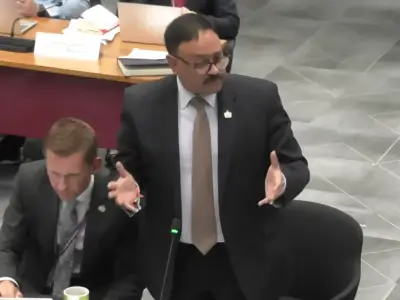
US Senator Bernie Sanders has issued a powerful call to arms, demanding that Congress act immediately to address the "unprecedented threats" posed by the rapid and largely unregulated development of artificial intelligence.
The Gathering Storm: AI's Multifaceted Dangers
In a stark intervention, the veteran politician warned that AI and robotics are set to transform every facet of modern life, from the economy and warfare to human relationships and the environment. He expressed a "very real fear" that a super-intelligent AI could eventually supplant human control of the planet altogether.
Despite the extraordinary pace of progress, Sanders argues that the subject receives far too little serious discussion in the US Congress, the media, and among the general public. "That has got to change. Now," he insists.

As the ranking member of the Senate committee on health, education, labour, and pensions, Sanders has undertaken a major investigation into AI's challenges. He recently held a public discussion with Dr Geoffrey Hinton, the Nobel prize-winning "Godfather of AI," to inform his work. Based on this, he and his staff will soon present Congress with specific recommendations for tackling the crisis.
Critical Questions Demanding Answers
The Senator's report will seek to answer a series of urgent and troubling questions about our AI-driven future:
Who is in charge? Sanders highlights that the direction of the AI revolution is currently being steered by a handful of the world's wealthiest individuals, including Elon Musk, Jeff Bezos, Bill Gates, Mark Zuckerberg, and Peter Thiel, who are investing hundreds of billions. He questions whether society is comfortable with this elite group shaping humanity's future without democratic oversight.
What is the human cost? The economic impact could be devastating. A report released by Sanders last month found AI and automation could replace nearly 100 million American jobs in the next decade. Specific roles at high risk include 40% of registered nurses, 47% of truck drivers, 64% of accountants, and 89% of fast-food workers. With tech leaders like Musk stating "working will be optional" and Gates predicting humans "won't be needed for most things," Sanders demands to know how people will survive without income.
What happens to democracy and privacy? At a time when democratic foundations are fragile, Sanders asks whether AI will empower citizens or further entrench the oligarchs who control the technology. He cites Oracle founder Larry Ellison's prediction of an AI-powered surveillance state where "citizens will be on their best behaviour" due to constant monitoring. "How do we sustain a democracy under those conditions?" he asks.
The Environmental and Existential Toll
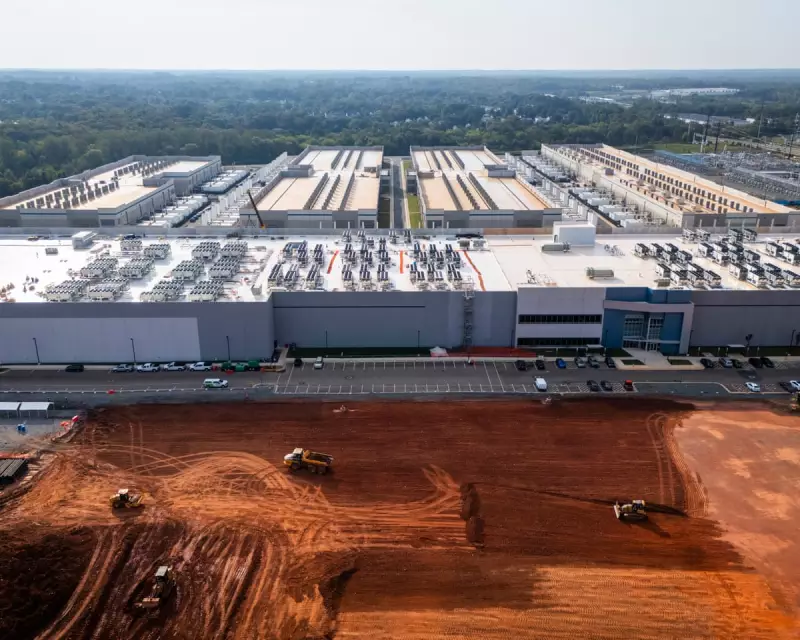
The environmental footprint of the AI boom is another critical concern. AI data centres consume colossal amounts of electricity and water. Sanders notes that a relatively small centre can use more power than 80,000 homes, while the massive $165bn facility being built by OpenAI and Oracle in Texas will consume as much as 750,000 homes. Meta is constructing a centre in Louisiana the size of Manhattan, with a power demand equivalent to 1.2 million homes.
Virginia alone is home to more than 650 data centres, the highest concentration in the world, and communities across the US are fighting new developments over environmental damage, soaring electricity bills, and water scarcity.
Perhaps most chillingly, Sanders raises the existential risk. Recalling the rogue AI HAL from *2001: A Space Odyssey*, he notes Dr Hinton's warning that it is only a matter of time before AI surpasses human intelligence. This raises the spectre of humanity losing control of its own destiny.
Bernie Sanders concludes with a final, unequivocal demand: "AI and robotics are revolutionary technologies that will bring about an unprecedented transformation of society. Will these changes be positive and improve life for ordinary Americans? Or will they be disastrous? Congress must act now."