In the wake of a devastating mass shooting at Sydney's Bondi Beach, the Australian government is moving to further tighten the nation's already stringent gun control laws. Prime Minister Anthony Albanese confirmed his cabinet is actively considering new legislative measures following the attack on Sunday, which resulted in the deaths of fifteen people.
What are Australia's current firearms regulations?
Australia's gun laws are among the strictest globally, particularly when contrasted with the United States. To legally obtain a firearms licence, an individual must demonstrate a 'genuine reason', as defined by state governments like New South Wales. Acceptable reasons include business or employment needs, animal welfare, recreational hunting, vermin control, and sport shooting.
The recent attack has brought these laws into sharp focus, as it was revealed that one of the gunmen, involved in the incident on Monday 15 December 2025, had held a firearms licence since 2015 and owned six registered weapons. Footage analysed by Sky News indicated the attackers, identified as Naveed Akram and Sajid Akram, used a rifle and a semi-automatic shotgun respectively.

What changes is the government proposing?
Prime Minister Albanese stated that his government is prepared to take 'whatever action is necessary', with a clear emphasis on enacting tougher gun laws. Key proposals under consideration include:
- Establishing a national firearms register to improve tracking.
- Reviewing the number of weapons permitted under a single licence and the duration of licence validity.
- Re-evaluating the types of legal firearms, including modifications.
- Using 'additional criminal intelligence' to assess eligibility, potentially disqualifying individuals with suspicious associates.
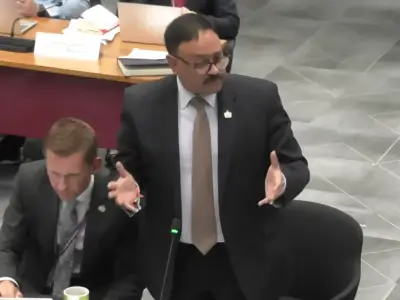
'People's circumstances can change. People can be radicalised over a period of time. Licences should not be in perpetuity,' Mr Albanese told reporters. New South Wales Premier Chris Minns echoed this sentiment, questioning why civilians unrelated to farming or agriculture would need access to high-powered weapons that endanger the public and police.
A legacy shaped by tragedy
Australia's modern firearm framework was fundamentally reshaped by the 1996 Port Arthur massacre in Tasmania, where Martin Bryant killed 35 people using semi-automatic weapons. Then-Prime Minister John Howard swiftly introduced the National Firearms Agreement, which banned rapid-fire rifles and shotguns for most citizens.
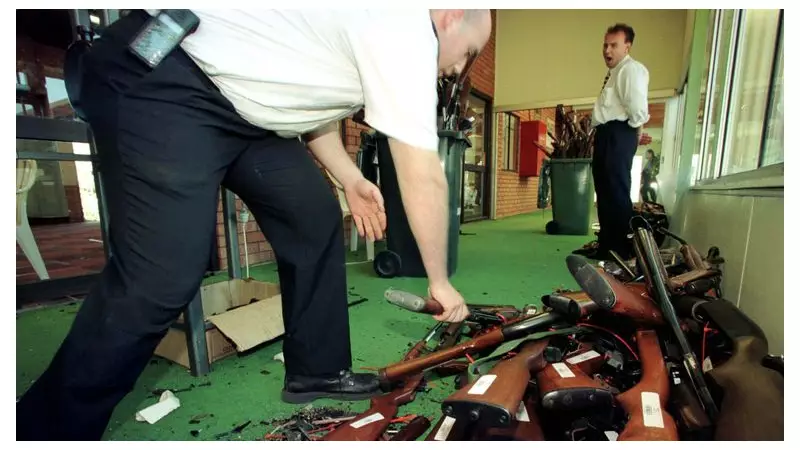
A subsequent government buyback scheme saw more than 600,000 weapons surrendered and destroyed. The policy's impact was significant; by 2009, Australia's gun murder rate stood at 0.1 per 100,000 people, compared to 3.2 per 100,000 in the US.
While mass shootings have been rare since the 1996 reforms, incidents like the 2022 Wieambilla ambush that killed two police officers and a civilian, and the recent Bondi attack, demonstrate an ongoing threat. The government's renewed push for stricter laws aims to close perceived loopholes and adapt to evolving risks, ensuring the nation's hard-won safety record is maintained.