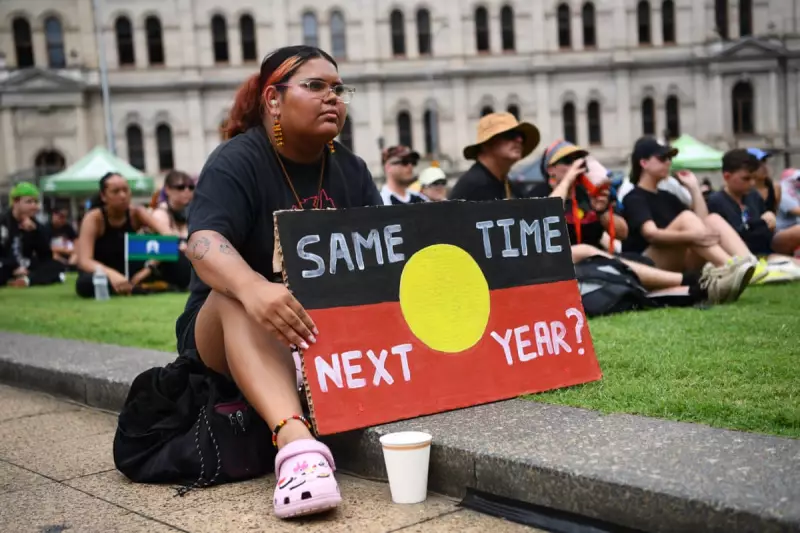
As the Australian summer unfolds and citizens return from their holiday breaks, a predictable national ritual begins to dominate public discourse. Media outlets launch polls asking whether the date of Australia Day should be moved from 26 January, while social media platforms become battlegrounds for heated opinions expressed through emojis and impassioned comments.
The Cyclical Nature of Superficial Debate
This annual pattern has become as regular as the changing seasons. For a brief but intense period, the nation becomes consumed by divisive headlines and reactive discussions about 26 January and whether this controversial date should be altered. The debate generates significant media attention and public engagement, creating an illusion of meaningful national conversation about Indigenous issues.
However, just as predictably as it arrives, this fervent discussion subsides into political silence. The noise dissipates, leaving First Nations communities exactly where they were before the annual debate began – no closer to achieving substantive improvements in their lives, no closer to closing the devastating socioeconomic gaps, and no closer to addressing what many describe as Australia's unfinished business.

A Deafening Silence After the Referendum
This pattern of engagement followed by neglect has become particularly pronounced in the two years since the 2023 Voice to Parliament referendum. While most Australians would acknowledge that the level of disadvantage experienced by First Nations peoples remains unacceptable, the political response has been characterized more by avoidance than by meaningful action.
The annual release of the Closing the Gap report typically confirms what Indigenous communities already know through lived experience – that progress remains inadequate and that governments are failing to meet the agreed socioeconomic targets. On several crucial measures, outcomes are not merely stagnating but actually worsening, indicating systemic failures rather than isolated policy missteps.
Systemic Issues Require Structural Solutions
The Productivity Commission's review of the Closing the Gap agenda reveals a troubling reality: much of what governments are implementing remains essentially business as usual. This continuation of inadequate approaches represents a primary reason why progress remains slow or even regressive in certain areas.
Without genuine structural reform that guarantees First Nations peoples meaningful input into the laws and policies affecting their lives, the same systems that created inequality will continue to reproduce it year after year. The current approach often involves consultation without transparency, frequently engaging individuals who lack proper community representation and who operate outside the framework of self-determination.
The Need for Sustained, Honest Conversations
What Australia truly requires are sustained, honest discussions about why First Nations people continue to experience:
- Significantly shorter life expectancies than other Australians
- Disproportionately high rates of youth incarceration
- Unprecedented levels of child removal from families
These are the conversations that matter most, and they must occur consistently throughout the year rather than being confined to the annual January debate cycle. Yet instead of this sustained engagement, Australia faces a troubling political silence on Indigenous affairs that was particularly evident during the most recent federal election.
Rebranding Without Reform
Since the 2023 referendum, the government has announced a new direction in Indigenous affairs focused on economic empowerment. However, this approach is not genuinely innovative – economic development has been central to Indigenous affairs policy since the Howard era, without delivering meaningful improvements in systemic disadvantage.
Rebranding the status quo does not constitute genuine reform. Discussions about wealth creation and equity funds may sound impressive, but they often remain speculative and tied to global economic forces beyond community control. Furthermore, these initiatives are typically led by bodies accountable to parliament rather than to the communities they purport to serve.

Truth-Telling Without Power Shifting
Alongside economic initiatives, there have been renewed calls for a national truth-telling process. While truth-telling was mentioned in the Uluru Statement from the Heart, its primary purpose was always constitutional power rather than historical acknowledgment alone.
Australia has engaged in truth-telling processes many times before, particularly at state levels. These initiatives, while valuable for historical acknowledgment, do not inherently shift power structures, change decision-making processes, or address the systemic drivers of inequality that perpetuate First Nations disadvantage.
The risk with truth-telling processes is that they may place the burden for change back onto First Nations peoples rather than onto the institutions responsible for historic and ongoing harm. Without accompanying structural reforms, truth-telling alone cannot deliver justice or claim rights effectively.
Moving Beyond Symbolic Gestures
First Nations communities continue to advocate for a meaningful, national mechanism that ensures their voices are heard in decisions affecting their lives. If Australia is serious about achieving justice, the focus must remain on the mandate of the Uluru Statement from the Heart: meaningful recognition and structural reform.
The challenges facing Indigenous Australians are fundamentally systemic and structural in nature. Therefore, the solutions must address these root causes rather than merely engaging in annual debates about symbolic dates. Until Australia moves beyond this cyclical pattern of intense but brief engagement followed by prolonged silence, genuine progress will remain elusive.