
A Birthday Tribute in the Shadow of the Bomb
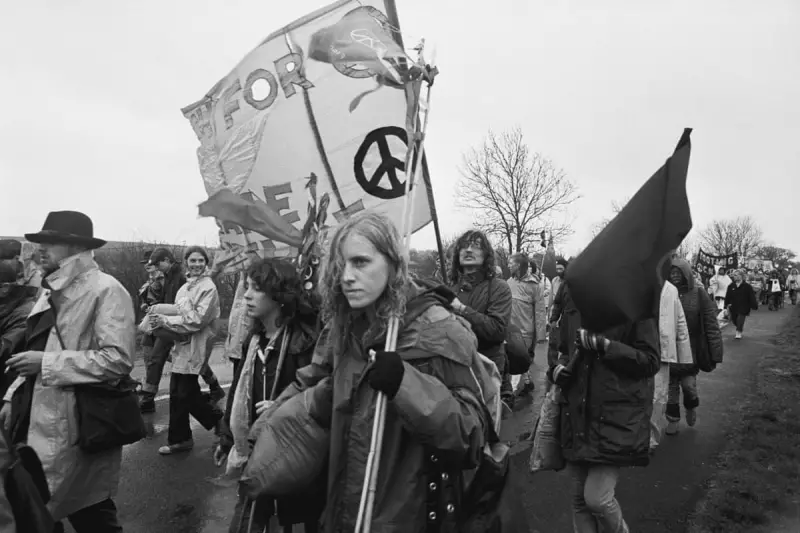
On a day that would have been her late mother's birthday, Guardian columnist Zoe Williams made a poignant choice. She attended a public meeting focused on nuclear disarmament, a cause that defined her childhood in the 1980s. Her mother was a dedicated activist, and the family's life was punctuated by marches and demonstrations against the threat of nuclear war.
From Cold War Fears to Modern Threats
Williams recalls a childhood dominated by anxiety, where Campaign for Nuclear Disarmament (CND) stickers like 'Protest and Survive' were commonplace. She remembers endless marches through London, often culminating in graphic speeches from figures like Tony Benn detailing the horrifying effects of hydrogen bombs. The fear was palpable, a strange mix of boredom and terror for a child.
However, the discourse has radically shifted. At the recent meeting, Professor Mary Kaldor, a veteran of CND and its European arm, END, presented a report arguing that the old paradigm of nuclear deterrence is fundamentally broken. She contended that this Cold War logic, which began over seventy-five years ago, is ill-suited to contemporary threats.
Today's enemies, she suggested, employ hybrid warfare—using drones, bot farms, and misinformation campaigns to sow chaos and polarisation from within democracies. In such scenarios, threatening to annihilate hundreds of thousands of civilians is not just unhelpful, but irrelevant. Kaldor proposed that building democratic resilience from within is a more effective and cheaper strategy.
The Unseen Cost of Nuclear Weapons
The discussion took a fascinating turn when a former Marine revealed that even military branches are sceptical of nuclear arms. The navy, he claimed, dislikes them because their colossal expense diverts funds from other priorities. The argument against the weapons was becoming pragmatic, not just moral.
This was underscored by nuclear physicist Patricia Lewis, who made an elegant point: no population, if given the choice, would ever authorise the use of a nuclear weapon. Autocrats know this, meaning the weapons only function as a credible threat if democracies become less democratic and stop listening to their people. Nuclear weapons, therefore, deter democracy itself.
For Williams, the intellectually stimulating meeting was bittersweet. She could vividly imagine her mother, a veteran of the Greenham Common women's peace camp, insisting that the speakers were not being frightening enough, demanding they talk about incinerated flesh and radiation sickness. The event was a fitting, if different, tribute to a lifelong campaigner.
Marking her mother's birthday with a renewed commitment to opposing nuclear obliteration was, she concluded, exactly what her mother would have wanted.




